
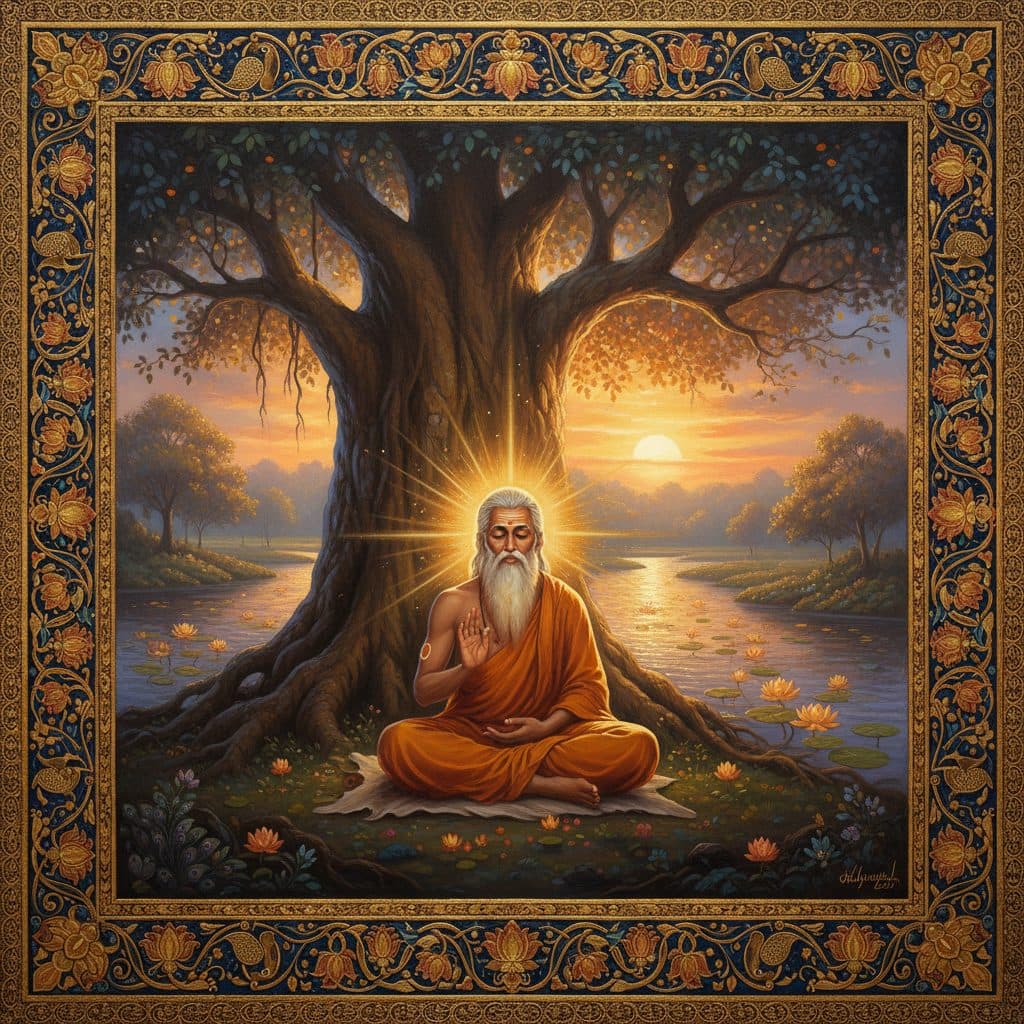
कर्म संन्यास योग
The Yoga of Renunciation
29 VersesDescription
Arjuna asks Krishna about the relative merits of renunciation of action (Sannyasa) and selfless action (Karma Yoga). Krishna explains that both paths lead to liberation, but Karma Yoga is easier for most people. He describes the qualities of a true renunciant who sees the same in all beings and remains undisturbed by joy and sorrow.
Location
Kurukshetra Battlefield
Characters
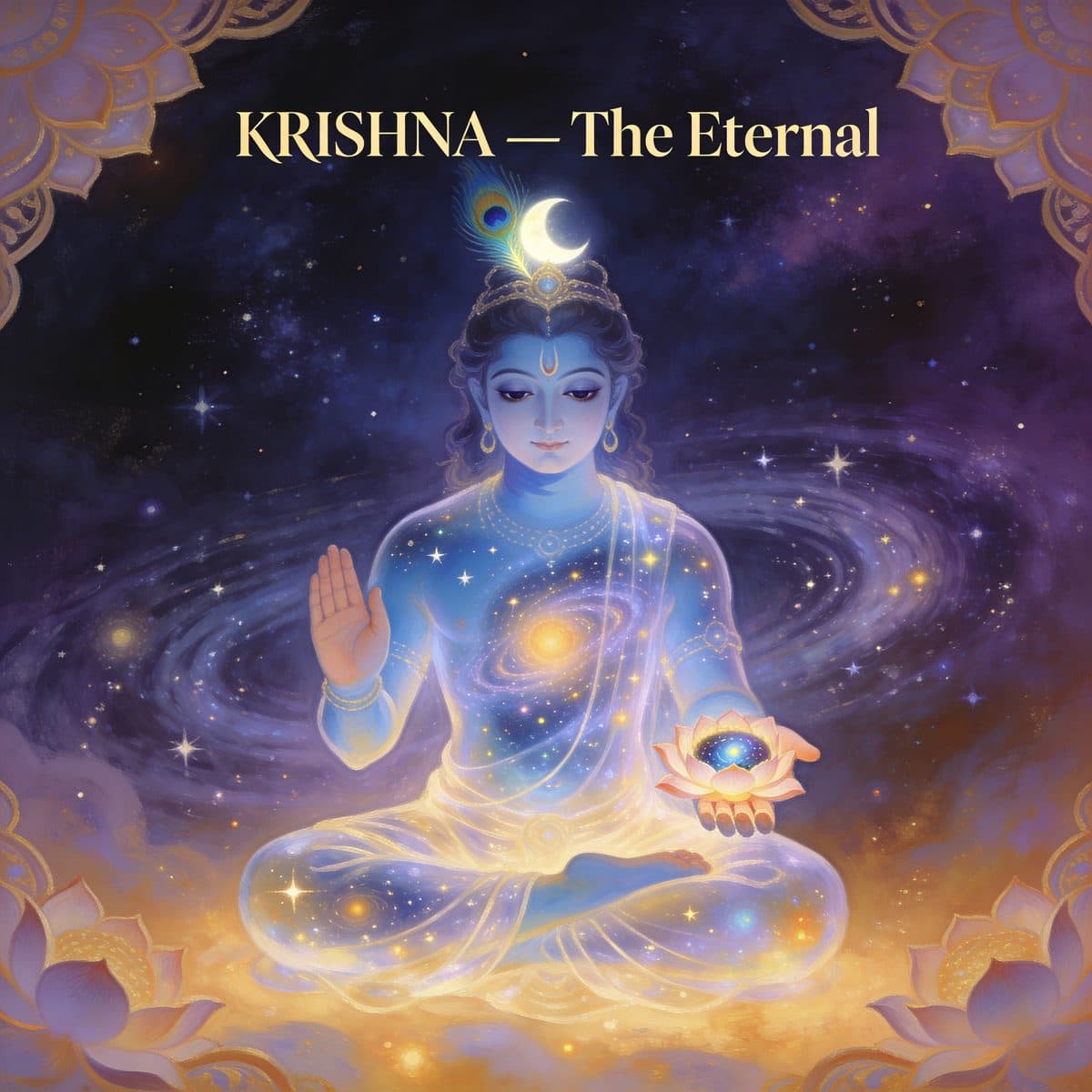
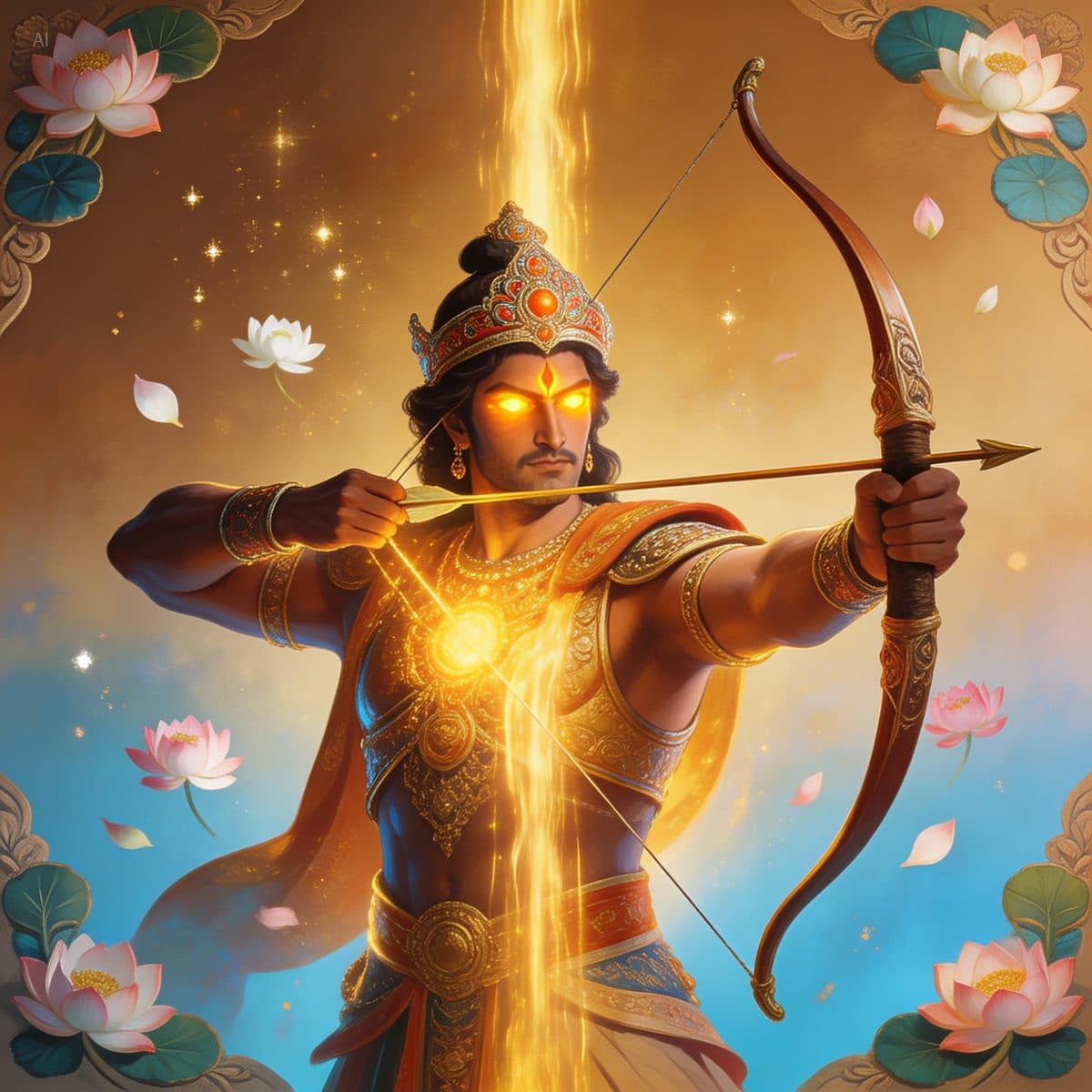
Watch Chapter Discourse
Video coming soon
Add a YouTube URL to the videoUrl field in chapters.ts
Chapter 5 — The Yoga of Renunciation
Read Verses
29 of 29 availableArjuna said: O Krishna, first of all You ask me to renounce work, and then again You recommend work with devotion. Now will You kindly tell me definitively which of the two is more beneficial?
Arjuna is confused by what seems a contradiction: Krishna praised renunciation of action, yet also urged selfless action. He asks directly: which path is superior?
The Supreme Lord said: The renunciation of work and work in devotion are both good for liberation. But, of the two, work in devotional service is better than renunciation of work.
Krishna resolves the apparent contradiction: both paths lead to liberation. But for most people in the world, Karma Yoga — engaged, selfless action — is more practical and superior to mere external renunciation.
One who neither hates nor desires the fruits of his activities is known to be always renounced. Such a person, free from all dualities, easily overcomes material bondage and is completely liberated, O mighty-armed one.
A true renunciant is defined not by wearing robes or leaving home, but by internal freedom — neither hating nor craving. Free from the pairs of opposites, such a person is always liberated, wherever they are.
Only the ignorant speak of devotional service [karma-yoga] as being different from the analytical study of the material world [Sankhya]. Those who are actually learned say that he who applies himself well to one of these paths achieves the results of both.
Those who see Sankhya (the path of knowledge and renunciation) and Yoga (the path of action) as opposed are missing the point. Anyone who sincerely follows either path all the way reaches the same destination.
One who knows that the position reached by the means of analytical study can also be attained by devotional service, and who therefore sees analytical study and devotional service to be on the same level, sees things as they are.
The goal reached by Sankhya is the same goal reached by Yoga. One who sees this unity — who does not divide the paths of knowledge and action — truly sees.
Unless one is engaged in the devotional service of the Lord, mere renunciation of activities cannot make one happy. The sages, purified by works of devotion, achieve the Supreme without delay.
Renunciation without the inner discipline of yoga leads only to difficulty. But the sage who is yoked to selfless action — a Karma Yogi — quickly reaches Brahman.
One who works in devotion, who is a pure soul, and who controls his mind and senses is dear to everyone, and everyone is dear to him. Though always working, such a man is never entangled.
The Karma Yogi — purified in soul, master of mind and senses, seeing their own Self in all beings — acts constantly yet is never stained by karma. Self-mastery and universal vision make action effortless and free.
A person in the divine consciousness, although engaged in seeing, hearing, touching, smelling, eating, moving about, sleeping and breathing, always knows within himself that he actually does nothing at all.
The person of true knowledge — even while seeing, hearing, touching, tasting, walking, sleeping, breathing — inwardly knows: "I do nothing." The Self is the witness, never the actor.
Speaking, evacuating, receiving, and opening or closing his eyes, he always knows that only the material senses are engaged with their objects and that he himself does nothing.
Continuing the description from 5:8: even in speaking, giving, receiving, opening and closing the eyes — the realized person holds firmly to the understanding that the senses alone move among sense-objects; the Self is uninvolved.
One who performs his duty without attachment, surrendering the results unto the Supreme Lord, is unaffected by sinful action, as the lotus leaf is untouched by water.
Like a lotus leaf that lives in water yet is never wetted by it, one who acts without attachment and offers all actions to Brahman is never touched by the stain of karma.
The yogis, abandoning attachment, act with body, mind, intelligence and even with the senses, only for the purpose of purification.
Yogis use every instrument — body, mind, intellect, senses — not for personal gain but purely for self-purification. Action becomes worship when the motive is purification rather than acquisition.
The steadily devoted soul attains unadulterated peace because he offers the result of all activities to Me; whereas a person who is not in union with the Divine, who is greedy for the fruits of his labor, becomes entangled.
The yogi, by surrendering the fruits of all actions, attains lasting peace. The non-yogi, driven by desire and clinging to results, binds himself ever more tightly.
When the embodied living being controls his nature and mentally renounces all actions, he resides happily in the city of nine gates [the material body], neither working nor causing work to be done.
The soul dwelling in the body — the city of nine gates (two eyes, two ears, two nostrils, mouth, and two lower openings) — who mentally renounces all actions lives in ease, neither acting nor causing others to act.
The embodied spirit, master in the city of his body, does not create activities, nor does he induce people to act, nor does he create the fruits of action. All this is enacted by the modes of material nature.
The Self does not create the sense of doership, the actions, or their results — nature (svabhava / prakriti) performs all of this. The Self is the witness-lord within, uninvolved in the mechanics of action.
Nor does the Supreme Lord assume anyone's sinful or pious activities. Embodied beings, however, are bewildered because of the ignorance which covers their real knowledge.
The Supreme neither takes on anyone's sin nor claims their merit. Beings are deluded because their natural knowledge (of the Self) is veiled by ignorance — this veil of avidya is the root of all suffering.
When, however, one is enlightened with the knowledge by which nescience is destroyed, then his knowledge reveals everything, as the sun lights up everything in the daytime.
When ignorance is destroyed by the light of knowledge, the Supreme shines forth as clearly as the sun lights the world at dawn. Self-knowledge is not acquired from outside — it is the removal of a veil.
When one's intelligence, mind, faith and refuge are all fixed in the Supreme, then one becomes fully cleansed of misgivings through complete knowledge and thus proceeds straight on the path of liberation.
Those whose intellect, heart, and devotion are all absorbed in the Supreme — purified of all impurities by knowledge — go to the state of no-return. This is moksha: liberation from the cycle of rebirth.
The humble sages, by virtue of true knowledge, see with equal vision a learned and gentle brāhmaṇa, a cow, an elephant, a dog and a dog-eater [outcaste].
The truly wise see with equal vision — the same Brahman in a learned brahmin, a cow, an elephant, a dog, and an outcaste. This equality of vision (sama-darshana) is the hallmark of realized knowledge.
Those whose minds are established in sameness and equanimity have already conquered the conditions of birth and death. They are flawless like Brahman, and thus they are already situated in Brahman.
Those with a mind established in equanimity have already conquered existence itself — right here, in this life. Since Brahman is equal and flawless everywhere, one who perceives this equality is already established in Brahman.
A person who neither rejoices upon achieving something pleasant nor laments upon obtaining something unpleasant, who is self-intelligent, who is unbewildered, and who knows the science of God, is already situated in transcendence.
The knower of Brahman is unmoved by pleasant or unpleasant outcomes — neither elated nor dismayed. With steady intellect and no delusion, such a person is already in Brahman, not as a future destination but as a present reality.
Such a liberated person is not attracted to material sense pleasure but is always in trance, enjoying the pleasure within. In this way the self-realized person enjoys unlimited happiness, for he concentrates on the Supreme.
Not drawn to outer pleasures of the senses, the realized person finds endless joy within — in the Atman itself. This inner happiness is inexhaustible, unlike the fleeting satisfaction of sense-objects.
An intelligent person does not take part in the sources of misery, which are due to contact with the material senses. O son of Kunti, such pleasures have a beginning and an end, and so the wise man does not delight in them.
All pleasures born of sense-contact are at root sources of suffering — they have a beginning and an end. The wise do not seek happiness there, knowing that what begins must end and that ending brings pain.
Before giving up this present body, if one is able to tolerate the urges of the material senses and check the force of desire and anger, he is well situated and is happy in this world.
Happiness in this life belongs to one who can endure, right here before death, the rush of desire and anger. Self-mastery — not circumstances — is the source of genuine wellbeing.
One whose happiness is within, who is active and rejoices within, and whose aim is inward is actually the perfect mystic. He is liberated in the Supreme, and ultimately he attains the Supreme.
The true yogi draws all happiness from within — their delight is internal, their light is internal, their aim is internal. Such a one attains brahma-nirvana: the peace of merging into Brahman.
Those who are beyond the dualities that arise from doubts, whose minds are engaged within, who are always busy working for the welfare of all living beings, and who are free from all sins achieve liberation in the Supreme.
The sages who attain Brahma-nirvana share four qualities: sins extinguished, doubts cut, minds controlled, and devoted to the welfare of all beings. Service to all and liberation are not separate — they arise together.
Those who are free from anger and all material desires, who are self-realized, self-disciplined and constantly endeavoring for perfection, are assured of liberation in the Supreme in the very near future.
For those who have conquered desire and anger, who know themselves, who are self-disciplined — brahma-nirvana is near, on all sides. Liberation is not a remote destination but a present proximity for such people.
Shutting out all external sense objects, keeping the eyes and vision concentrated between the two eyebrows, suspending the inward and outward breaths within the nostrils, and thus controlling the mind, senses and intelligence, the transcendentalist aiming at liberation becomes free from desire, fear and anger.
Verse 27 and 28 together describe the meditator's technique: external sense-objects excluded, gaze centered between the eyebrows, breath balanced — mind, senses, and intellect stilled. This is the doorway to moksha.
He who has controlled the senses, mind and intelligence, and who is always in trance and is beyond desire, fear and anger, is certainly always liberated and is transcendental in this matter.
The sage with controlled senses, mind, and intellect — free from desire, fear, and anger, aimed always at liberation — is perpetually free. The word "sadā" (always) makes clear this is not a temporary state but a permanent condition.
A person in full consciousness of Me, knowing Me to be the ultimate beneficiary of all sacrifices and austerities, the Supreme Lord of all planets and demigods, and the benefactor and well-wisher of all living entities, attains peace from the pangs of material miseries.
The chapter closes with the threefold knowledge that brings complete peace: knowing Krishna as the enjoyer of all sacrifice and austerity, as the sovereign lord of all worlds, and as the true friend of all beings. This three-fold recognition — cosmic sovereign yet intimate friend — is the ground of final peace.
Key Teachings
- •Both renunciation and selfless action lead to liberation
- •True renunciation is detachment, not inaction
- •The wise see the same in all beings