
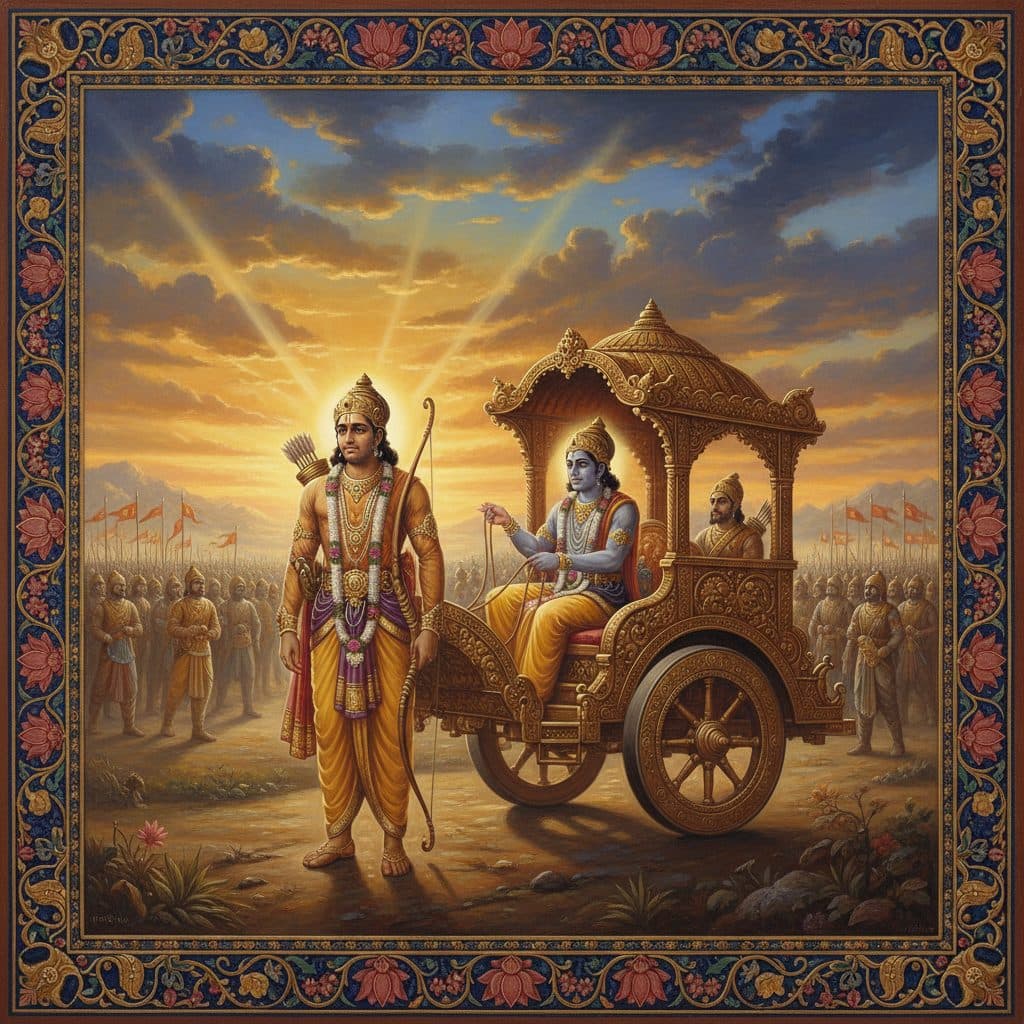
अर्जुन विषाद योग
Arjuna's Dilemma
47 VersesDescription
The Bhagavad Gita begins on the battlefield of Kurukshetra, where two great armies—the Pandavas and the Kauravas—have assembled for a historic war. Arjuna, the great Pandava warrior, asks his charioteer Krishna to place his chariot between the two armies so he can see who he must fight. Seeing his kinsmen, teachers, and friends arrayed against him, Arjuna is overcome with grief and moral confusion. He refuses to fight, setting the stage for Krishna's divine discourse. This chapter establishes the human predicament—the conflict between duty and emotion, between what must be done and what the heart resists.
Location
Kurukshetra Battlefield, between the two armies
Characters
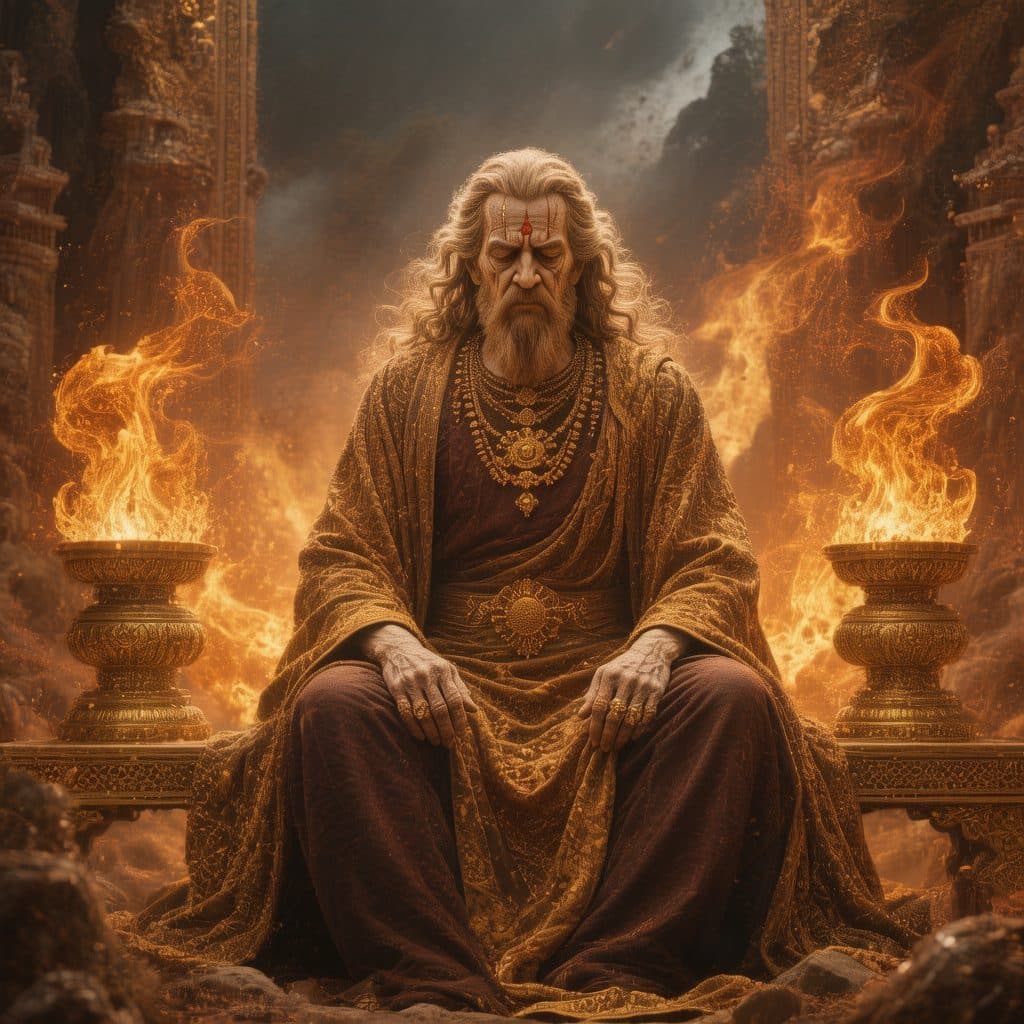
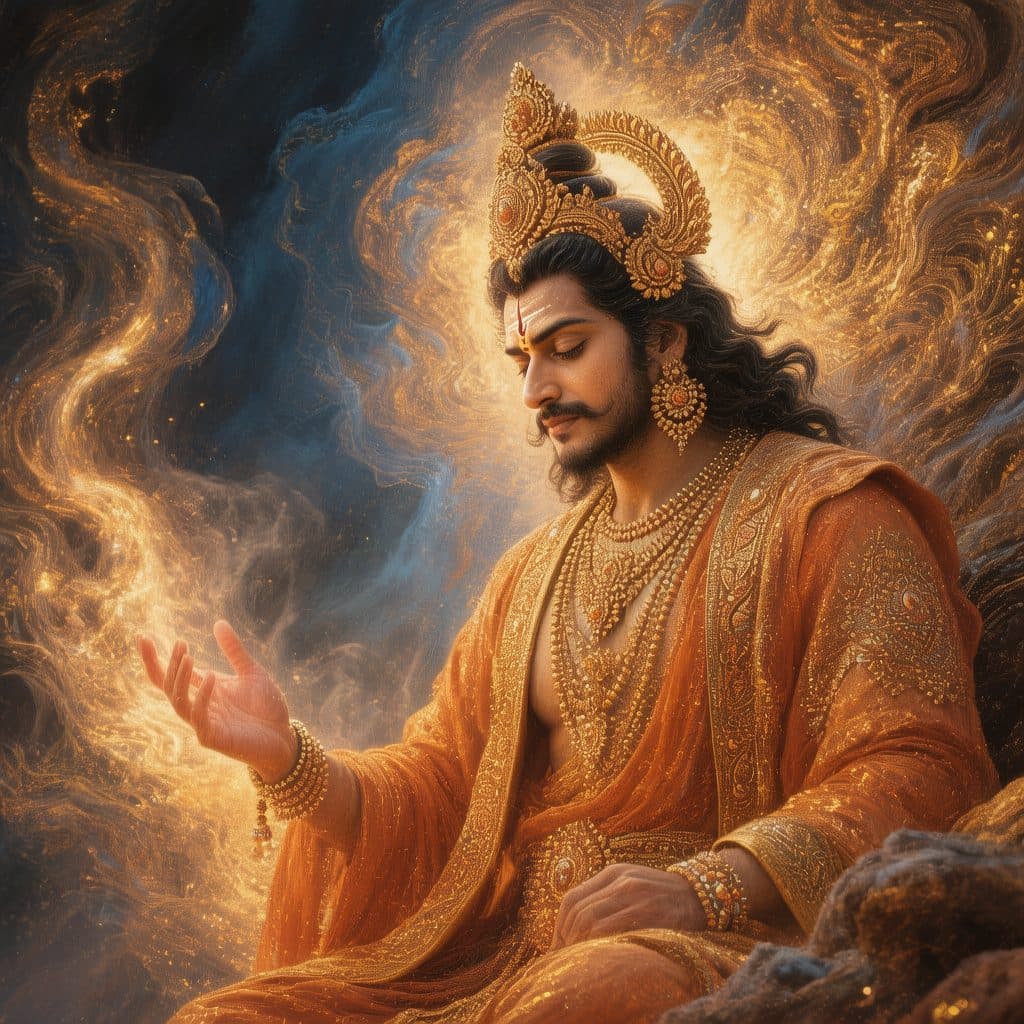
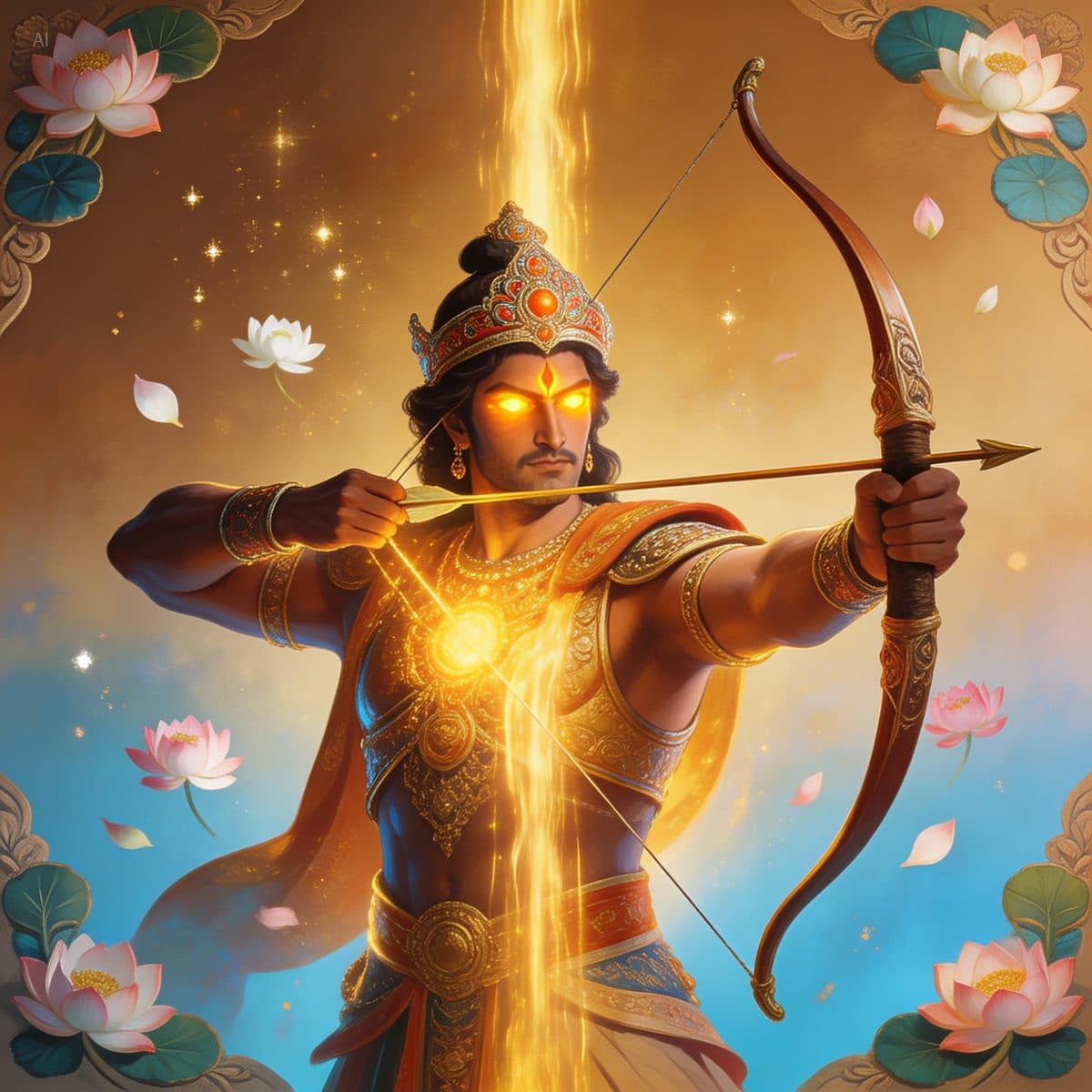
Watch Chapter Discourse
Chapter 1 — Arjuna's Dilemma
Open in YouTubeRead Verses
47 of 47 availableO Sanjaya, what did my sons and the sons of Pandu do when they assembled on the holy field of Kurukshetra, eager to fight?
The blind King Dhritarashtra asks Sanjaya about the events on the battlefield of Kurukshetra, a sacred place of pilgrimage.
Sanjaya said: O King, after looking over the army gathered by the sons of Pandu, King Duryodhana went to his teacher and spoke the following words.
Sanjaya begins narrating the events. Duryodhana approaches his teacher Drona with concern.
O my teacher, behold the mighty army of the sons of Pandu, so expertly arranged by your intelligent disciple, the son of Drupada.
Duryodhana points out the impressive military formation of the Pandavas.
Here in this army there are many heroic bowmen equal in fighting to Bhima and Arjuna; there are also great fighters like Yuyudhana, Virata and Drupada.
Duryodhana describes the great warriors in the Pandava army.
There are also great, heroic, mighty warriors like Dhrishtaketu, Chekitana, the King of Kashi, Purujit, Kuntibhoja, and Shaibya.
Duryodhana continues listing the notable warriors on the Pandava side.
There are the mighty Yudhamanyu, the very powerful Uttamauja, the son of Subhadra (Abhimanyu), and the sons of Draupadi. All of them are great chariot fighters.
Duryodhana mentions more great warriors including Abhimanyu and sons of Draupadi.
O best of the brahmanas, for your information, let me tell you about the captains who are especially qualified to lead my military force.
Duryodhana shifts to describing his own army's leaders.
There are personalities like yourself, Bhishma, Karna, Kripa, Ashvatthama, Vikarna, and Bhurishrava, ever victorious in battle.
Duryodhana lists the principal warriors of his army.
There are many other heroes who are ready to give up their lives for my sake. All of them are well equipped with different kinds of weapons, and all are experienced in military science.
Duryodhana mentions many other warriors ready to sacrifice their lives for him.
Our strength is immeasurable, being protected by Bhishma, and the strength of the Pandavas is limited, being protected by Bhima.
Duryodhana compares the two armies, claiming his is unlimited and protected by Bhishma.
All of you must now give full support to Grandfather Bhishma, as you stand at your respective strategic points of entrance into the phalanx of the army.
Duryodhana instructs his warriors to take their positions and protect Bhishma.
The mighty grandsire Bhishma, the oldest of the Kuru dynasty, roared like a lion and blew his conchshell very loudly, increasing Duryodhana's joy.
Bhishma blew his conch shell to cheer Duryodhana and boost the army's morale.
After that, the conchshells, drums, bugles, trumpets and horns were all suddenly sounded, and the combined sound was tumultuous.
Following Bhishma's lead, various instruments were sounded simultaneously, creating a tremendous noise.
On the other side, both Lord Krishna and Arjuna, stationed in a great chariot drawn by white horses, sounded their divine conchshells.
Krishna and Arjuna blew their divine conch shells in response.
Lord Krishna blew His conchshell, called Panchajanya; Arjuna blew his, the Devadatta; and Bhima, the voracious eater and performer of herculean tasks, blew his terrific conchshell, called Paundra.
Each warrior blew his own named conch shell.
King Yudhishthira, the son of Kunti, blew his conchshell, the Ananta-vijaya, and Nakula and Sahadeva blew the Sughosha and Manipushpaka.
Yudhishthira, Nakula and Sahadeva also blew their conches.
The King of Kashi, an excellent archer, the great warrior Shikhandi, Dhrishtadyumna, Virata, and the invincible Satyaki all blew their respective conchshells.
Other great warriors also blew their conches.
O King, Drupada, the sons of Draupadi, and the mighty-armed Abhimanyu, son of Subhadra, all blew their respective conchshells.
King Drupada, the sons of Draupadi, and Abhimanyu also blew their conches.
The blowing of these different conchshells became uproarious, and the sound was tremendous, vibrating both in the sky and on the earth. It shattered the hearts of the sons of Dhritarashtra.
The combined sound of all these divine conches terrified the Kauravas.
O King, at that time Arjuna, the son of Pandu, who was seated in his chariot, his flag marked with Hanuman, took up his bow and prepared to shoot his arrows.
Arjuna lifted his bow, ready to release his arrows at the Kaurava forces.
Arjuna said: O infallible one, please draw my chariot between the two armies so that I may see those present here, who are eager for battle, and with whom I must engage in this fight.
Arjuna requests Krishna to place his chariot between the two armies.
I wish to see those who have assembled here to fight, wishing to please the evil-minded son of Dhritarashtra.
Arjuna wants to see all the warriors who have gathered to support Duryodhana.
Sanjaya said: O descendant of Bharata, having thus been addressed by Arjuna, Lord Krishna drew up the fine chariot in the midst of the armies of both parties.
Krishna placed the chariot between the two armies.
In the presence of Bhishma, Drona and all other chieftains of the world, Hrishikesha, the Lord, said: O Partha, behold the Kurus assembled here.
Krishna positioned the chariot and said to Arjuna: "Behold the Kurus."
There Arjuna saw his fathers, grandfathers, teachers, maternal uncles, brothers, sons, grandsons, friends, and also his father-in-law and well-wishers.
Arjuna saw his relatives on both sides of the battlefield.
There were also his father-in-law and friends in both armies. Seeing all his kinsmen present, O King, Arjuna was overcome with deep compassion.
Seeing all his relatives arrayed for battle, Arjuna was filled with deep compassion.
Overwhelmed by compassion, Arjuna said with a sorrowful heart: O Krishna, seeing my kinsmen assembled and eager for battle, I feel overwhelmed.
Filled with compassion, Arjuna spoke with a sorrowful heart.
My limbs fail, my mouth is dry, my body shakes, and my hair stands on end.
Arjuna describes his physical symptoms of distress.
The Gandiva bow slips from my hand, and my skin is burning. I am unable to stand, and my mind is spinning.
Arjuna's bow slips from his hand, he cannot stand steady, his mind is reeling.
O Krishna, I see omens of evil, and I foresee no good from killing my kinsmen in battle.
Arjuna sees bad omens and cannot see any good from killing his relatives.
I do not desire victory, O Krishna, nor kingdom, nor pleasures. Of what use is kingdom to us, O Govinda, or enjoyments, or even life itself?
Arjuna declares he does not seek victory, kingdom, or pleasures.
Those for whose sake we desire kingdom, enjoyments, and pleasures are here on this battlefield, having given up their lives and wealth.
The people for whom he wants kingdom are ready to die.
Teachers, fathers, sons, and also grandfathers; maternal uncles, fathers-in-law, grandsons, brothers-in-law, and other relatives.
Arjuna lists all the relations present on the battlefield.
O Madhusudana, even if they were to kill me, I do not wish to kill them—not even for the sovereignty of the three worlds, let alone for an earthly kingdom.
Arjuna does not wish to kill his relatives, not even for the kingdom of three worlds.
O Janardana, what pleasure would we derive from killing the sons of Dhritarashtra? Killing these aggressors would only bring sin upon us.
Arjuna questions what happiness could come from killing the Kauravas.
Therefore, it is not proper for us to kill the sons of Dhritarashtra, our own kinsmen. How can we be happy after killing our own family, O Madhava?
Arjuna concludes it is not right to kill their relatives.
Even if these men, their minds blinded by greed, do not see the evil of destroying a family or the sin of treachery to friends...
The Kauravas, blinded by greed, do not see the evil consequences.
Why should we not, O Janardana, know how to turn away from this sin, we who clearly see the evil of destroying a family?
Arjuna asks why they should not refrain from this sin when they see the consequences.
With the destruction of a family, the eternal family traditions are destroyed. When dharma is destroyed, adharma (irreligion) overtakes the entire family.
When a family is destroyed, its traditions are lost, and unrighteousness spreads.
When irreligion is prominent in the family, O Krishna, the women of the family become corrupt, and from the degradation of womanhood, O Varshneya, comes unwanted progeny.
When adharma dominates, women become corrupted, leading to social disorder.
This mixture of classes leads to hell both for the family destroyers and the family itself. The ancestors fall, deprived of rice-ball and water offerings.
Class mixture leads to hell for both the destroyers of family and the family.
By these evil deeds of the destroyers of the family, which cause a mixture of classes, the eternal community and family traditions are uprooted.
Due to the sins of family destroyers, eternal traditions are destroyed.
O Janardana, we have heard that those whose family traditions are destroyed dwell in hell indefinitely. This is indeed my belief.
Those whose family traditions are destroyed must dwell in hell.
Alas, how strange it is that we are preparing to commit a great sin! Driven by the desire for kingdom and pleasures, we are ready to kill our own kinsmen.
Out of desire for kingdom, they are ready to commit the terrible sin of killing relatives.
It would be far better for me if the sons of Dhritarashtra, armed with weapons, were to kill me in battle, unarmed and unresisting.
It would be better to be killed unarmed than to kill them.
Sanjaya said: Having spoken thus, Arjuna sat down in the chariot, casting aside his bow and arrows, his mind overwhelmed with grief.
Arjuna sat down in his chariot, putting aside his weapons, his heart overcome with sorrow.
To him who was thus overwhelmed with pity and sorrow, whose eyes were filled with tears and who was despondent, Krishna spoke these words.
Seeing Arjuna overwhelmed with grief, Krishna began to speak the divine discourse.
Key Teachings
- •The importance of facing life's battles
- •The consequences of attachment
- •Even the greatest warriors face moments of doubt