
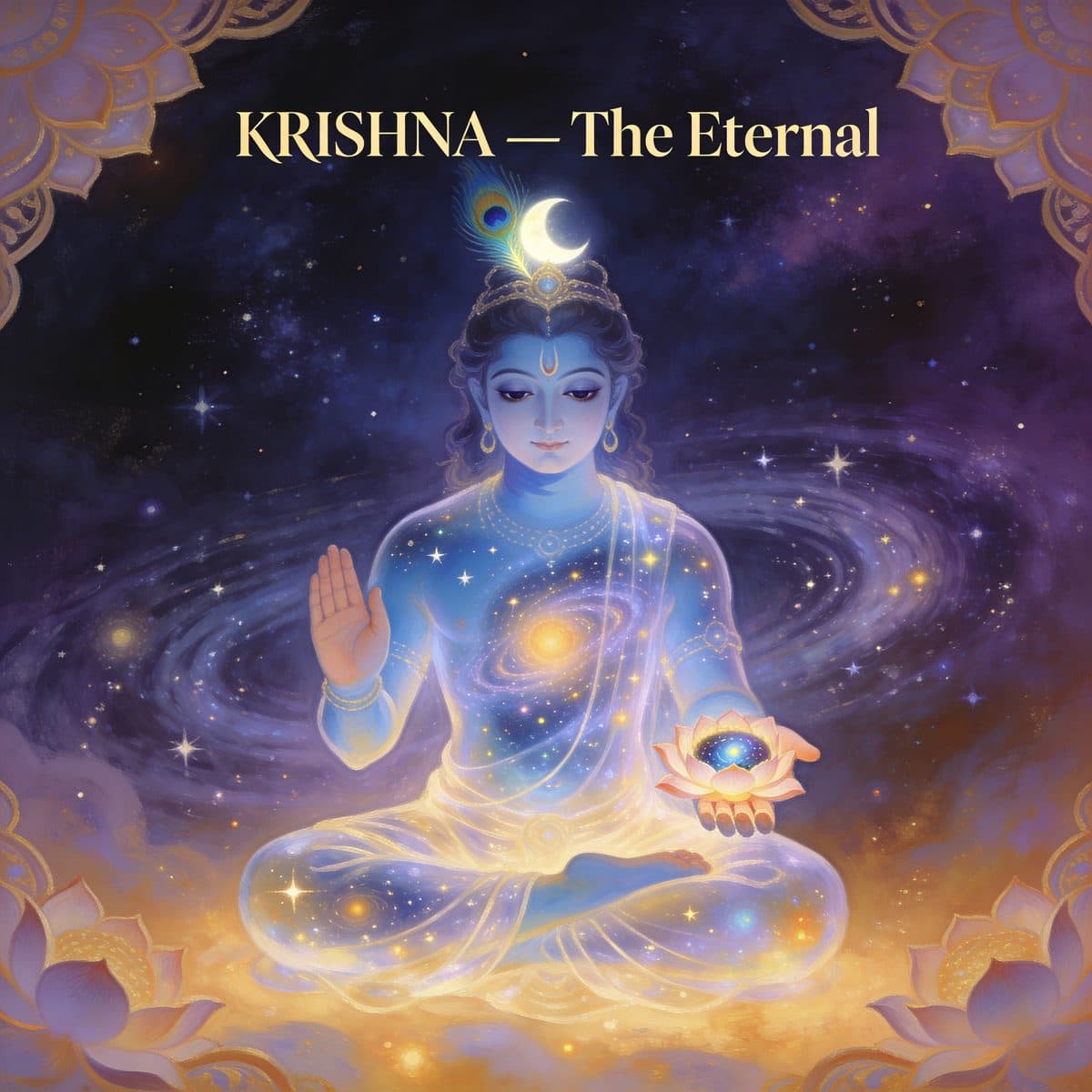
Lord Krishna
Divine TeacherThe Supreme Lord, the charioteer and divine guide of Arjuna. Krishna delivers the eternal wisdom of the Gita, revealing the nature of the soul, duty, and the path to liberation.
Speaking: Chapter 14, Verse 19
Verse 19
Hard VerseThe Yoga of the Three Gunas
When the seer perceives no doer other than the guṇas, and knows what is beyond the guṇas — that one attains My nature.
Context & Meaning
The liberating insight: when the witness (draṣṭā — the seer) clearly perceives that all action is performed by the guṇas alone — that there is no doer other than the three modes of Prakriti — and when they also know what is beyond the guṇas (the pure witnessing consciousness that is unaffected by them), then they attain the divine nature. The two parts of the insight are inseparable: one must see that the guṇas are the doers (dissolving ego-doership) AND that pure awareness transcends all three (revealing the true self as the witness).
Scholar Commentaries
2 commentaries · Public domainAdi Shankaracharya
AdvaitaThis verse is the epistemological heart of the chapter. The "seer" who perceives no doer other than the guṇas has dissolved the fundamental ignorance — the misidentification of the pure witness with the acting, choosing, desiring person. When that identity dissolves, what remains is the pure witnessing awareness that was always already beyond the guṇas.
Madhvacharya
DvaitaMadbhāvaṃ so'dhigacchati — that one attains My nature. The culmination of the path through the guṇas is the attainment of the divine nature. This is not absorption into God but participation in God's freedom — the soul becomes free from guṇa-bondage, sharing in the divine quality of transcendence while remaining itself.