
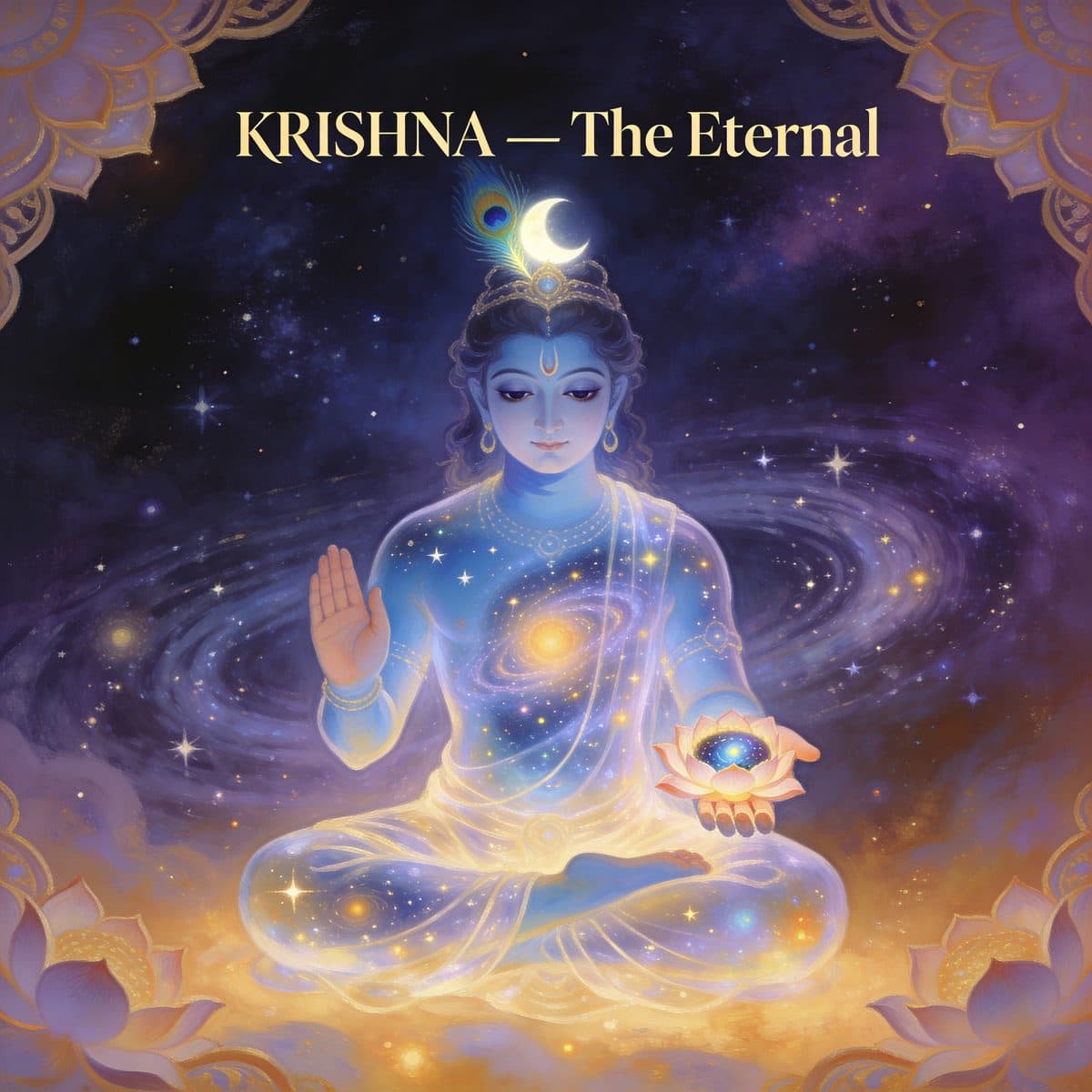
Lord Krishna
Divine TeacherThe Supreme Lord, the charioteer and divine guide of Arjuna. Krishna delivers the eternal wisdom of the Gita, revealing the nature of the soul, duty, and the path to liberation.
Speaking: Chapter 14, Verse 18
Verse 18
The Yoga of the Three Gunas
Those established in sattva rise upward; those in rajas remain in the middle; those abiding in the lowest quality — tamas — go downward.
Context & Meaning
A vertical cosmology of the guṇas: sattva leads upward (toward higher states of being, toward liberation); rajas keeps one in the middle (in the ordinary human world of striving and partial satisfaction); tamas pulls downward (toward denser births, heavier states of consciousness). The direction of one's existence is set by the quality one predominantly inhabits. This is not fatalism — it is a map of the forces at work — and the entire teaching of the Gita is about how to orient one's movement upward, and ultimately beyond even the highest of the three.
Scholar Commentaries
1 commentary · Public domainRamanujacharya
VishishtadvaitaŪrdhvaṃ — upward. The direction of sattva is toward the light, toward God, toward liberation. But even the highest point of sattva is not yet freedom, because sattva itself is still a guṇa — still a quality of Prakriti, still a form of bondage. The truly free person has transcended even sattva's gentle attachment, moving beyond all three guṇas entirely.