
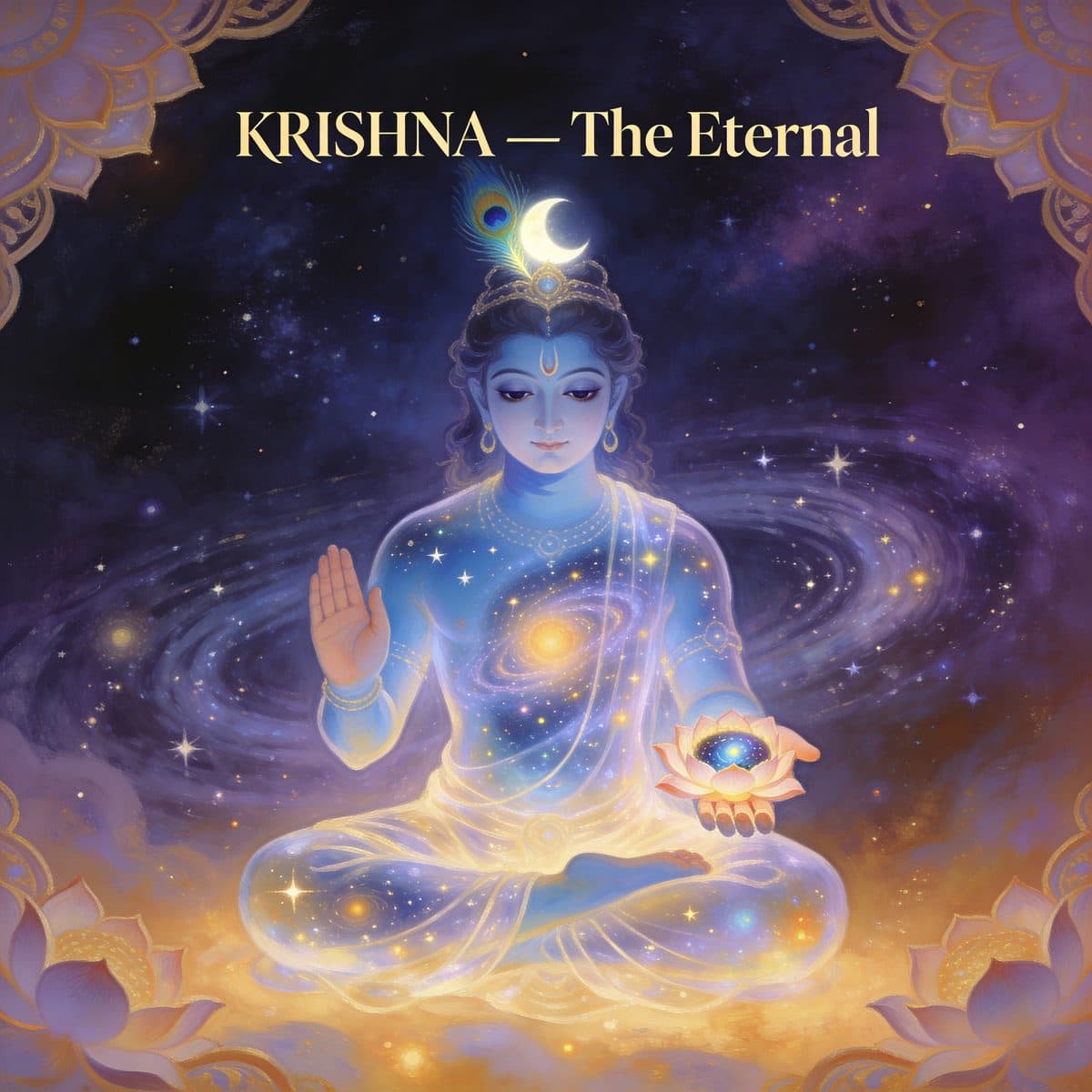
Lord Krishna
Divine TeacherThe Supreme Lord, the charioteer and divine guide of Arjuna. Krishna delivers the eternal wisdom of the Gita, revealing the nature of the soul, duty, and the path to liberation.
Speaking: Chapter 14, Verse 20
Verse 20
The Yoga of the Three Gunas
Having transcended these three guṇas that are the source of the body, the embodied soul is freed from birth, death, old age, and suffering, and attains immortality.
Context & Meaning
The promise at the heart of the chapter: transcend the three guṇas — which are the very source and substance of embodied existence — and one is freed from the entire cycle of janma (birth), mṛtyu (death), jarā (old age), and duḥkha (suffering). Amṛtam aśnute — one tastes immortality. Not merely a better rebirth, not merely a more pleasant existence within the cycle, but the complete cessation of the cycle itself. This is the destination that the entire teaching of the guṇas points toward: not the improvement of life within the three modes, but the transcendence of the three modes altogether.
Scholar Commentaries
1 commentary · Public domainRamanujacharya
VishishtadvaitaAmṛtam aśnute — tastes, experiences, partakes of immortality. This is a lived experience, not a theoretical conclusion. The one who has transcended the guṇas does not merely believe in immortality — they live from it. The fear of death disappears not because one has argued oneself out of it, but because one has found the place in oneself that was never born and therefore cannot die.