
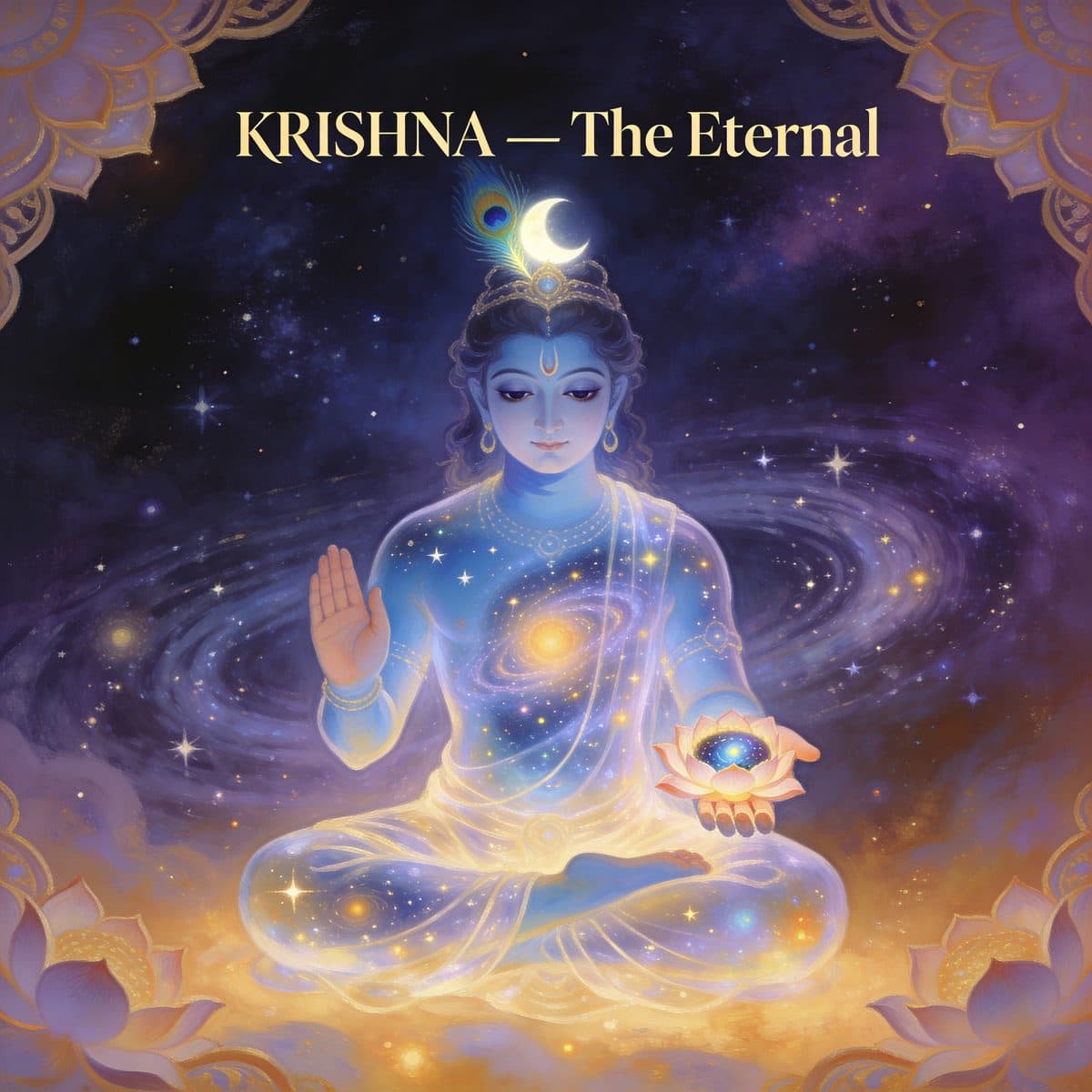
Lord Krishna
Divine TeacherThe Supreme Lord, the charioteer and divine guide of Arjuna. Krishna delivers the eternal wisdom of the Gita, revealing the nature of the soul, duty, and the path to liberation.
Speaking: Chapter 18, Verse 9
Verse 9
The Yoga of Liberation through Renunciation
That renunciation is considered sattvic, O Arjuna, when one performs prescribed action as a duty, giving up attachment and the fruit.
Context & Meaning
Here is the sattvic tyāga — the genuine renunciation that the Gita has been pointing toward throughout. It has three characteristics: the action is niyata (prescribed by one's duty), it is performed kāryam iti — simply because it ought to be done, as a matter of dharmic necessity — and it is performed with both saṅga (attachment to the process) and phala (desire for the fruit) fully released. The simplicity of this formulation is radical: do your duty because it is your duty, neither clinging to how it goes nor grasping at what comes from it. This is the posture of the liberated actor — fully engaged in the world, fully free from the world.
Scholar Commentaries
1 commentary · Public domainMadhvacharya
DvaitaKāryam iti eva — simply because it must be done. The Dvaita reading finds in this phrase the essence of karma-yoga as devotion: when action is stripped of personal desire and performed purely because it is one's dharmic offering to God, it becomes perfectly pure. The sattvic renouncer is not someone who does nothing but someone who does everything that must be done without any of it sticking to the soul. They are, in the Dvaita idiom, a pure instrument of Vishnu's will — acting entirely within the divine order, free from the distortions of ego.