
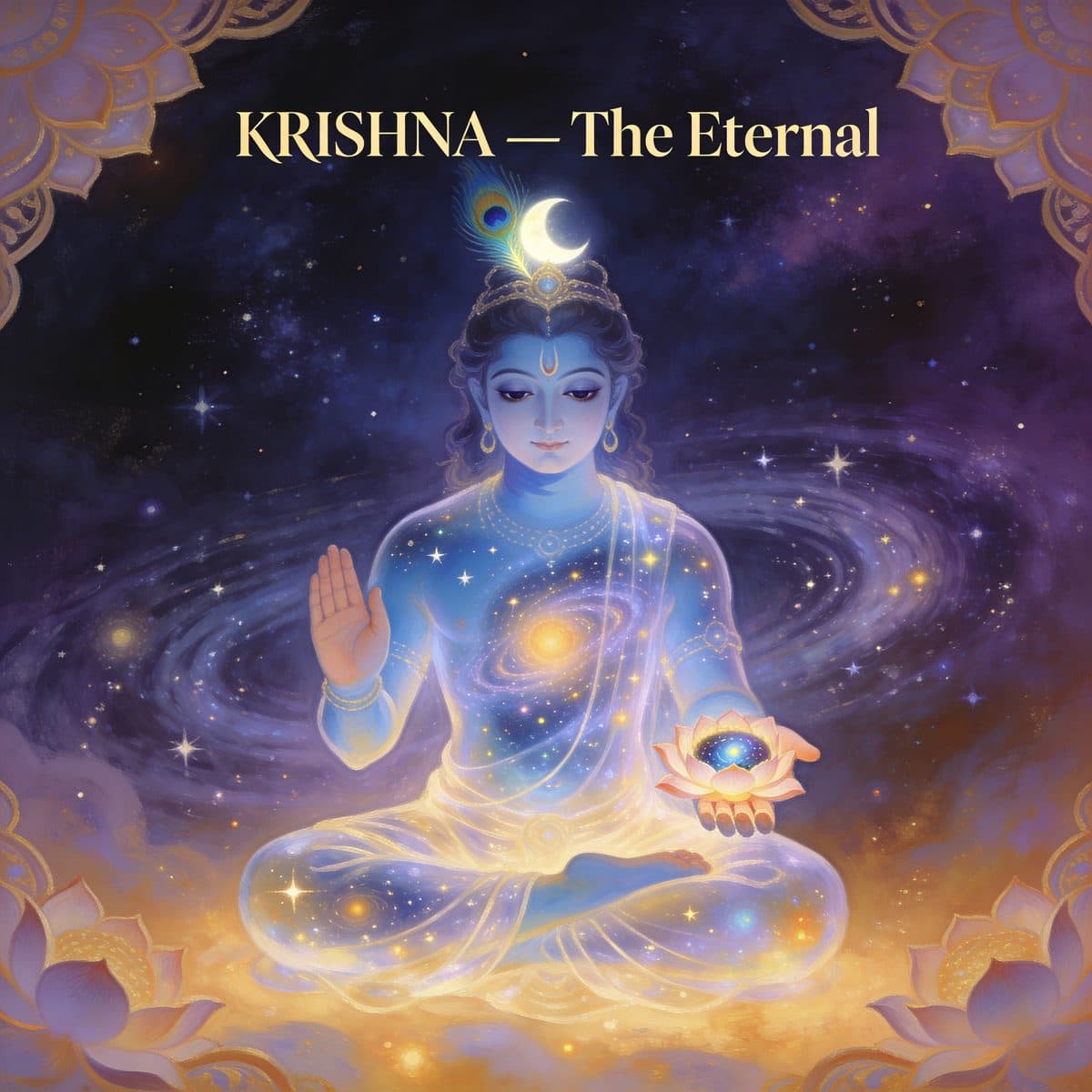
Lord Krishna
Divine TeacherThe Supreme Lord, the charioteer and divine guide of Arjuna. Krishna delivers the eternal wisdom of the Gita, revealing the nature of the soul, duty, and the path to liberation.
Speaking: Chapter 18, Verse 10
Verse 10
The Yoga of Liberation through Renunciation
The renouncer who is pervaded by sattva, who is intelligent and free from doubt, does not hate disagreeable action nor cling to agreeable action.
Context & Meaning
The sattvic renouncer is described here with beautiful precision. They do not dveṣṭi — hate, avoid, or resent — the actions that are disagreeable, difficult, or unpleasant. Nor do they anusajjate — become attached to, cling to, or addicted to — actions that are pleasant and rewarding. This equanimity is not indifference but perfect spiritual balance: the full engagement of intelligence and will without the distortions of aversion and desire. They are medhāvī (wise, of sharp discernment) and chinna-saṃśayaḥ (free from doubt, their doubts cut through). The resolution of doubt comes not from information but from the direct experience of sattva — the clarity that sees action as action, result as result, neither welcoming nor dreading either.
Scholar Commentaries
1 commentary · Public domainAdi Shankaracharya
AdvaitaSattvasamāviṣṭo medhāvī — pervaded by sattva, wise. The Advaita insight here is that doubt — saṃśaya — is the product of the egoic mind's attempt to secure itself by controlling outcomes. The person pervaded by sattva no longer needs this security because they have found a deeper ground. When you know that you are the witnessing Self, not the actor — that the actor is a function of Prakriti, not who you are — then the aversion to hard actions and the attachment to pleasant ones both dissolve. Chinna-saṃśayaḥ: the doubts are cut at the root.