
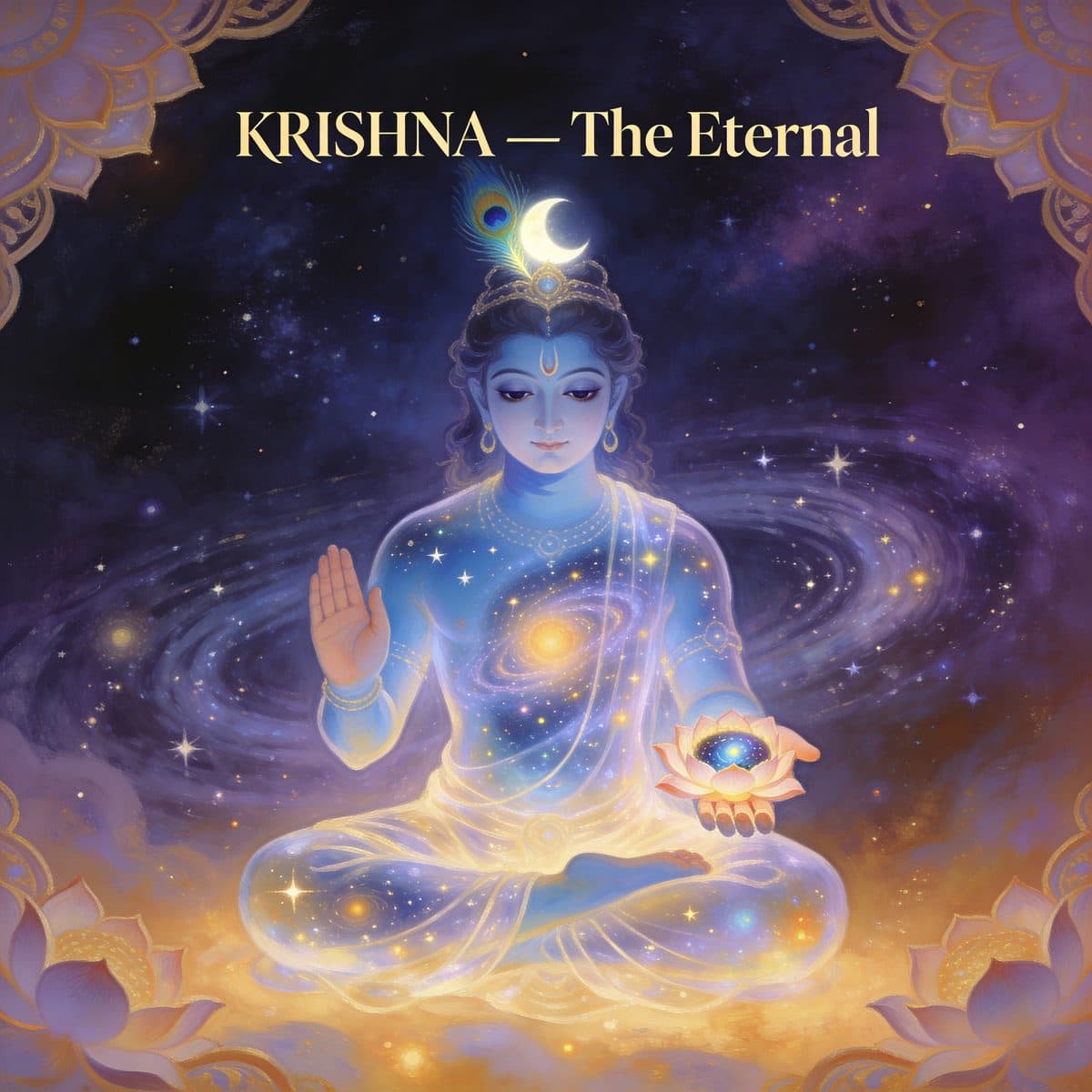
Lord Krishna
Divine TeacherThe Supreme Lord, the charioteer and divine guide of Arjuna. Krishna delivers the eternal wisdom of the Gita, revealing the nature of the soul, duty, and the path to liberation.
Speaking: Chapter 18, Verse 56
Verse 56
The Yoga of Liberation through Renunciation
Always performing all actions, taking refuge in me — through my grace one attains the eternal, imperishable state.
Context & Meaning
The teaching reaches a new level of generosity here: sarvakarmāṇyapi — all actions, even all of them. There is no action that needs to be excluded from the devotional life. The householder performing worldly duties, the warrior fighting, the merchant trading, the servant serving — all of these, if performed with mad-vyapāśrayaḥ (taking refuge in God), lead through divine grace to the śāśvata pada avyayam — the eternal, imperishable state. This is the grace of the personal God: not the impersonal law that says "if you do this, you will get that," but the living love that meets the sincere devotee wherever they are and carries them to where they could never carry themselves.
Scholar Commentaries
1 commentary · Public domainRamanujacharya
VishishtadvaitaMatprasādādavāpnoti — through my grace one attains. The Vishishtadvaita tradition finds here the most explicit statement of the role of divine grace in liberation: it is not merely the seeker's effort and merit that secure the eternal state but the prasāda — the grace — of Bhagavān himself. The devotee's refuge (vyapāśraya) in God is the condition; the grace is the gift. This is why even the one who performs all the mundane duties of life can attain the supreme — because the supreme is not earned by perfect action but received through genuine refuge. The path is always shorter than the ego imagines, because the destination is always closer than the ego knows.