
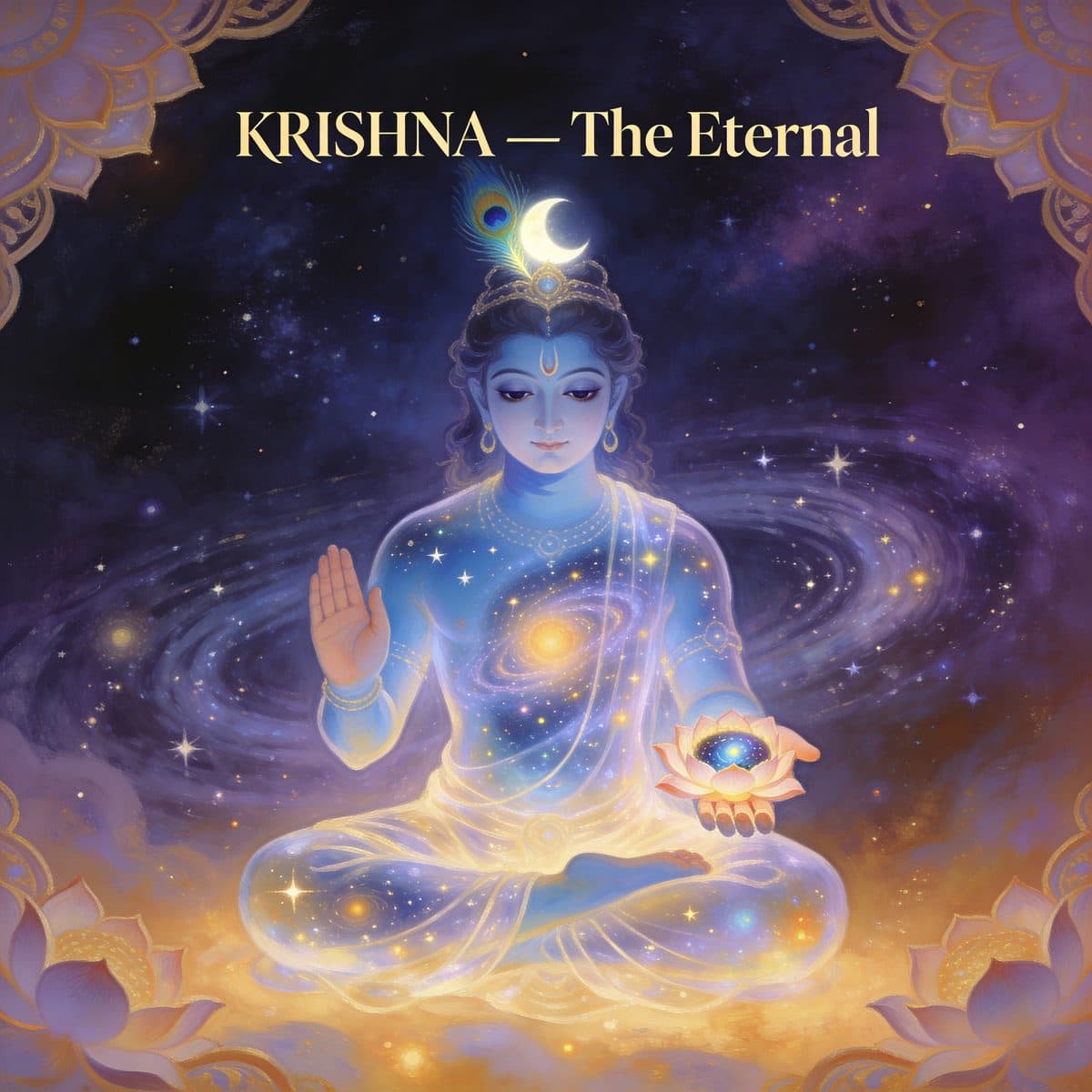
Lord Krishna
Divine TeacherThe Supreme Lord, the charioteer and divine guide of Arjuna. Krishna delivers the eternal wisdom of the Gita, revealing the nature of the soul, duty, and the path to liberation.
Speaking: Chapter 18, Verse 57
Verse 57
The Yoga of Liberation through Renunciation
Mentally renouncing all actions into me, making me the supreme goal, taking refuge in the yoga of discernment — always keep your mind in me.
Context & Meaning
Krishna now gives Arjuna a specific practical instruction. Cetasā — through the mind — surrender all actions into God. This is the inner act that complements and completes the external performance of duty: mentally, in each moment, the action is released into the divine. Mat-paraḥ — making God the supreme goal, the ultimate orientation. Buddhi-yogam upāśritya — taking refuge in the yoga of discernment, using the purified intellect to navigate each situation. Mac-cittaḥ satataṃ bhava — always keep your mind in me. This is not a part-time practice but a constant orientation of consciousness. The mind that is always in God is the mind that has found its natural home.
Scholar Commentaries
1 commentary · Public domainMadhvacharya
DvaitaMaccittaḥ satataṃ bhava — always keep your mind in me. This is the Dvaita practice of continual remembrance (anusandhāna): the mind that is always in Vishnu is the mind that sees everything as pervaded by Vishnu. This is not a suppression of normal life but its transformation: every event, every encounter, every object becomes a face of the divine presence, and the mind naturally rests in that presence rather than grasping outward at appearances. Buddhi-yoga here is the practical tool: the disciplined use of the discerning intellect to maintain this orientation even when circumstances pull against it.