
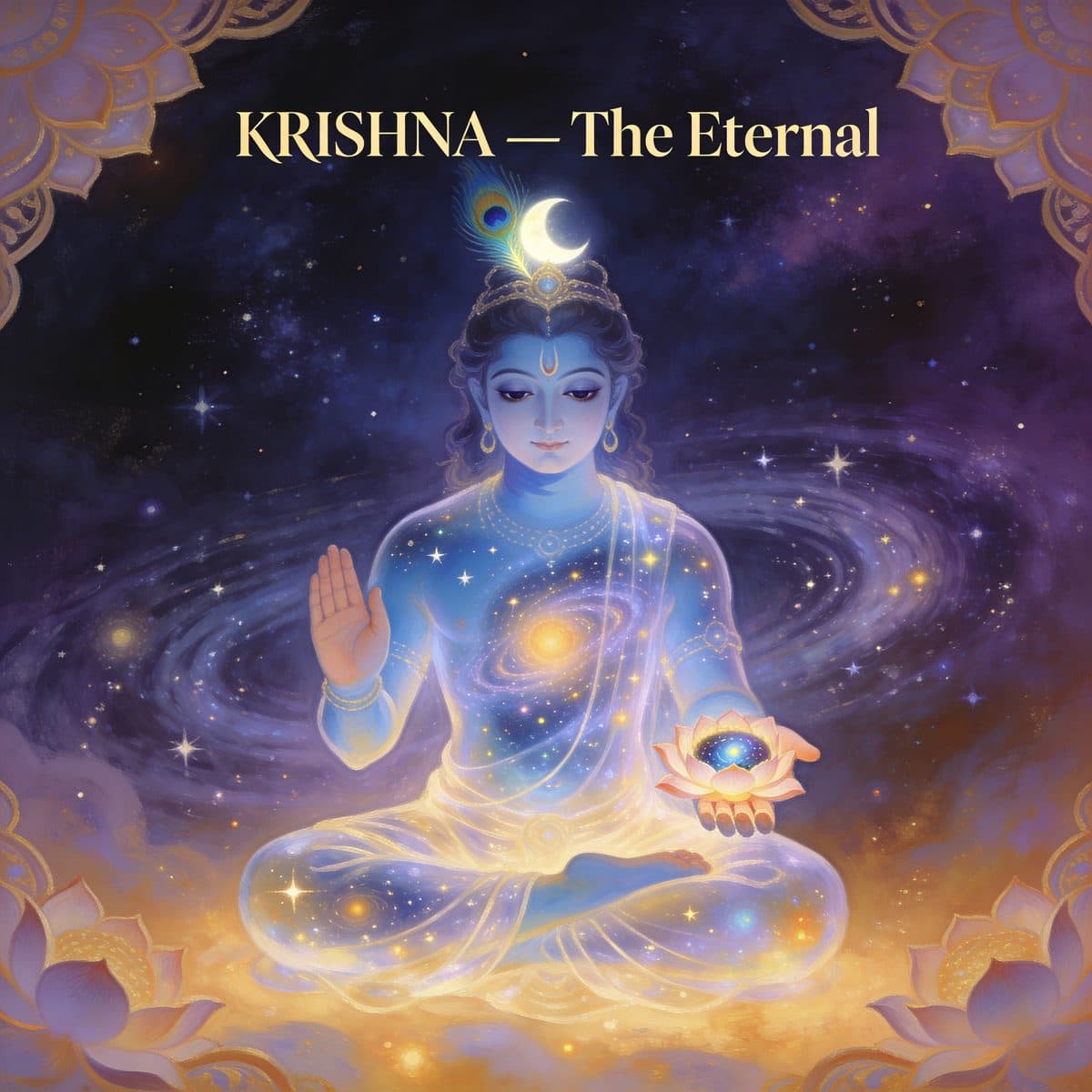
Lord Krishna
Divine TeacherThe Supreme Lord, the charioteer and divine guide of Arjuna. Krishna delivers the eternal wisdom of the Gita, revealing the nature of the soul, duty, and the path to liberation.
Speaking: Chapter 18, Verse 54
Verse 54
The Yoga of Liberation through Renunciation
Becoming Brahman, with a joyful self, one neither grieves nor desires; equal to all beings, one attains supreme devotion to me.
Context & Meaning
This verse describes a remarkable movement: the one who has become Brahman — who has realised their identity with the absolute — does not remain at a distance from devotion. Instead, from the platform of Brahman-realisation, they attain parā bhakti — supreme devotion. This is the Gita's reconciliation of the path of knowledge and the path of devotion: Brahman-realisation is not the end but the precondition for the highest love. The prasannātmā (joyful self), the one who neither grieves nor desires, the one who sees all beings with sameness — this person has the inner freedom required for love in its purest and most universal form. Devotion without this freedom is always coloured by personal need; devotion with this freedom is pure offering.
Scholar Commentaries
1 commentary · Public domainMadhvacharya
DvaitaBrahmabhūtaḥ... madbhaktiṃ labhate parām — becoming Brahman... attains supreme devotion to me. The Dvaita reading does not accept that the soul literally becomes Brahman — the soul remains always a distinct reality from the divine. Rather, brahmabhūta here means the soul realising its own divine nature as Vishnu's eternal servant — free, luminous, without the distortions of ego — and from that realised condition, attaining the highest devotion. The path of knowledge purifies the devotee; devotion then reaches its fullness in the pure heart. These are not competing paths but sequential stages of the same journey.