
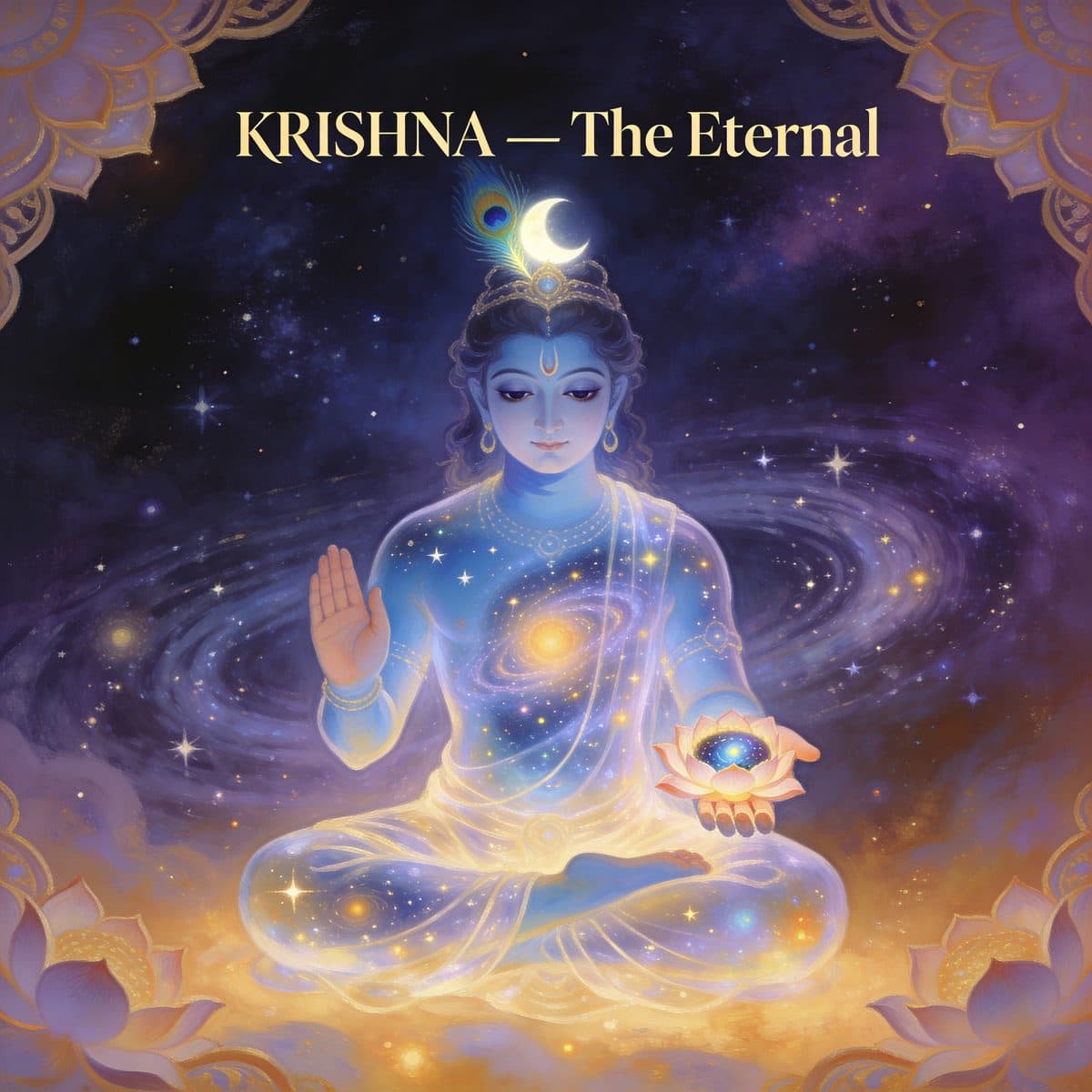
Lord Krishna
Divine TeacherThe Supreme Lord, the charioteer and divine guide of Arjuna. Krishna delivers the eternal wisdom of the Gita, revealing the nature of the soul, duty, and the path to liberation.
Speaking: Chapter 18, Verse 53
Verse 53
The Yoga of Liberation through Renunciation
Freed from ego, force, arrogance, desire, anger, and possessiveness; without the sense of "mine"; peaceful — one becomes fit for union with Brahman.
Context & Meaning
The third and culminating cluster of conditions: freedom from ahaṅkāra (ego-sense), bala (the aggressive assertion of personal power), darpa (arrogance — the ego's pride in its own accomplishments), kāma (desire), krodha (anger — the ego's reaction when desire is frustrated), parigraha (possessiveness, grasping), nirmama (the absence of the "mine" sense — the "my" that turns everything into personal property), and śānta (peaceful — the natural condition of the mind freed from all these agitations). When all of these are genuinely released, one becomes fit (kalpate) for brahmabhūya — union with, or recognition of, Brahman. This is the preparation complete; realisation can now dawn.
Scholar Commentaries
1 commentary · Public domainRamanujacharya
VishishtadvaitaNirmamaḥ śānto brahmabhūyāya kalpate — without the sense of mine, peaceful, fit for Brahman. The Vishishtadvaita reading sees this verse as describing the soul in its most transparent condition: all the opaque layers of ego-possession have been removed, and the soul stands clear — a pure medium for the divine light. In this state, brahmabhūya is not absorption but the fullest expression of the soul's eternal nature as it stands in the divine presence: clear, bright, at peace, without any separating wall of "mine." This is the condition of the perfected devotee — not self-annihilation but perfect self-transparency.