
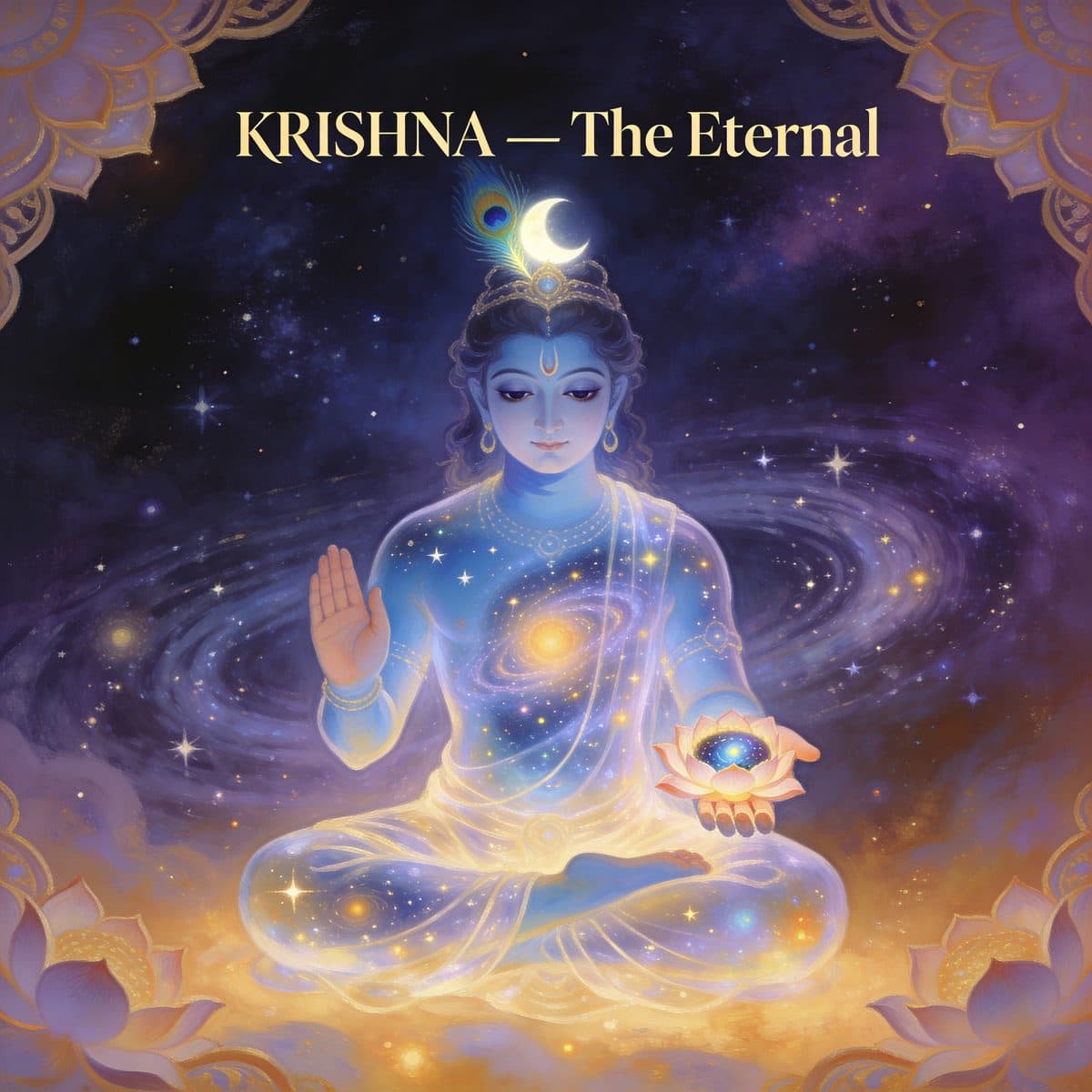
Lord Krishna
Divine TeacherThe Supreme Lord, the charioteer and divine guide of Arjuna. Krishna delivers the eternal wisdom of the Gita, revealing the nature of the soul, duty, and the path to liberation.
Speaking: Chapter 18, Verse 52
Verse 52
The Yoga of Liberation through Renunciation
Dwelling in solitude, eating lightly, controlling speech, body, and mind, always devoted to meditation-yoga, taking refuge in dispassion —
Context & Meaning
The second cluster of conditions for Brahman-realisation: vivikta-sevī (frequenting solitude, giving the mind the space of quietude away from constant social stimulation), laghvāśī (eating lightly — the discipline of diet that supports clear awareness), yata-vāk-kāya-mānasaḥ (controlling speech, body, and mind — the threefold discipline of outer and inner conduct), dhyāna-yoga-para nityam (always devoted to the practice of meditation-yoga), and vairāgya (dispassion — the genuine and deepening freedom from the pull of sense-objects and worldly attachments). These are the marks of the mature spiritual practitioner in the midst of their path.
Scholar Commentaries
1 commentary · Public domainAdi Shankaracharya
AdvaitaDhyānayogaparo nityam — always devoted to meditation-yoga. The Advaita teaching holds that meditation is the proximate means of realisation: it is the practice through which the mind learns to rest in its source, gradually releasing its habitual outward movement and discovering the stillness from which it springs. Vairāgya — dispassion — is not a harsh rejection of the world but the natural consequence of deepening meditation: when one begins to taste the inner bliss that is independent of objects, the desperate hunger for external pleasures naturally releases its grip. Vairāgya is the by-product of finding a better happiness, not the suppression of the hunger for happiness.