
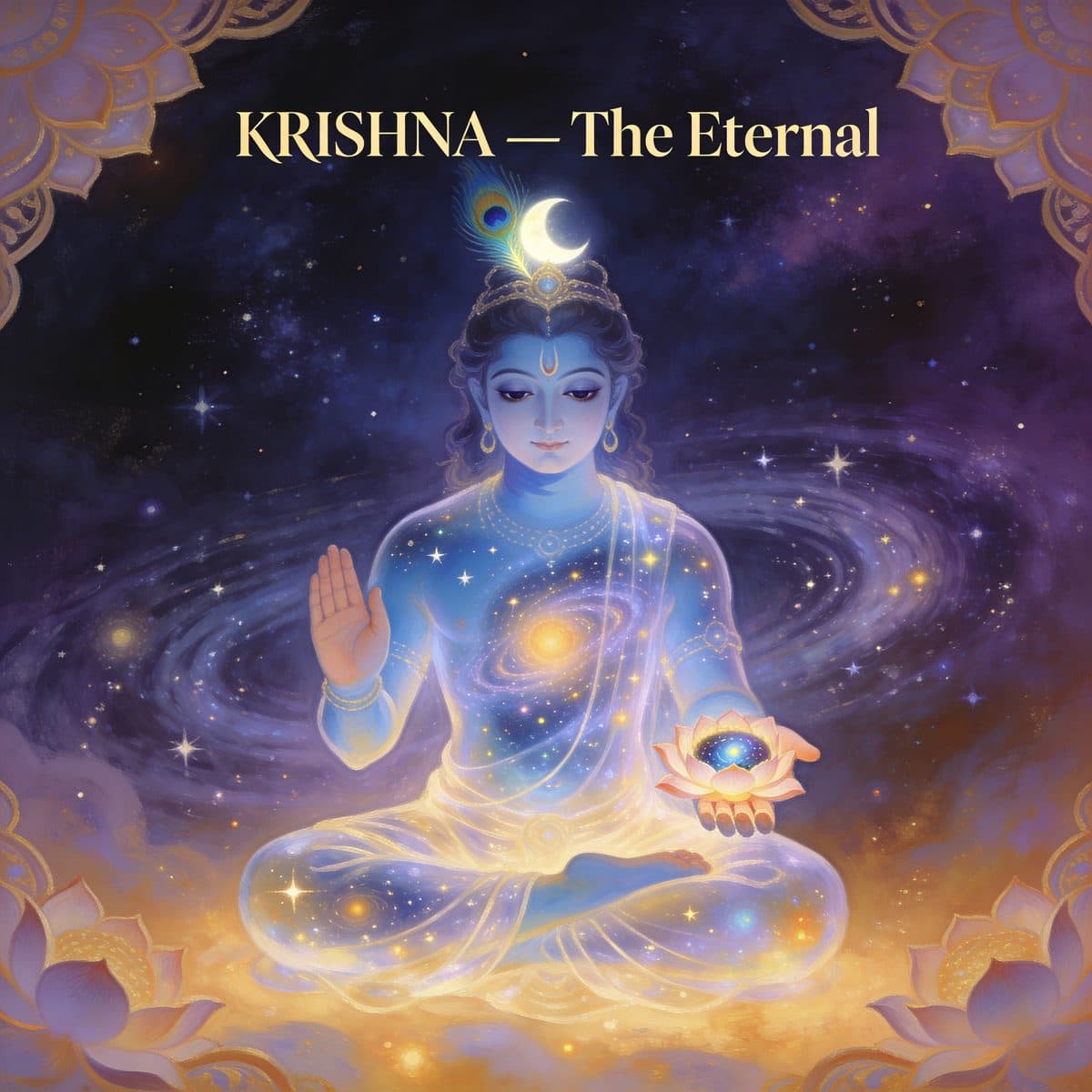
Lord Krishna
Divine TeacherThe Supreme Lord, the charioteer and divine guide of Arjuna. Krishna delivers the eternal wisdom of the Gita, revealing the nature of the soul, duty, and the path to liberation.
Speaking: Chapter 18, Verse 39
Verse 39
The Yoga of Liberation through Renunciation
That happiness which deludes the self at first and in the end, arising from sleep, laziness, and heedlessness — that is called tamasic.
Context & Meaning
Tamasic happiness is the strangest of the three: it is deluding (mohana) both at first and in the end. It arises from nidrā (excessive sleep), ālasya (laziness), and pramāda (heedlessness, negligence). This is the "happiness" of unconsciousness — the relief of not having to be awake to one's life, the comfort of not engaging, the pleasure of avoidance and escape. Unlike rajasic pleasure, which at least offers genuine pleasure before its destructive consequences, tamasic pleasure doesn't even deliver: it is merely the absence of the discomfort of awareness. It is the happiness of the person who says "at least I'm not suffering" while remaining entirely asleep to the possibility of genuine joy.
Scholar Commentaries
1 commentary · Public domainMadhvacharya
DvaitaMohanam ātmanaḥ — deluding to the self. The Dvaita reading notes that tamasic happiness is the most complete form of self-deception: it convinces the soul that it has found a resting place, when what it has found is simply the absence of effort. Pramāda — heedlessness — is particularly important here: the tamasic person mistakes the peace of not-paying-attention for the peace of liberation. True peace (śānti) arises from the presence of awareness, not from its absence. The path out of tamasic happiness is not more pleasure-seeking (which would be rajasic) but the gentle cultivation of wakefulness — first to the body, then to the mind, then to the spirit.