
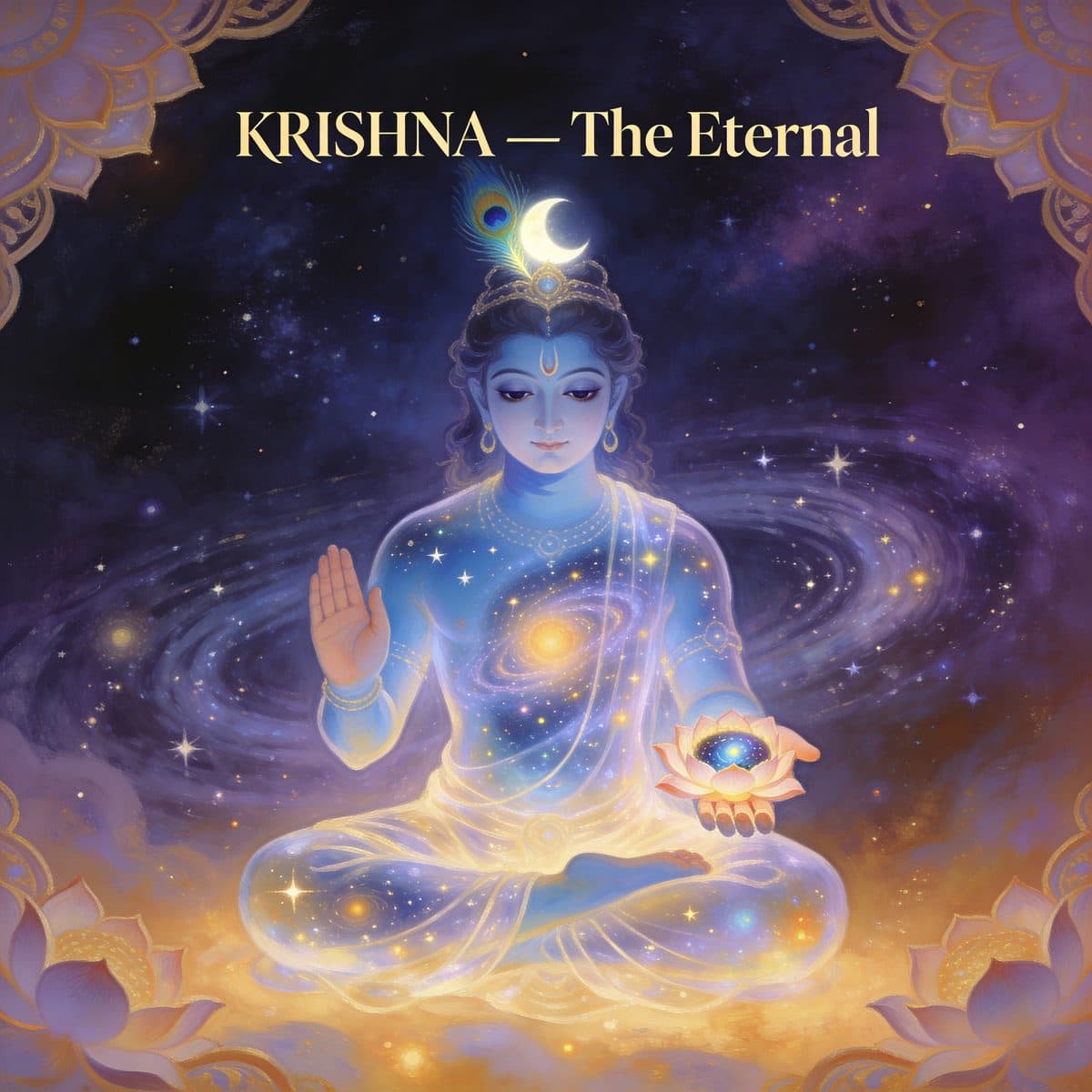
Lord Krishna
Divine TeacherThe Supreme Lord, the charioteer and divine guide of Arjuna. Krishna delivers the eternal wisdom of the Gita, revealing the nature of the soul, duty, and the path to liberation.
Speaking: Chapter 18, Verse 38
Verse 38
The Yoga of Liberation through Renunciation
That happiness which arises from the contact of senses and sense-objects, which seems like nectar at first but is like poison in the end — that is called rajasic.
Context & Meaning
The sattvic happiness is exactly inverted in its temporal structure: it is nectar at the end. Rajasic happiness — the happiness of sensory pleasure, of getting what we desire — is the reverse: nectar at first, poison at the end. This is one of the most practically important teachings in the Gita. Every person who has experienced the pattern of desire, gratification, and the subsequent emptiness or craving knows this structure. The pleasure is real; so is the subsequent suffering. The rajasic happiness arises from viṣayendriya-saṃyoga — the contact of senses with their objects — and it is inherently impermanent because the contact cannot be maintained and the hunger returns stronger than before.
Scholar Commentaries
1 commentary · Public domainRamanujacharya
VishishtadvaitaPariṇāme viṣamiva — like poison in the end. The Vishishtadvaita reading sees this not as an ascetic judgment on sensory pleasure but as a clear-eyed description of its actual structure. Pleasure arising from sense-contact is not evil — it is limited and impermanent. The problem is when it is pursued as the highest happiness, when it is mistaken for what the soul actually hungers for. The soul that mistakes sensory pleasure for the happiness of God-realisation is not sinful — it is confused. The Gita's compassion is to clarify the confusion: if you want what is nectar at the end, cultivate sattvic practice. If you settle for what is nectar only at first, you will exhaust yourself in an endless cycle of pleasure and pain.