
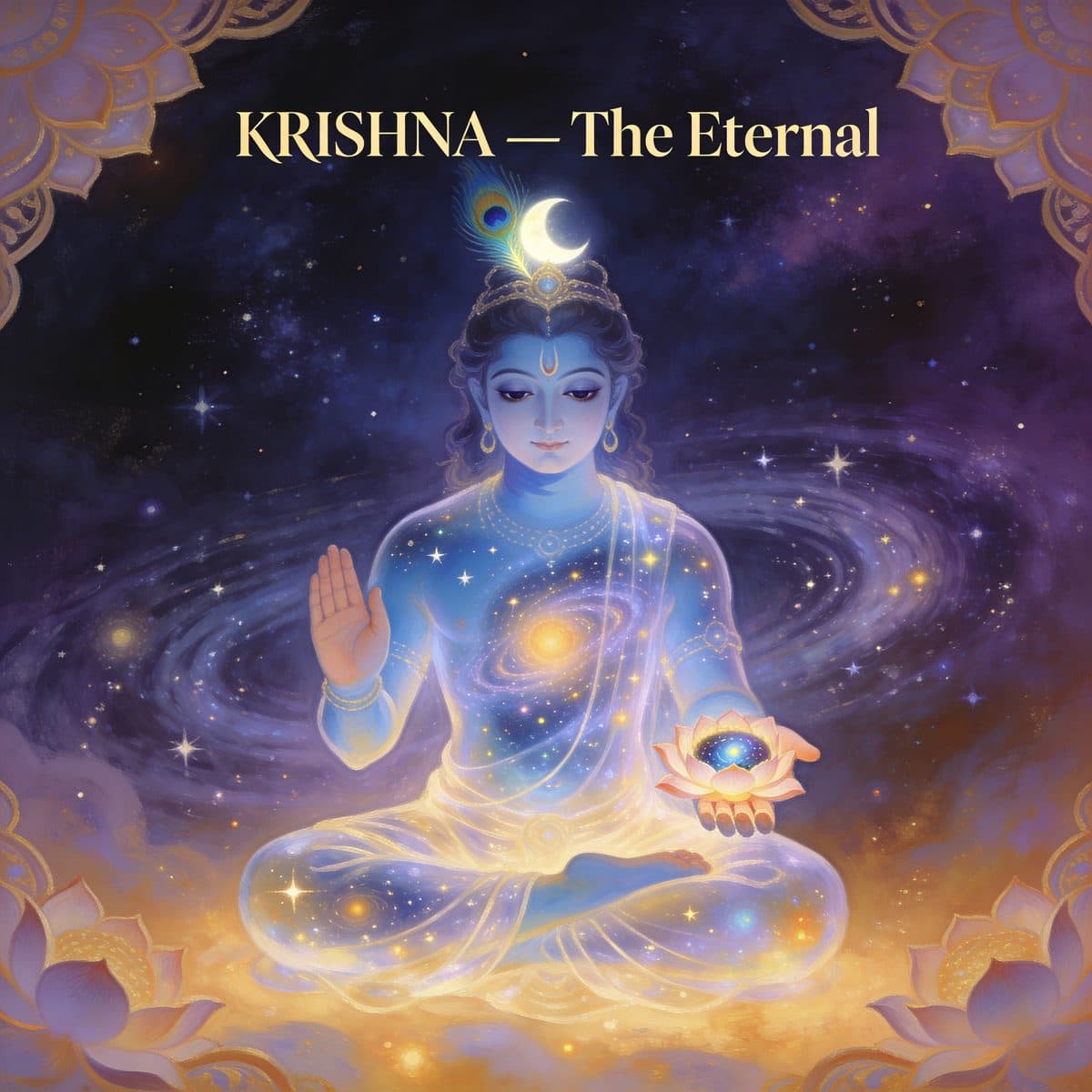
Lord Krishna
Divine TeacherThe Supreme Lord, the charioteer and divine guide of Arjuna. Krishna delivers the eternal wisdom of the Gita, revealing the nature of the soul, duty, and the path to liberation.
Speaking: Chapter 18, Verse 37
Verse 37
The Yoga of Liberation through Renunciation
That which is like poison at first but like nectar at the end — that happiness, born of the clarity of the Self and intellect, is declared sattvic.
Context & Meaning
The most perfect verse in the Gita's analysis of happiness describes the sattvic experience with a paradox that every serious spiritual practitioner recognises: what begins as poison — difficult, demanding, uncomfortable, even painful — becomes nectar at the end. The spiritual life begins with the dissolution of the ego's familiar pleasures, the disruption of comfortable routines, the confrontation with one's own shadow. This is "poison at first." But the end is amṛta — nectar, the immortal. This happiness is ātmabuddhi-prasādajam — born of the clarity (prasāda, literally "grace" or "purity") of the Self and intellect. It comes not from outside but from within, as the natural radiance of awareness when it comes to rest in its own nature.
Scholar Commentaries
1 commentary · Public domainAdi Shankaracharya
AdvaitaAgre viṣamiva — like poison at first. The Advaita teaching is precise here: the apparent poison of spiritual life is the dissolution of the ego's constructions — the loss of what the ego called pleasure, security, and identity. These losses feel like deaths. But they are the death of illusion, not of reality. On the other side of them is ātmabuddhi-prasāda — the grace-clarity of the Self, which is the only happiness that is not constructed, not maintained by conditions, not subject to loss. This is Ānanda — the bliss of pure Being — not because circumstances are good but because the awareness has come home to itself.