
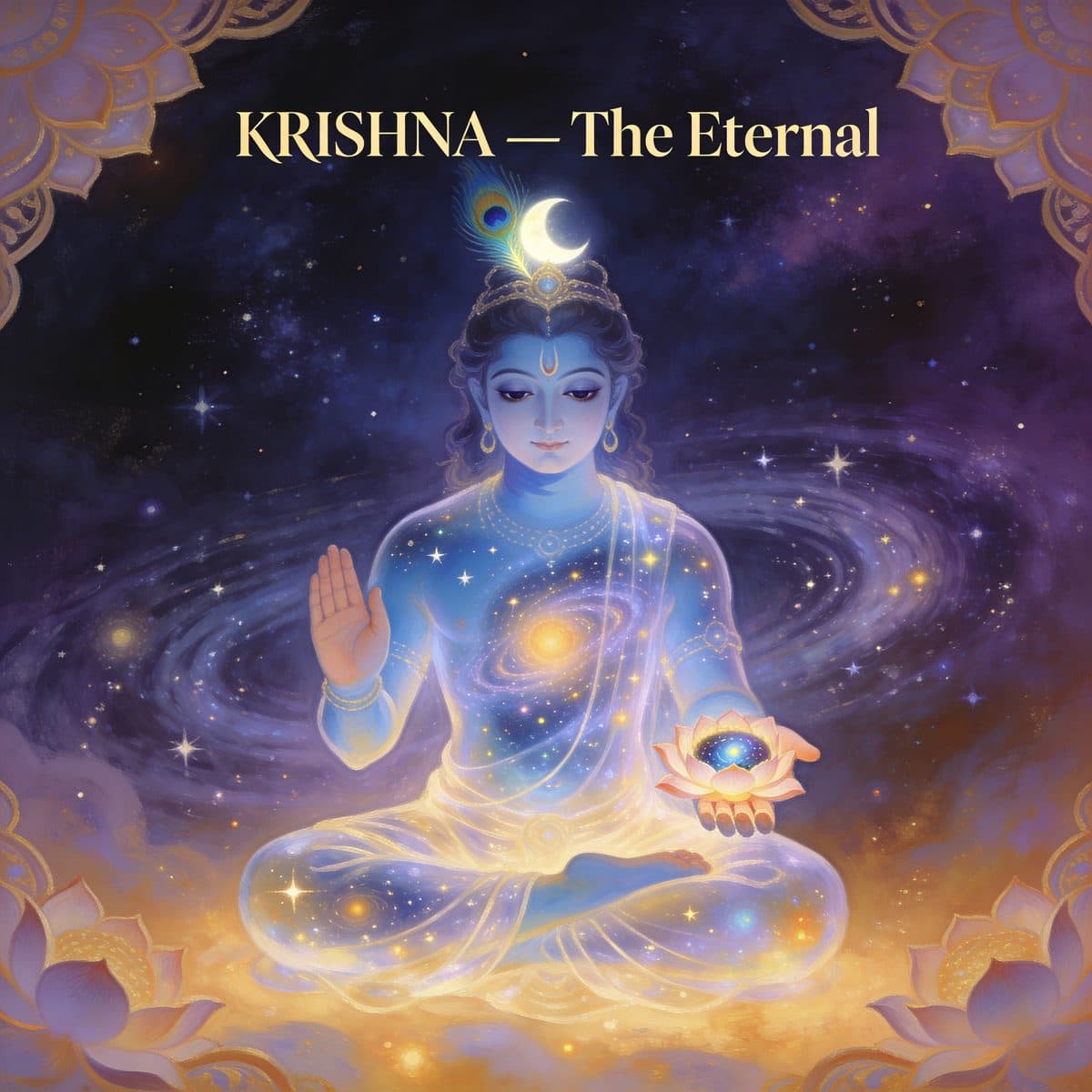
Lord Krishna
Divine TeacherThe Supreme Lord, the charioteer and divine guide of Arjuna. Krishna delivers the eternal wisdom of the Gita, revealing the nature of the soul, duty, and the path to liberation.
Speaking: Chapter 18, Verse 36
Verse 36
The Yoga of Liberation through Renunciation
Now hear from me, O best of the Bharatas, about the three kinds of happiness. That happiness in which one delights through practice, and by which one reaches the end of suffering —
Context & Meaning
Krishna now turns to happiness — sukha — and applies the same threefold Guna-analysis. This transitional verse introduces the analysis with a key characteristic of the highest form of happiness: it comes through abhyāsa (practice, repeated engagement) and it leads to the end of suffering (duḥkhānta). This is a crucial pointer: the deepest happiness is not available to the beginner, not immediately pleasurable, requires cultivation — and it dissolves suffering at the root rather than temporarily relieving it. This description already tells us that the highest sukha will not look like what we ordinarily call pleasure.
Scholar Commentaries
1 commentary · Public domainMadhvacharya
DvaitaAbhyāsādramate — delights through practice. The Dvaita tradition sees spiritual joy as the natural fruit of bhakti cultivated over time. Devotion practiced consistently — whether in formal worship, meditation, chanting, service, or the constant mental offering of all acts to Vishnu — gradually deepens from a willed practice into a natural radiance. The practitioner begins by doing devotion and gradually discovers that devotion is doing them. This is the happiness that grows through practice and ends suffering: not relief from circumstances but the discovery of an inner spring that flows regardless of circumstances.