
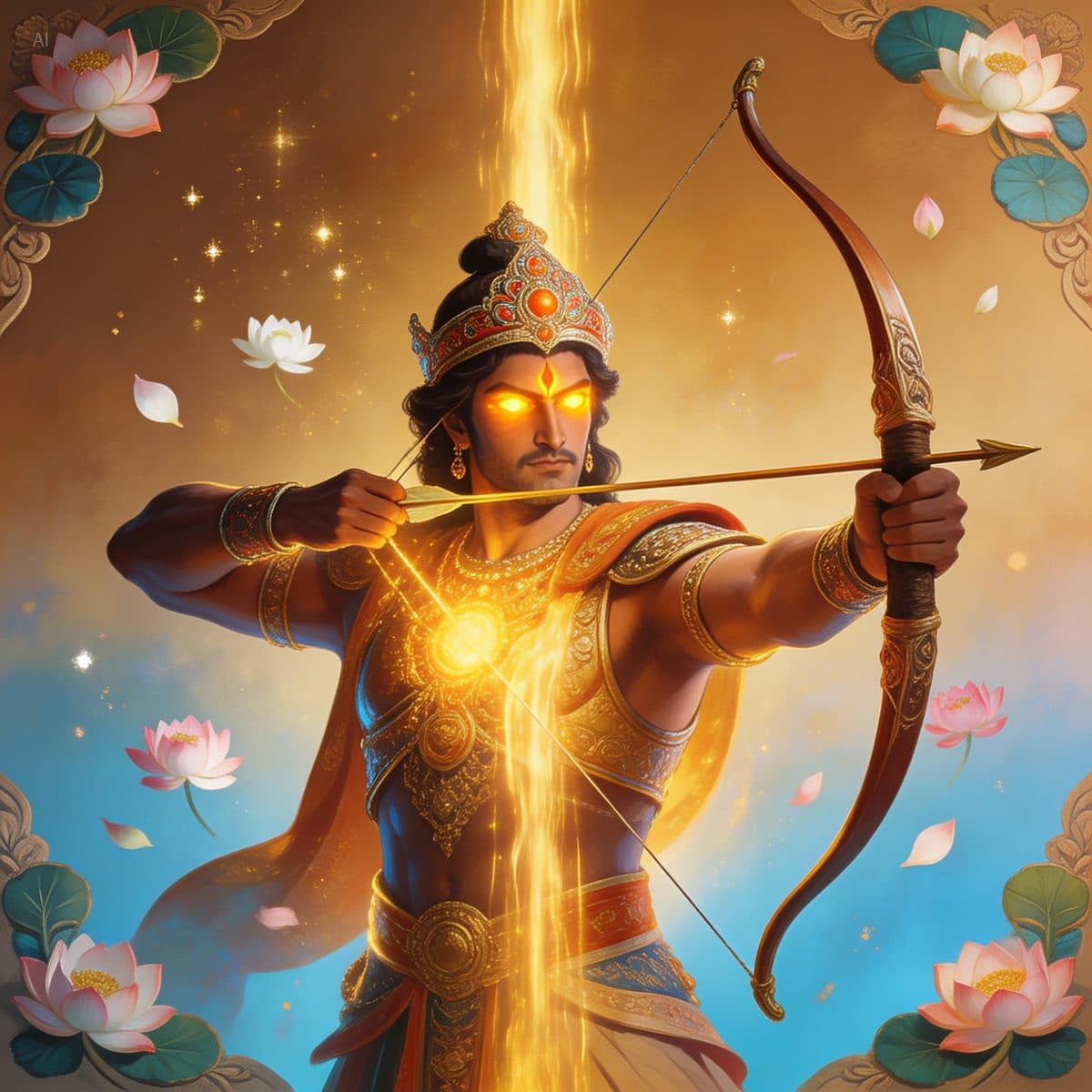
Arjuna
Devotee & WarriorThe great Pandava warrior and skilled archer. Overwhelmed by moral dilemma on the battlefield, he seeks guidance from Krishna, becoming the ideal disciple.
Speaking: Chapter 18, Verse 1
Verse 1
The Yoga of Liberation through Renunciation
Arjuna said: O mighty-armed one, I desire to know the truth of renunciation (sannyasa) and of relinquishment (tyaga) separately, O Hrishikesha, O slayer of Keshi.
Context & Meaning
Arjuna opens the final chapter with a precise philosophical question that has been implicit throughout the entire Gita: what is the difference between sannyasa — the complete renunciation of action itself — and tyaga — the relinquishment of the fruits of action? This distinction is not academic. It determines whether a person living in the world, performing duties, raising a family, fighting battles, can truly walk a spiritual path — or whether liberation requires physical withdrawal from all activity. Arjuna addresses Krishna with three names here: Mahābāhu (mighty-armed), Hrishikesha (master of the senses), and Keshinishudana (slayer of the demon Keshi). Each name is chosen with care — the question is about action and its renunciation, and it is posed to the one who is simultaneously the greatest actor in the cosmos and its supreme master.
Scholar Commentaries
1 commentary · Public domainAdi Shankaracharya
AdvaitaArjuna's question is the culminating inquiry of the entire Gita. Sannyasa — the renunciation of action itself — and tyāga — the renunciation of the fruits of action — appear to be related yet distinct. The Advaita reading sees this distinction as pointing to two levels of understanding: for the one who has realised the Self, even the appearance of action is transcended (sannyasa); for the one still on the path, the giving up of results while performing action (tyāga) is the practical discipline. Krishna will show that true sannyasa and true tyāga converge in the highest realisation.