
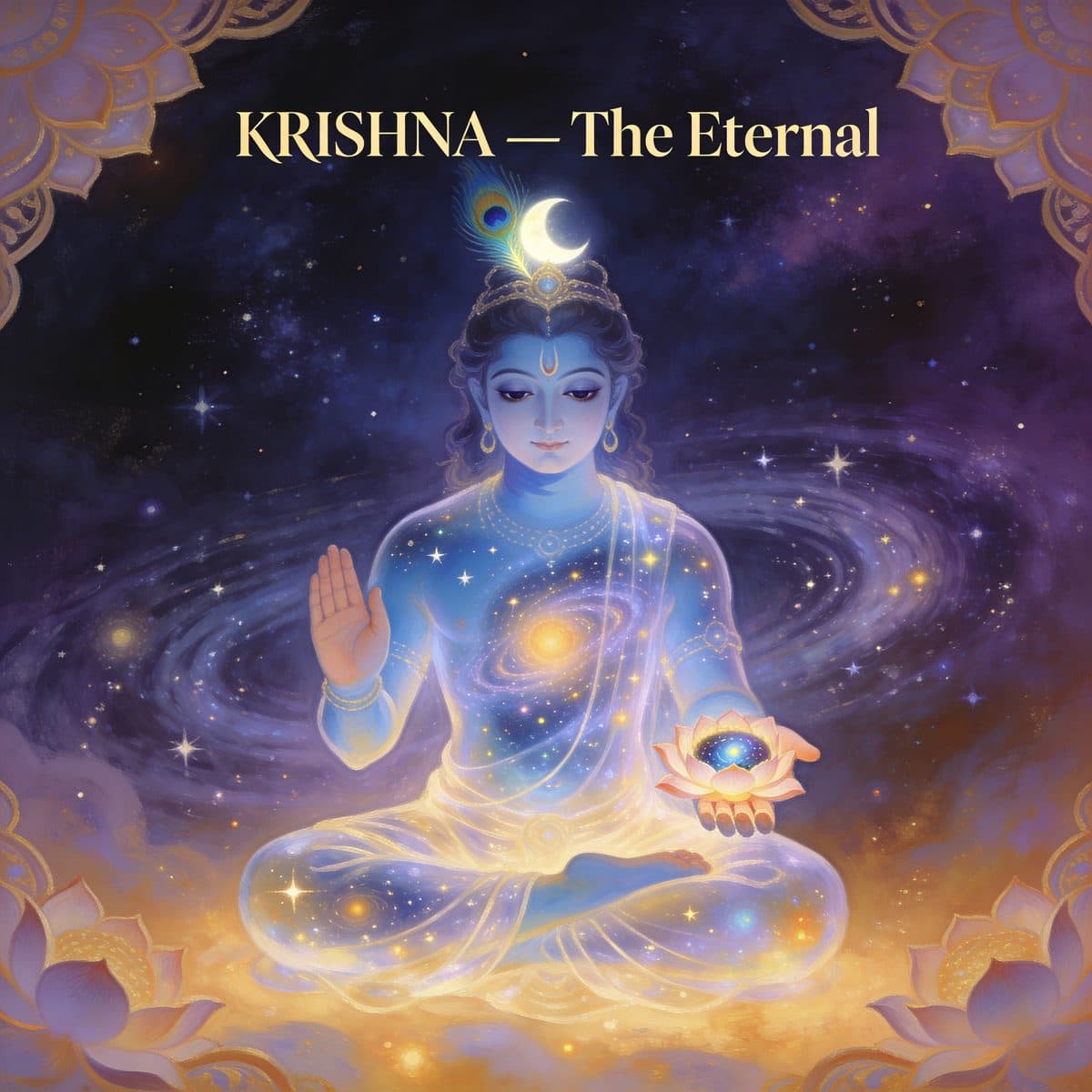
Lord Krishna
Divine TeacherThe Supreme Lord, the charioteer and divine guide of Arjuna. Krishna delivers the eternal wisdom of the Gita, revealing the nature of the soul, duty, and the path to liberation.
Speaking: Chapter 18, Verse 2
Verse 2
The Yoga of Liberation through Renunciation
The Supreme Lord said: The sages know sannyasa as the giving up of action motivated by desire. The wise call tyaga the relinquishment of the fruits of all actions.
Context & Meaning
Krishna opens his final discourse by defining his terms with precision. Sannyasa, as understood by the sages (kavayo), means giving up kāmya-karma — actions performed out of personal desire for specific results: the desire for wealth, pleasure, prestige, or even heaven. Tyāga, as understood by the wise (vicakṣaṇāḥ), means something broader and more radical: giving up the fruits of all actions — not just the obviously self-motivated ones, but every action, including duties performed in one's given role. These two definitions are not contradictory but complementary. Sannyasa purifies the motivation for action; tyāga purifies the relationship to results. Together they describe the inner architecture of the liberated actor — one who acts out of dharma rather than desire, and who releases outcomes to God rather than clutching them as personal property.
Scholar Commentaries
1 commentary · Public domainRamanujacharya
VishishtadvaitaThe Vishishtadvaita reading emphasises the positive content of this teaching: to give up desire-motivated action and the fruit of all action is not a counsel of passivity but of reorientation. Actions done for God — for the maintenance of the world, for the expression of one's divine nature — are not abandoned but transformed. The sages and the wise cited here represent two streams of understanding that Krishna will now reconcile: the Sankhya path of renouncing action and the Karma Yoga path of renouncing results. Both, properly understood, arrive at the same place.