
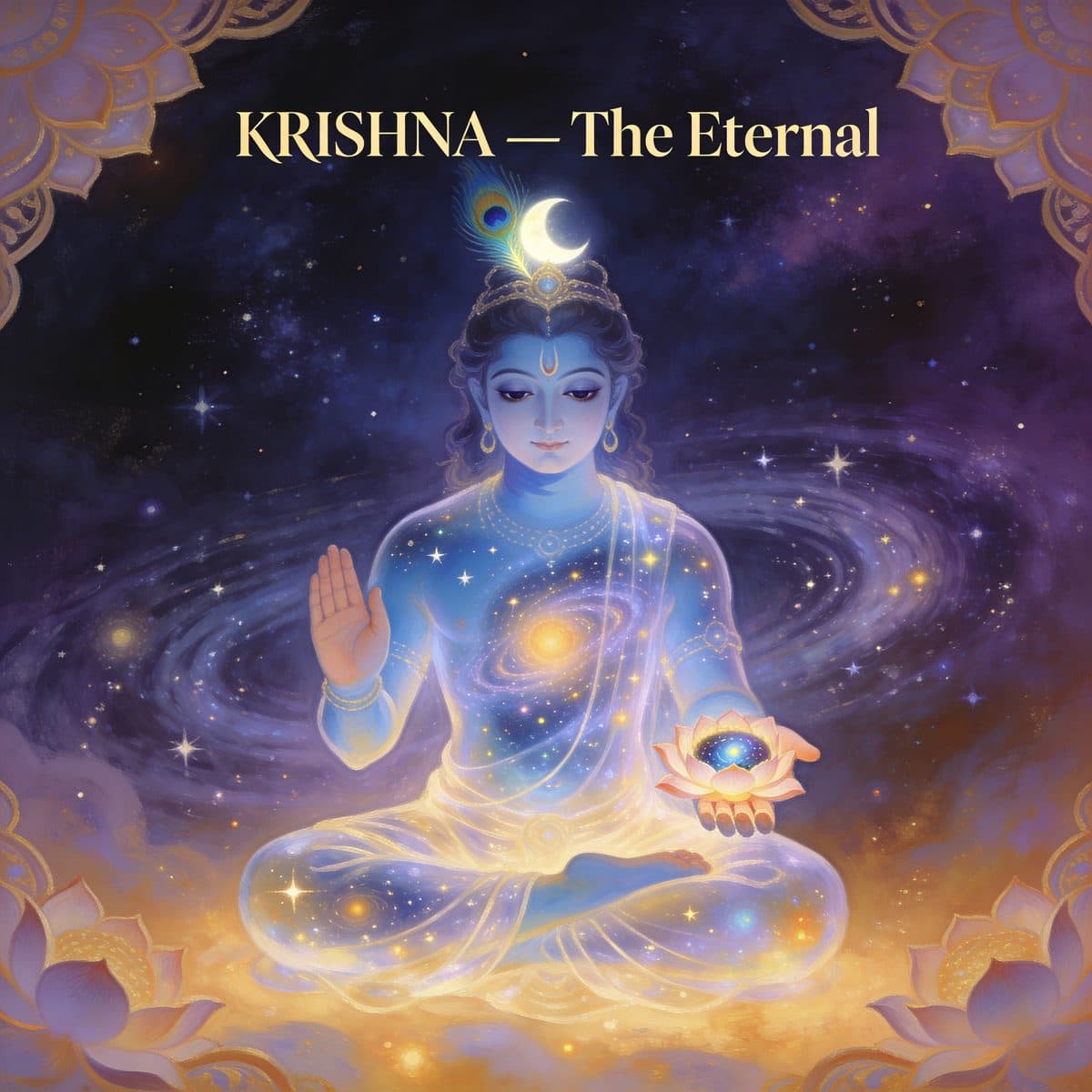
Lord Krishna
Divine TeacherThe Supreme Lord, the charioteer and divine guide of Arjuna. Krishna delivers the eternal wisdom of the Gita, revealing the nature of the soul, duty, and the path to liberation.
Speaking: Chapter 17, Verse 25
Verse 25
The Yoga of the Three Types of Faith
"Tat" — without aiming at the fruit, various acts of sacrifice, austerity, and charity are performed by those who seek liberation.
Context & Meaning
TAT — "That," the unnameable Absolute — is the invocation of those who seek liberation (mokṣa-kāṅkṣibhiḥ). The specific quality associated with TAT is anabhisandhāya phalam — without aiming at any fruit. When an act is dedicated to "That" — to the transcendent reality beyond all personal interest — the attachment to results naturally falls away. There is nothing to claim the fruit for, because the actor has, in that invocation, stepped back from personal ownership of the act. The act is TAT's, the fruit is TAT's, the actor is merely the instrument. This is the deepest form of karma yoga: action performed in the name of the Unnameable.
Scholar Commentaries
1 commentary · Public domainAdi Shankaracharya
AdvaitaTat — That. The Upanishadic tat-tvam-asi (That thou art) is compressed into a single syllable here. To dedicate an action to "Tat" is to acknowledge that the actor, the action, and the fruit all belong to the Absolute — there is no separate agent to claim ownership of results. This is the psychological mechanism of liberation through action: not the suppression of activity but its radical dediction, which dissolves the ego-knot that binds karma to the self.