
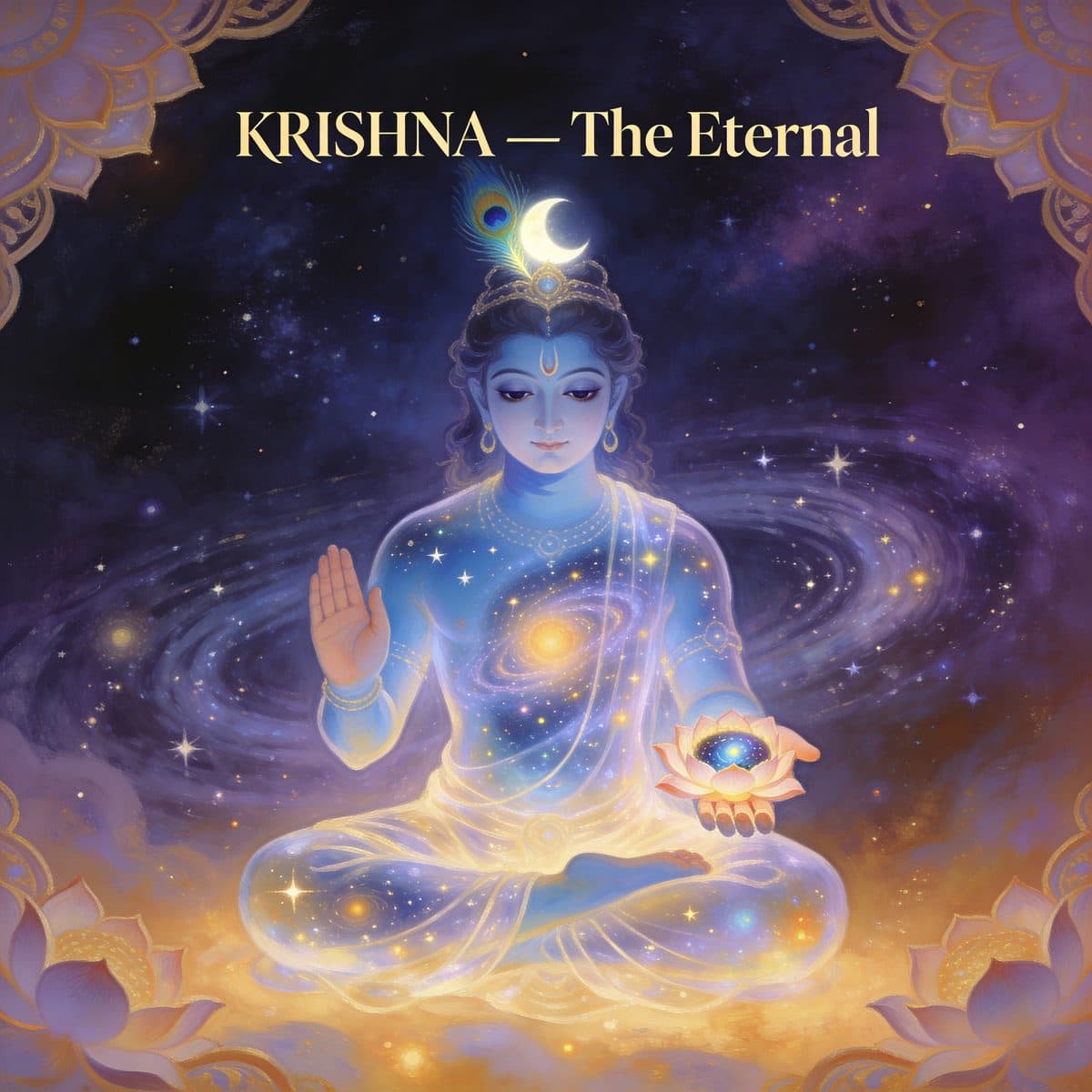
Lord Krishna
Divine TeacherThe Supreme Lord, the charioteer and divine guide of Arjuna. Krishna delivers the eternal wisdom of the Gita, revealing the nature of the soul, duty, and the path to liberation.
Speaking: Chapter 17, Verse 24
Verse 24
The Yoga of the Three Types of Faith
Therefore, uttering "Om," the acts of sacrifice, charity, and austerity, as prescribed in the scriptures, always begin for those who follow Brahman.
Context & Meaning
The practical application of Om Tat Sat: every sacred act — sacrifice, charity, austerity — begins with the invocation of Om by those who walk the path of Brahman (brahma-vādins — followers of the Vedic path of liberation). Om is not merely a preliminary sound but a declaration of intention: this act is being dedicated to the Absolute, not to personal gain. The consecration of an act with Om transforms its nature — not magically, but through the reorientation of the actor's consciousness toward the highest. Every act of sacrifice, giving, or self-discipline that begins with genuine invocation of the Absolute is, from that beginning, a sattvic act.
Scholar Commentaries
1 commentary · Public domainMadhvacharya
DvaitaBrahma-vādinām — for those who speak of Brahman, who live in the direction of Brahman. The invocation of Om is not a formula to be recited by habit but a genuine orientation of the will. The person for whom Om is truly the beginning of action has dedicated their action at its root to the Absolute. For Madhva, this is a form of bhakti: every act thus consecrated is offered to Viṣṇu, the Absolute Person, and is therefore already a devotional act.