
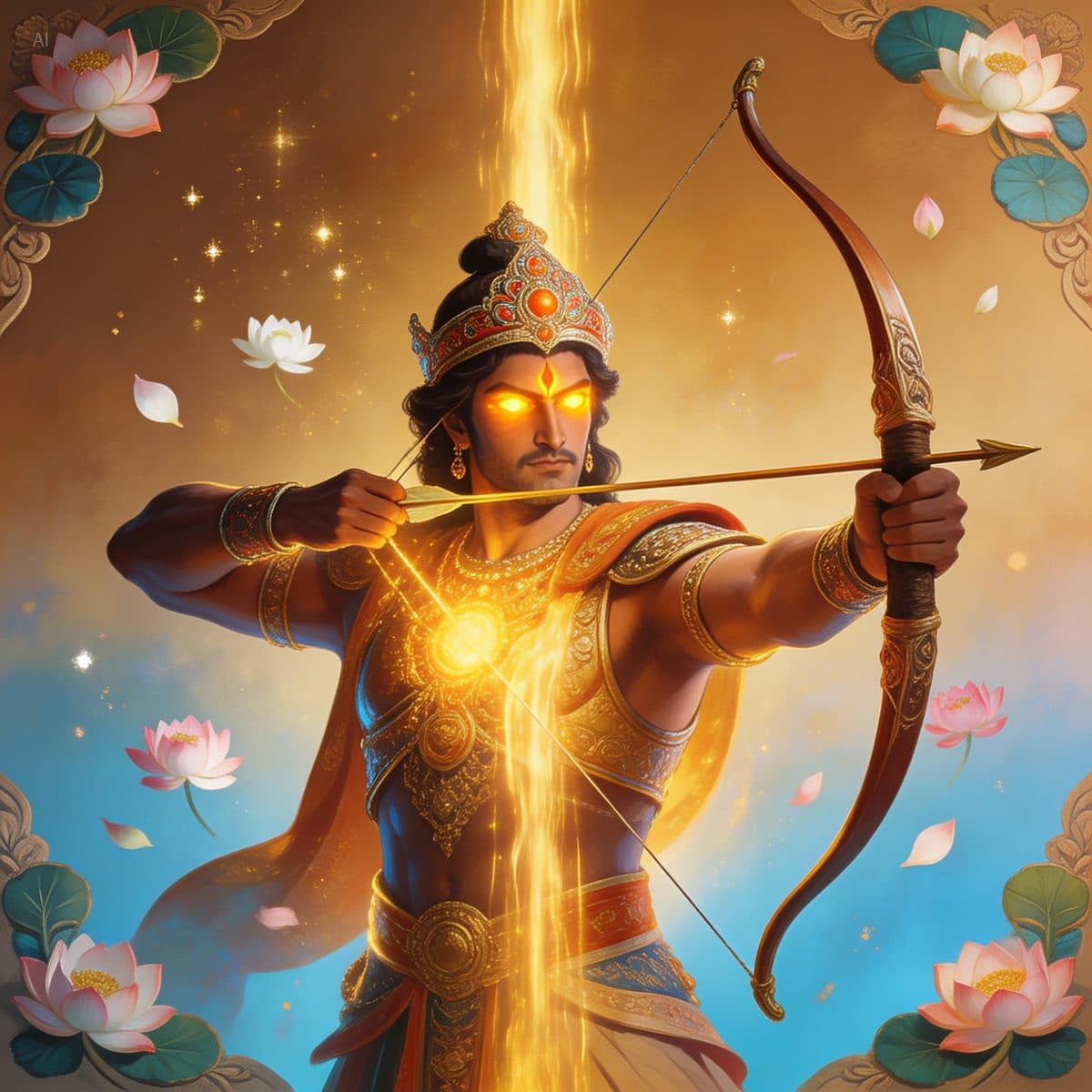
Arjuna
Devotee & WarriorThe great Pandava warrior and skilled archer. Overwhelmed by moral dilemma on the battlefield, he seeks guidance from Krishna, becoming the ideal disciple.
Speaking: Chapter 17, Verse 1
Verse 1
The Yoga of the Three Types of Faith
Arjuna said: Those who, setting aside the injunctions of scripture, worship with faith — what is their standing, O Krishna? Is it sattva, rajas, or tamas?
Context & Meaning
Arjuna's question is precise and practically important: what about people who are genuinely devout, who worship with real faith and sincerity, but who do not follow scriptural prescriptions — perhaps because they don't know them, or belong to traditions outside the Vedic mainstream? The previous chapter ended with scripture as the supreme authority. Arjuna now presses: does sincere faith without scriptural grounding count for anything? This question is not hypothetical — it touches the real lives of millions of seekers across every tradition, in every age, who approach the Divine with full hearts but without formal religious education. Krishna's answer in this chapter will show that faith itself is a force shaped by one's inner nature — and that the quality of faith determines the quality of everything that flows from it.
Scholar Commentaries
1 commentary · Public domainAdi Shankaracharya
AdvaitaArjuna's question is not a challenge to the authority of scripture but a sincere inquiry about the fate of those who worship outside its formal framework. The answer will reveal that śraddhā (faith) is not a single uniform thing but a quality that takes the colour of the guṇa that predominates in the worshipper's nature. Even faith — the most intimate of spiritual capacities — is shaped by the three forces of Prakriti.