
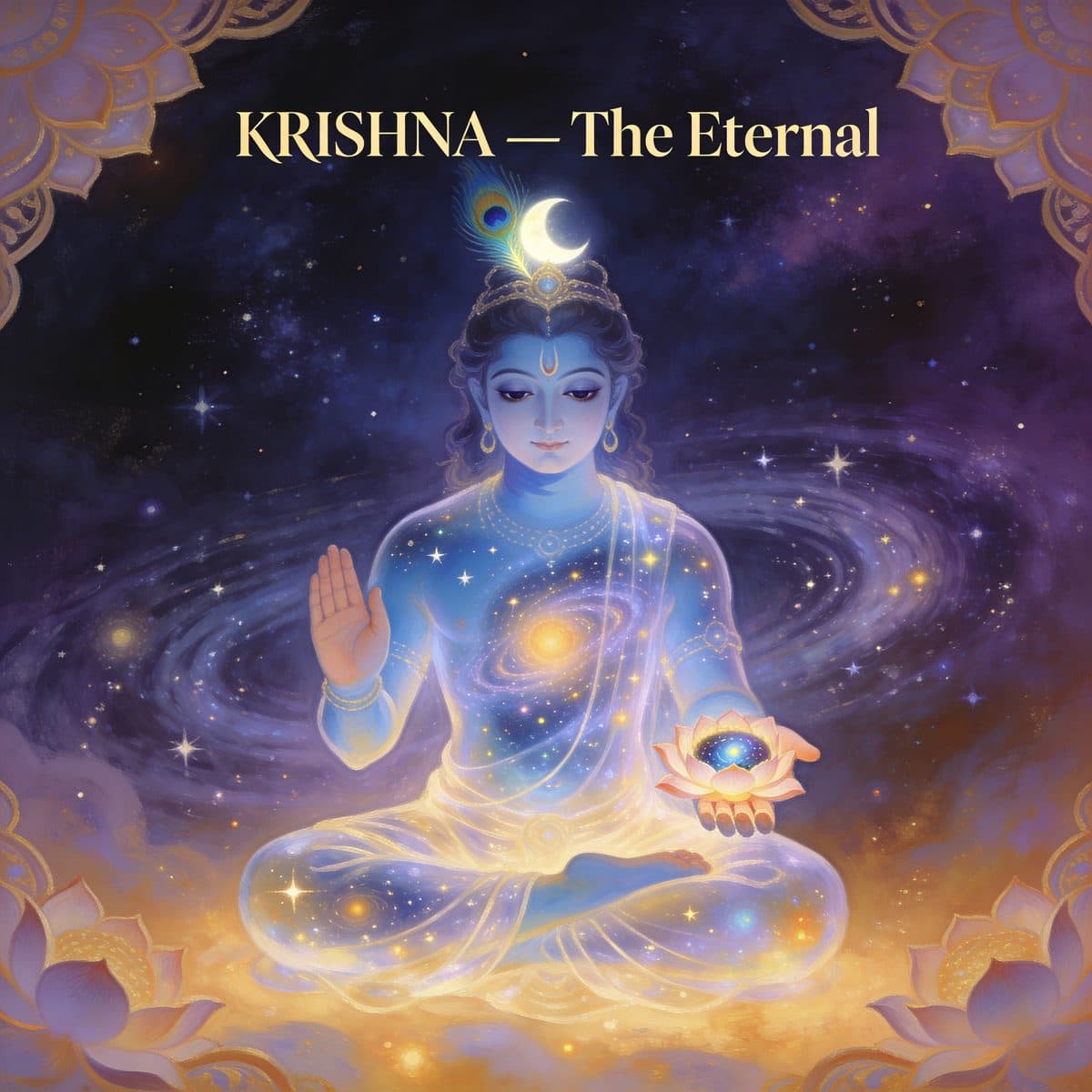
Lord Krishna
Divine TeacherThe Supreme Lord, the charioteer and divine guide of Arjuna. Krishna delivers the eternal wisdom of the Gita, revealing the nature of the soul, duty, and the path to liberation.
Speaking: Chapter 16, Verse 22
Verse 22
The Yoga of the Divine and Demonic Natures
The person who is freed from these three gates of darkness, O son of Kunti, acts for the welfare of the Self and thereby attains the supreme destination.
Context & Meaning
The positive consequence of abandoning the three gates: freedom (vimuktaḥ — completely freed), right action (ācaraty ātmanaḥ śreyas — acts for the true welfare of the Self, not for its indulgence), and the attainment of the supreme destination (parā gati). The phrase ātmanaḥ śreyas is precise: not acting for the ego's pleasure (sukha) but for the Self's genuine welfare (śreyas). This distinction — between what the ego wants and what the Self truly needs — is the axis of the entire Gita's ethical teaching. The freed person acts from this deeper wisdom, and the direction of their life naturally curves toward liberation.
Scholar Commentaries
1 commentary · Public domainAdi Shankaracharya
AdvaitaĀtmanaḥ śreyas — for the welfare of the Self. Śreyas is the highest good — that which benefits the soul, as distinct from preyas, the agreeable, which benefits the senses. The Kaṭha Upanishad opens with precisely this distinction: the wise choose śreyas; the foolish choose preyas. Freedom from the three dark gates is what makes the choice of śreyas possible — because as long as desire, anger, and greed are active, they will always override the deeper knowing and push toward preyas.