
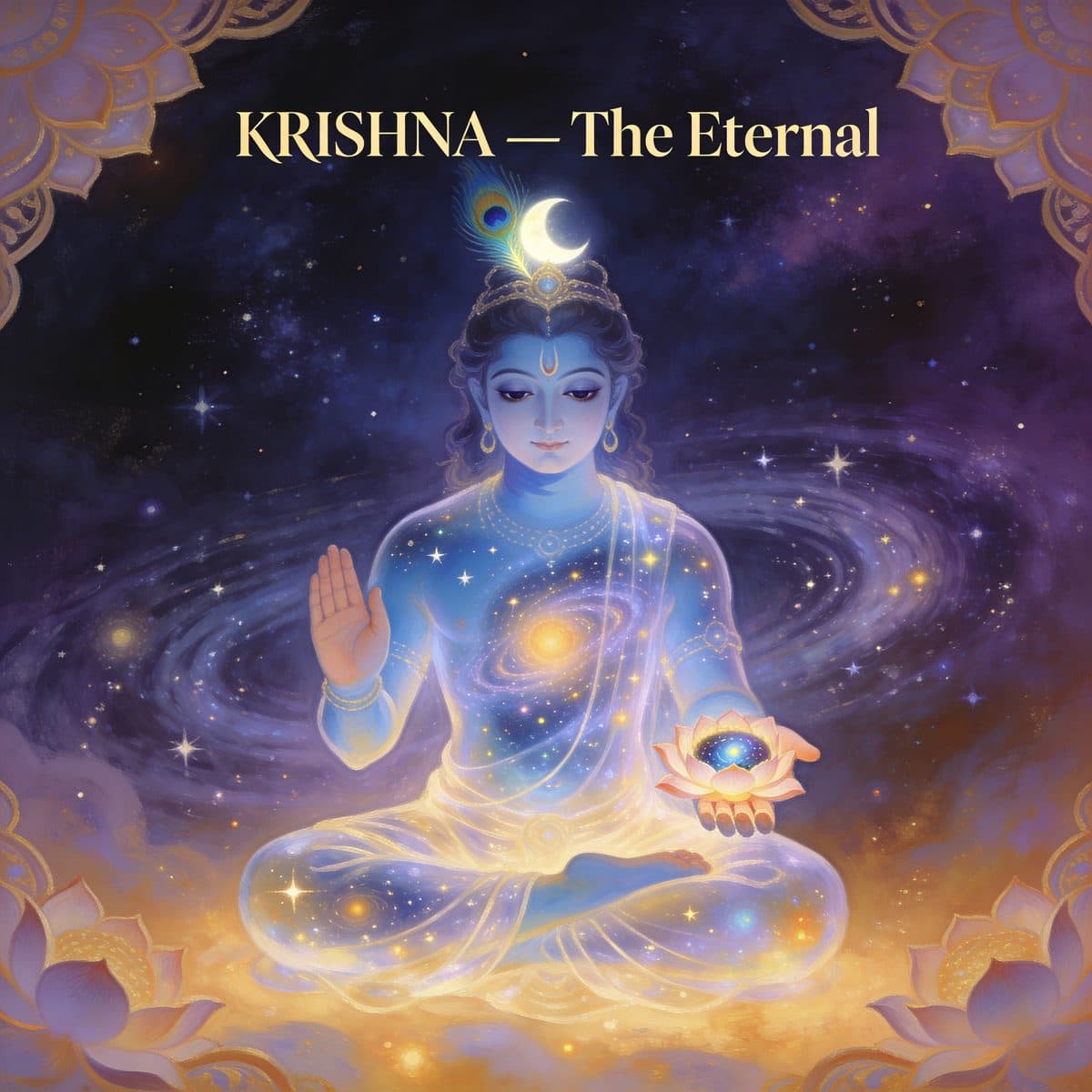
Lord Krishna
Divine TeacherThe Supreme Lord, the charioteer and divine guide of Arjuna. Krishna delivers the eternal wisdom of the Gita, revealing the nature of the soul, duty, and the path to liberation.
Speaking: Chapter 15, Verse 8
Verse 8
The Yoga of the Supreme Person
When the Lord — the individual soul — takes on a body and when he departs from it, he takes these senses along with him, as the wind carries fragrances from their source.
Context & Meaning
Death and rebirth are here described with a simple, beautiful precision. When the individual soul (called īśvara here — the lord of the body, the inner governor) migrates from one body to another, it takes the senses with it — just as the wind, passing through a garden, carries the fragrance of flowers from one place to another. The wind itself has no fragrance; the flower has no mobility. But together they create the momentary presence of fragrance far from its source. So too, the soul itself is formless and free; the senses are rooted in matter. But in transit, the soul carries the subtle impressions of its senses into the next embodiment — which is why tendencies, memories, and character persist across lives.
Scholar Commentaries
1 commentary · Public domainRamanujacharya
VishishtadvaitaThe wind-and-fragrance simile is perfect: the wind does not lose itself in carrying the fragrance, and the fragrance does not change its essential nature by being carried. So too the soul is unchanged by its migrations — it carries the bundle of subtle impressions but its own nature remains divine. This teaching grounds the reality of karma across lives: the sense-impressions accumulated in one life become the seeds of the next.