
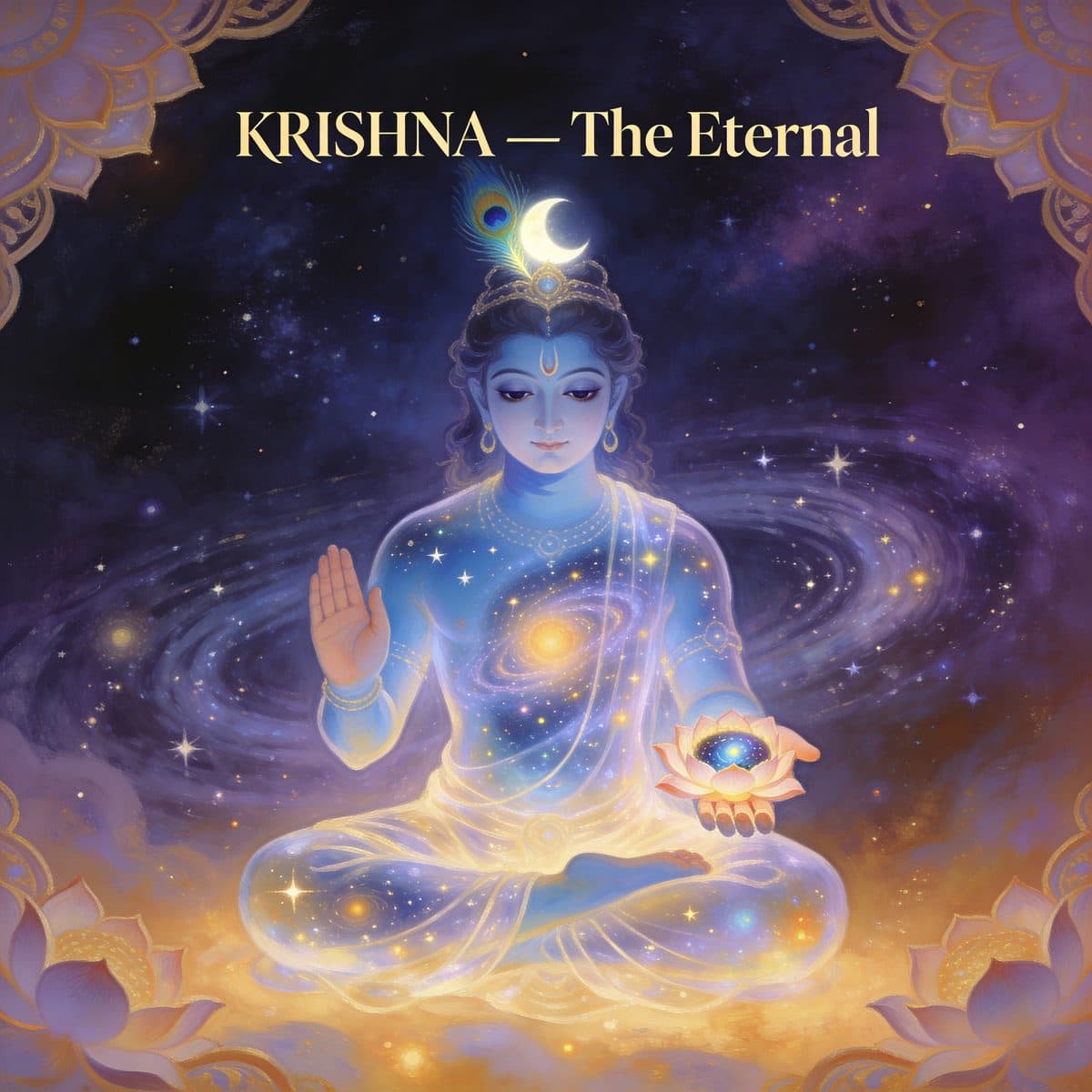
Lord Krishna
Divine TeacherThe Supreme Lord, the charioteer and divine guide of Arjuna. Krishna delivers the eternal wisdom of the Gita, revealing the nature of the soul, duty, and the path to liberation.
Speaking: Chapter 15, Verse 15
Verse 15
The Yoga of the Supreme Person
And I am seated in the hearts of all. From Me come memory, knowledge, and their loss. I alone am to be known by all the Vedas. I am the author of Vedanta, and I am the knower of the Vedas.
Context & Meaning
This is the summit of the chapter's vision of divine immanence. God sits in the heart (hṛdi sanniviṣṭaḥ) of every being — not as an abstract concept but as an actual inner presence. From Him come memory and knowledge — and also their withdrawal. This includes spiritual illumination: it is granted by grace, and its apparent absence is also governed by grace. Then an extraordinary claim: He alone is the true subject of all the Vedas. The vast scriptural literature — all its ritual prescriptions, hymns, and philosophy — has one ultimate referent: Him. He is both the author of Vedanta (the culminating philosophy of the Upanishads) and the knower of the Vedas. God wrote the scripture, and God alone fully understands it. Between these two facts lies the humility required of every student.
Scholar Commentaries
1 commentary · Public domainAdi Shankaracharya
AdvaitaHṛdi sanniviṣṭaḥ — seated in the heart of all. The heart here is not the anatomical organ but the centre of consciousness, the cave of the Self (guhā) spoken of in the Upanishads. God as the inner witness illumines memory and knowledge, and also withdraws them — meaning that the grace of insight and the apparent darkness of ignorance are both within the divine governance. This teaching should dissolve both spiritual pride (I achieved knowledge by my own effort) and spiritual despair (I am abandoned by the Divine).