
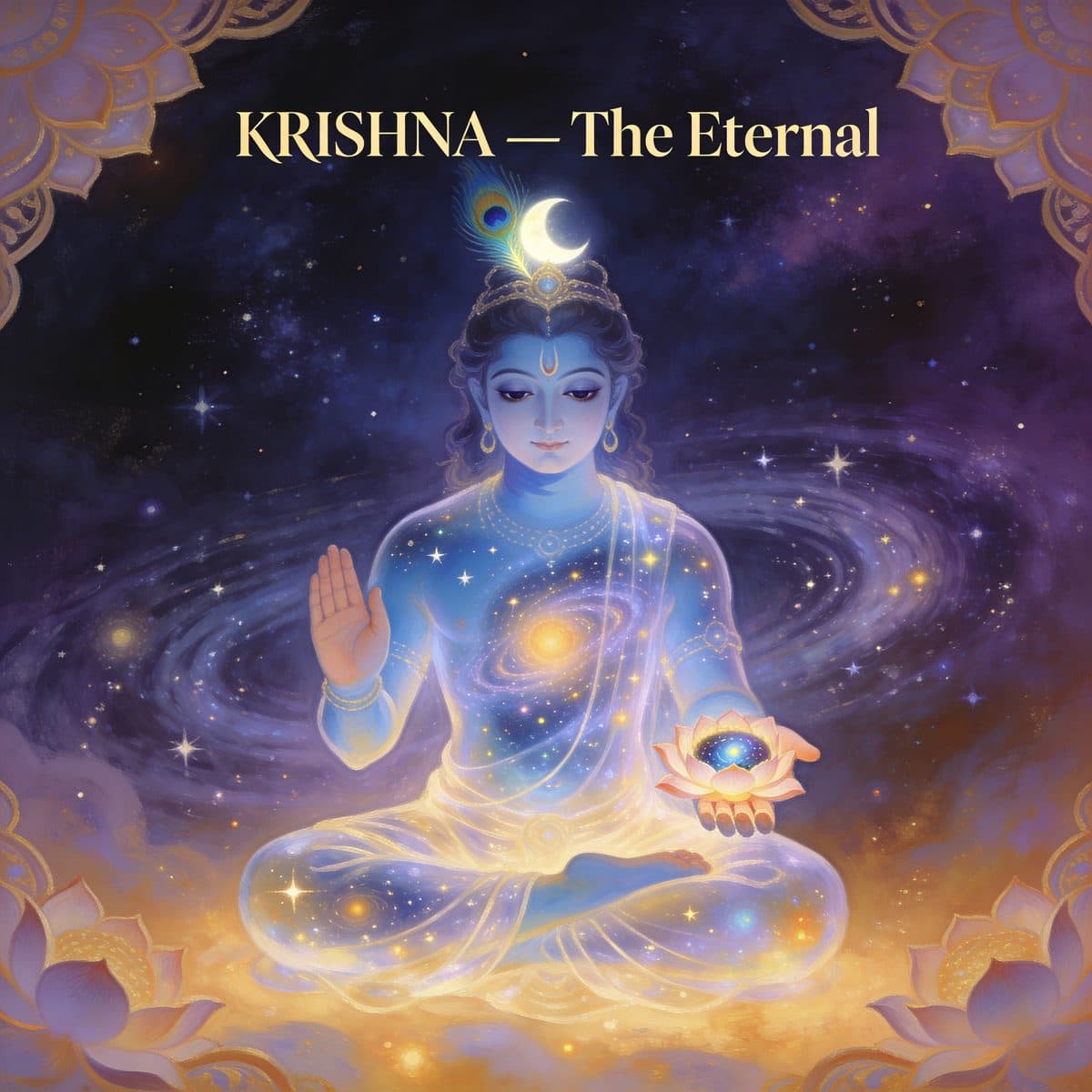
Lord Krishna
Divine TeacherThe Supreme Lord, the charioteer and divine guide of Arjuna. Krishna delivers the eternal wisdom of the Gita, revealing the nature of the soul, duty, and the path to liberation.
Speaking: Chapter 14, Verse 6
Verse 6
The Yoga of the Three Gunas
Among these, sattva — being pure — is illuminating and free from disease. It binds through attachment to happiness and attachment to knowledge, O sinless one.
Context & Meaning
The description of sattva: it is the most refined of the three guṇas — pure (nirmala), illuminating (prakāśaka), free from the corruption of disease (anāmaya). Sattva produces clarity of mind, joy, and the love of knowledge. Yet — and this is the crucial paradox — even sattva binds. It binds through attachment to the very happiness and knowledge it produces. The sāttvic person becomes attached to their clarity, their joy, their spiritual insight — and this very attachment keeps them tethered to the cycle of birth and death. Even virtue, when clung to as identity, is a subtle form of bondage.
Scholar Commentaries
1 commentary · Public domainRamanujacharya
VishishtadvaitaSattva binds through sukha-saṅga — attachment to happiness — and jñāna-saṅga — attachment to knowledge. This is a profound and sobering teaching. The pleasures of a clear mind, the satisfaction of understanding, even the joy of meditation — if clung to as possessions of the ego — become subtle chains. True freedom lies beyond even sattva.