
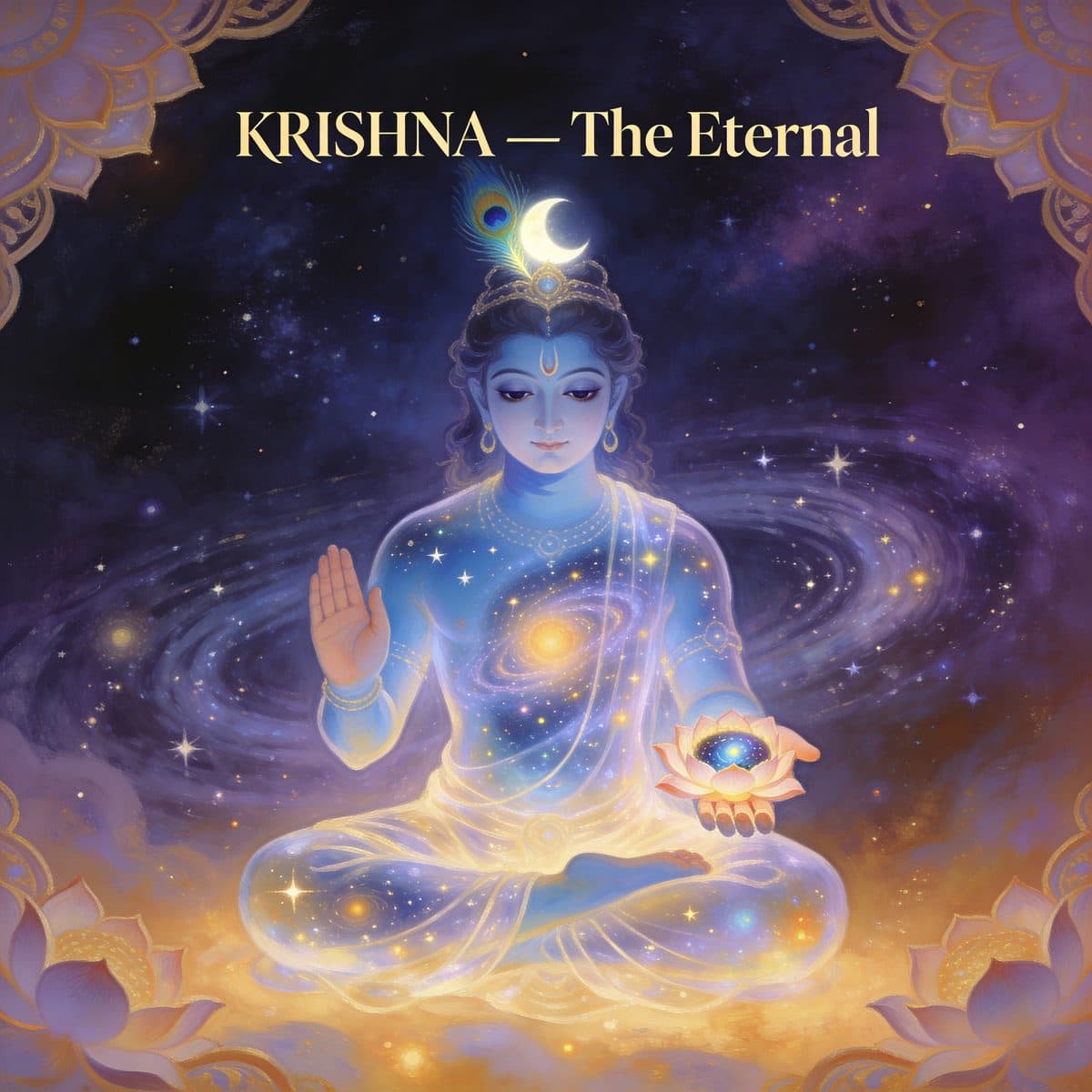
Lord Krishna
Divine TeacherThe Supreme Lord, the charioteer and divine guide of Arjuna. Krishna delivers the eternal wisdom of the Gita, revealing the nature of the soul, duty, and the path to liberation.
Speaking: Chapter 14, Verse 5
Verse 5
Hard VerseThe Yoga of the Three Gunas
Sattva, rajas, and tamas — these qualities, born of Prakriti, bind the imperishable soul to the body, O mighty-armed.
Context & Meaning
The central problem of the chapter is stated: the three guṇas (qualities of nature) — sattva (purity, clarity, light), rajas (passion, activity, agitation), and tamas (inertia, darkness, delusion) — bind the immortal, imperishable soul to the body. The soul itself is avyaya — unchangeable, inexhaustible — yet it becomes bound through these three modes of Prakriti. This is the mystery of bondage: the infinite is bound not by chains but by qualities. Understanding these qualities, their operation, and how to transcend them is the central teaching of this chapter.
Scholar Commentaries
1 commentary · Public domainAdi Shankaracharya
AdvaitaNibadhnanti — they bind. The guṇas bind the soul not through external force but through identification. When the soul mistakes the sāttvic mind for itself, or the rājasic will for itself, or the tāmasic inertia for itself, it becomes bound. Liberation is not the removal of the guṇas — they will always operate in Prakriti — but the soul's recognition that it is none of them.