
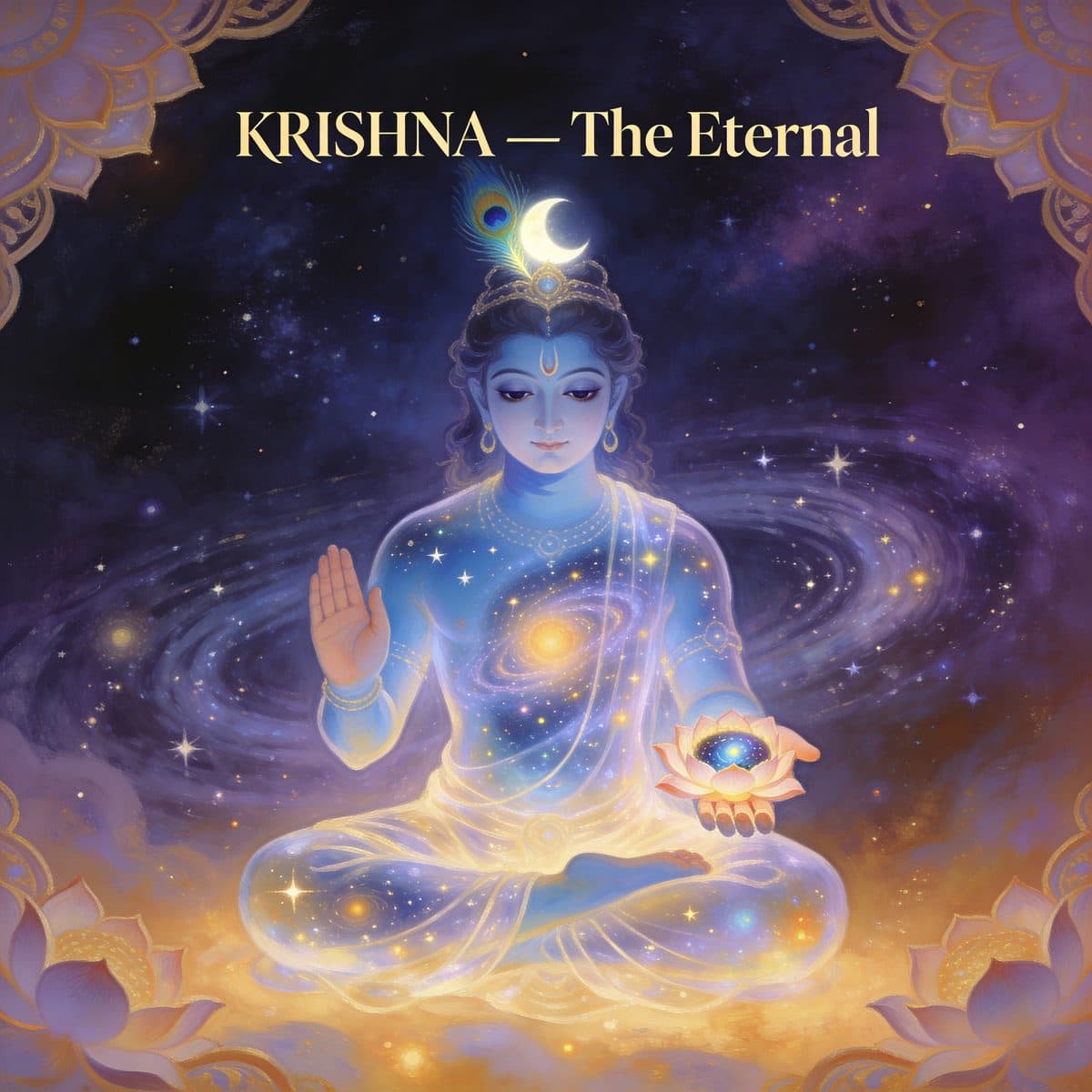
Lord Krishna
Divine TeacherThe Supreme Lord, the charioteer and divine guide of Arjuna. Krishna delivers the eternal wisdom of the Gita, revealing the nature of the soul, duty, and the path to liberation.
Speaking: Chapter 14, Verse 24
Verse 24
The Yoga of the Three Gunas
Equal in pleasure and pain, self-contained, seeing a clod, a stone, and gold as the same; equal toward the pleasant and unpleasant, steady, equal in blame and praise—
Context & Meaning
The portrait of the guṇātīta deepens with a series of equalities that span the entire range of human valuation. Equal in pleasure and pain (sama-duḥkha-sukha). Self-abiding, resting in the Self (svastha — literally, "situated in one's own nature"). Seeing a clod of earth, a stone, and gold as equally real — equally products of Prakriti, equally impermanent (sama-loṣṭāśma-kāñcana). Equal toward the pleasant and the unpleasant (tulya-priyāpriya). Steady, wise (dhīra). Equal in blame and praise (tulya-nindātmasaṃstuti). These are not cultivated attitudes — they are natural expressions of one who has found their identity beyond all of Prakriti's fluctuations.
Scholar Commentaries
1 commentary · Public domainMadhvacharya
DvaitaSama-loṣṭāśma-kāñcanaḥ — equal toward a clod, a stone, and gold. This does not mean the liberated person would not distinguish between a meal and a stone when hungry — practical discrimination remains. What is equal is the inner evaluation: neither gold nor dirt can add to or subtract from the fullness of the Self. The liberated person uses the world without being used by it.