
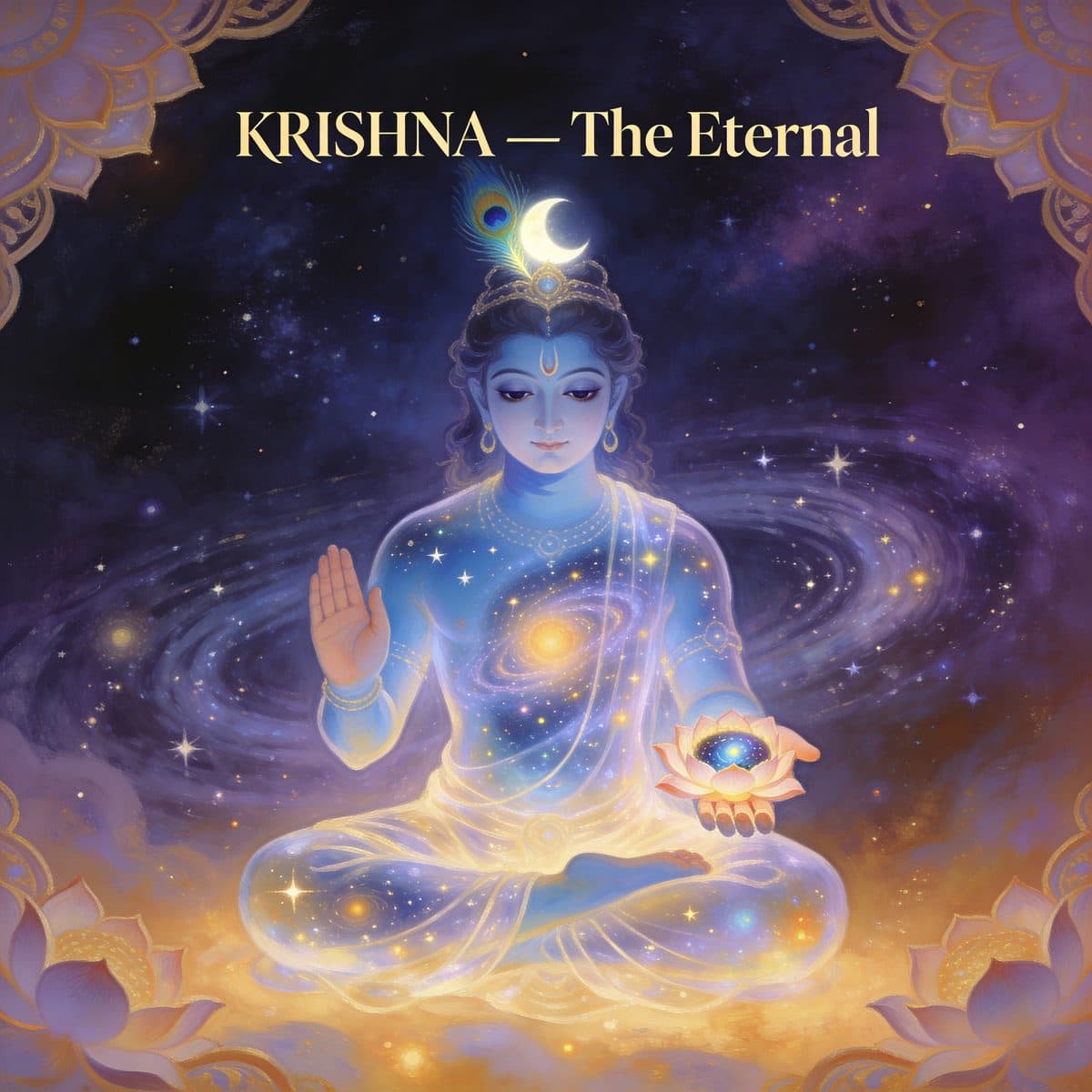
Lord Krishna
Divine TeacherThe Supreme Lord, the charioteer and divine guide of Arjuna. Krishna delivers the eternal wisdom of the Gita, revealing the nature of the soul, duty, and the path to liberation.
Speaking: Chapter 14, Verse 22
Verse 22
The Yoga of the Three Gunas
The Supreme Lord said: O Pandava, one who does not hate illumination, activity, or delusion when they arise, nor craves for them when they cease—
Context & Meaning
Krishna begins his description of the guṇātīta — the one who has transcended the guṇas — and it opens with a striking non-reaction: this person neither hates the guṇas when they arise (illumination of sattva, the activity of rajas, the confusion of tamas) nor craves them when they cease. The enlightened person is not someone who has permanently eliminated rajas and tamas from their experience — those forces still operate in Prakriti. What has changed is the relationship to them: no aversion when they come, no craving when they go. This non-reactive witness-stance is the signature of transcendence.
Scholar Commentaries
1 commentary · Public domainRamanujacharya
VishishtadvaitaNa dveṣṭi — does not hate. Na kāṅkṣati — does not crave. These two negations define the liberated relationship to the guṇas. The guṇas continue to operate — even in the body of a saint, sattva rises and falls, occasional rajas or tamas may appear. What is absent is the identification with them and the consequent push-pull of aversion and craving.