
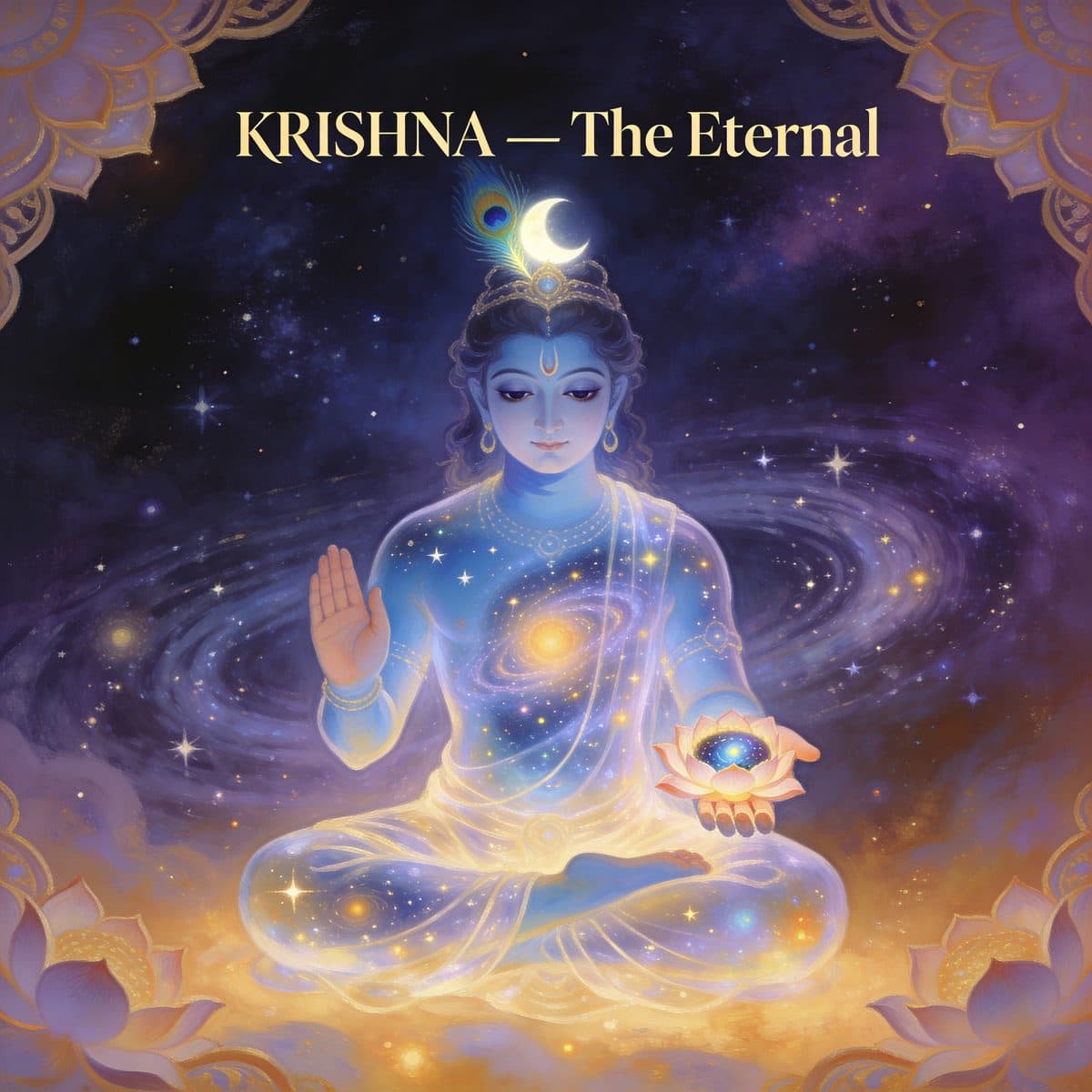
Lord Krishna
Divine TeacherThe Supreme Lord, the charioteer and divine guide of Arjuna. Krishna delivers the eternal wisdom of the Gita, revealing the nature of the soul, duty, and the path to liberation.
Speaking: Chapter 14, Verse 13
Verse 13
The Yoga of the Three Gunas
When tamas increases, O son of the Kurus, darkness, inactivity, negligence, and delusion arise.
Context & Meaning
The signs of prevailing tamas: aprakāśa (darkness, the absence of inner light), apravṛtti (inactivity, withdrawal from appropriate engagement), pramāda (negligence, heedlessness toward one's duties and opportunities), and moha (delusion, confusion about what is real and what matters). The tāmasic state is the opposite of both the illuminated sāttvic state and the energised rājasic state — it is characterised by a heaviness, a fogginess, a kind of living unconsciousness. Things that matter do not register; effort feels impossible; the horizons of possibility contract.
Scholar Commentaries
1 commentary · Public domainMadhvacharya
DvaitaMoha — delusion — is the deepest feature of tamas. The tāmasic person is not simply uninformed; they are actively confused about what is real, what is valuable, what their life is for. This confusion is self-perpetuating: the deluded person does not know they are deluded, and therefore does not seek the clarity that would dispel delusion. Only an intervention of grace or sattva — a moment of genuine insight — can break the cycle.