
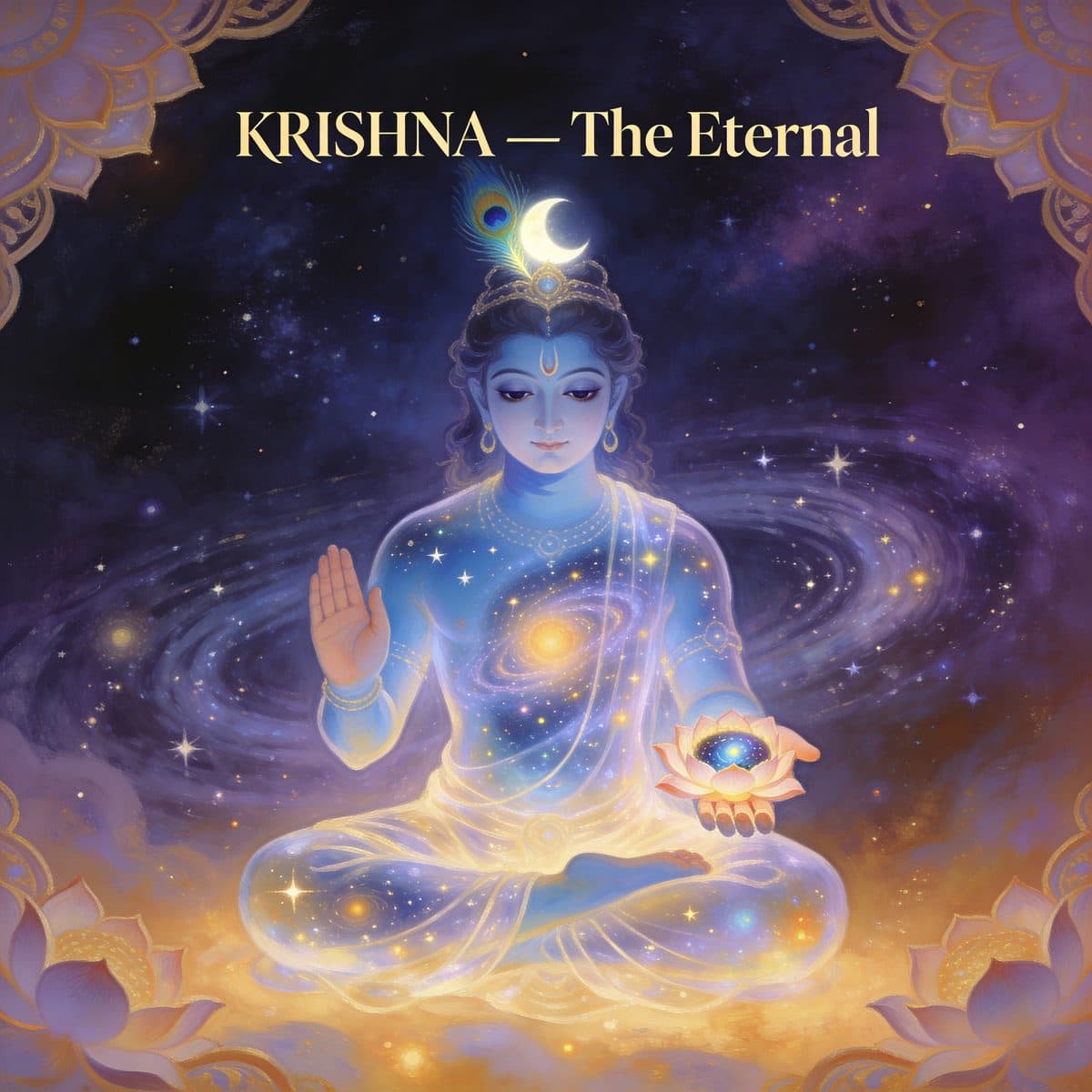
Lord Krishna
Divine TeacherThe Supreme Lord, the charioteer and divine guide of Arjuna. Krishna delivers the eternal wisdom of the Gita, revealing the nature of the soul, duty, and the path to liberation.
Speaking: Chapter 12, Verse 17
Verse 17
The Yoga of Devotion
One who neither rejoices nor grieves, who neither laments nor desires, who has given up both auspicious and inauspicious things, and who is full of devotion—is dear to Me.
Context & Meaning
The fourfold freedom: no excessive rejoicing, no hatred, no grief over the past, no craving for the future. This is not emotional flatness but the equanimity of one who is anchored in the eternal. Most striking is the phrase śubhāśubha-parityāgī — one who has given up both the auspicious and the inauspicious. This means the devotee is beyond the framework of results altogether. They do not pursue good outcomes and avoid bad ones; they act from devotion, leaving the categorization of results to God.
Scholar Commentaries
1 commentary · Public domainMadhvacharya
DvaitaThe abandonment of both auspicious and inauspicious results represents the ultimate freedom from karma. The devotee no longer inhabits the mental world of "this is good for me, this is bad for me." They have stepped outside the entire framework of self-interested calculation. All that remains is bhakti — pure love.