
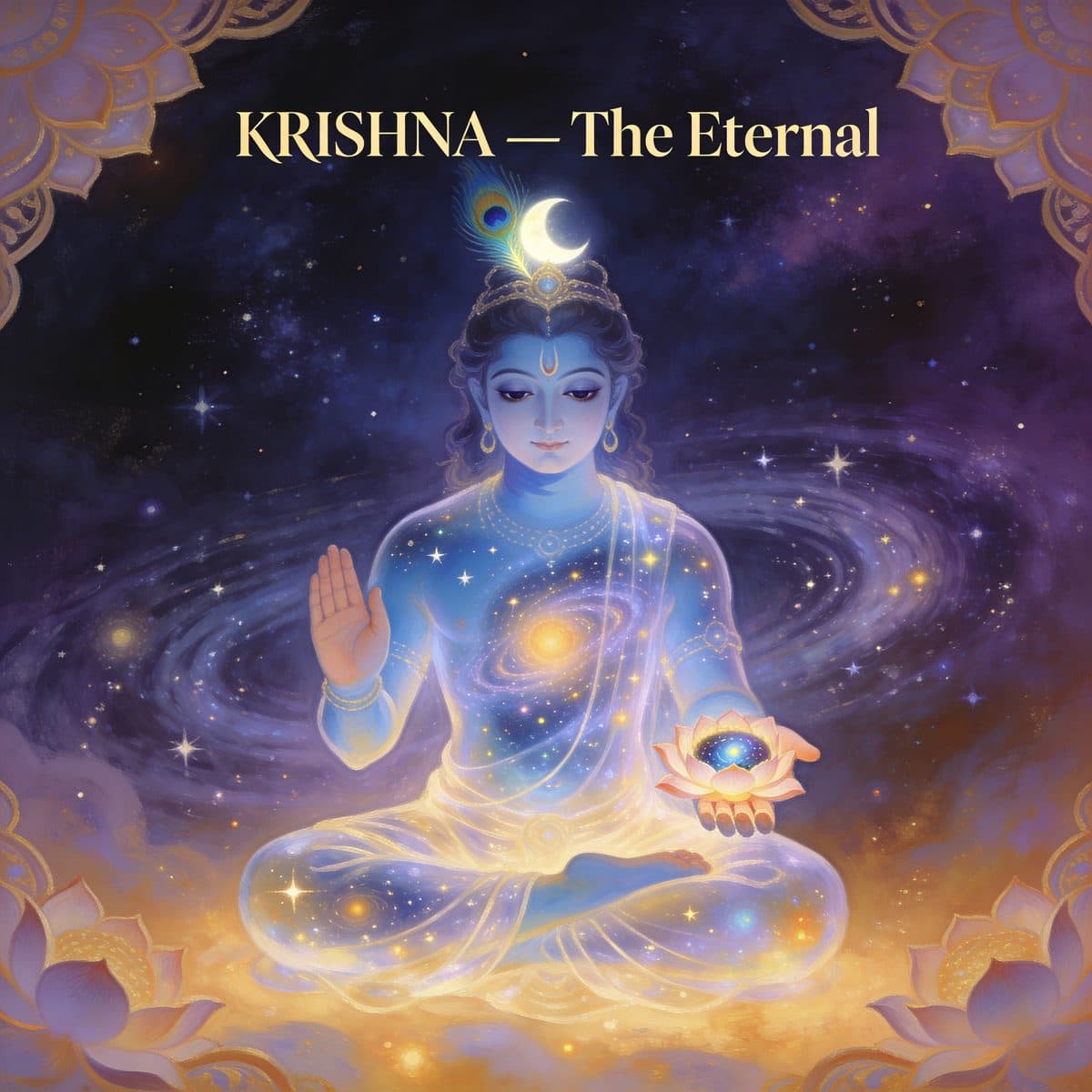
Lord Krishna
Divine TeacherThe Supreme Lord, the charioteer and divine guide of Arjuna. Krishna delivers the eternal wisdom of the Gita, revealing the nature of the soul, duty, and the path to liberation.
Speaking: Chapter 18, Verse 49
Verse 49
The Yoga of Liberation through Renunciation
One whose intellect is unattached everywhere, who has conquered the self, from whom all longings have departed — through renunciation such a person attains the supreme perfection of transcendence from action.
Context & Meaning
This verse describes the culminating state that the entire preceding teaching has been preparing: naiṣkarmya-siddhi — the supreme perfection of transcendence from action, the state in which action no longer binds. It is attained through saṃnyāsa — renunciation — but renunciation as defined throughout this chapter: the inner condition of asaktabuddhiḥ (intellect unattached everywhere), jitātmā (self-mastery — the self has been brought under the governance of the higher Self), and vigataspr̥ha (free from all longing, all grasping after any particular outcome). This is not a physical renunciation of the world but the radical inner freedom that can coexist with any external condition.
Scholar Commentaries
1 commentary · Public domainAdi Shankaracharya
AdvaitaNaiṣkarmyasiddhiṃ paramām — the supreme perfection of actionlessness. The Advaita reading is precise here: naiṣkarmya is not the cessation of action in the external sense but the transcendence of the doership-identification in the inner sense. The Self has never acted; when this is truly seen, the question of what to do and what to renounce dissolves. The Self is forever in the state the verse describes: asaktabuddhiḥ, jitātmā, vigataspr̥ha. Liberation is the recognition of this — not as an achievement but as the discovery of what has always been the case.