
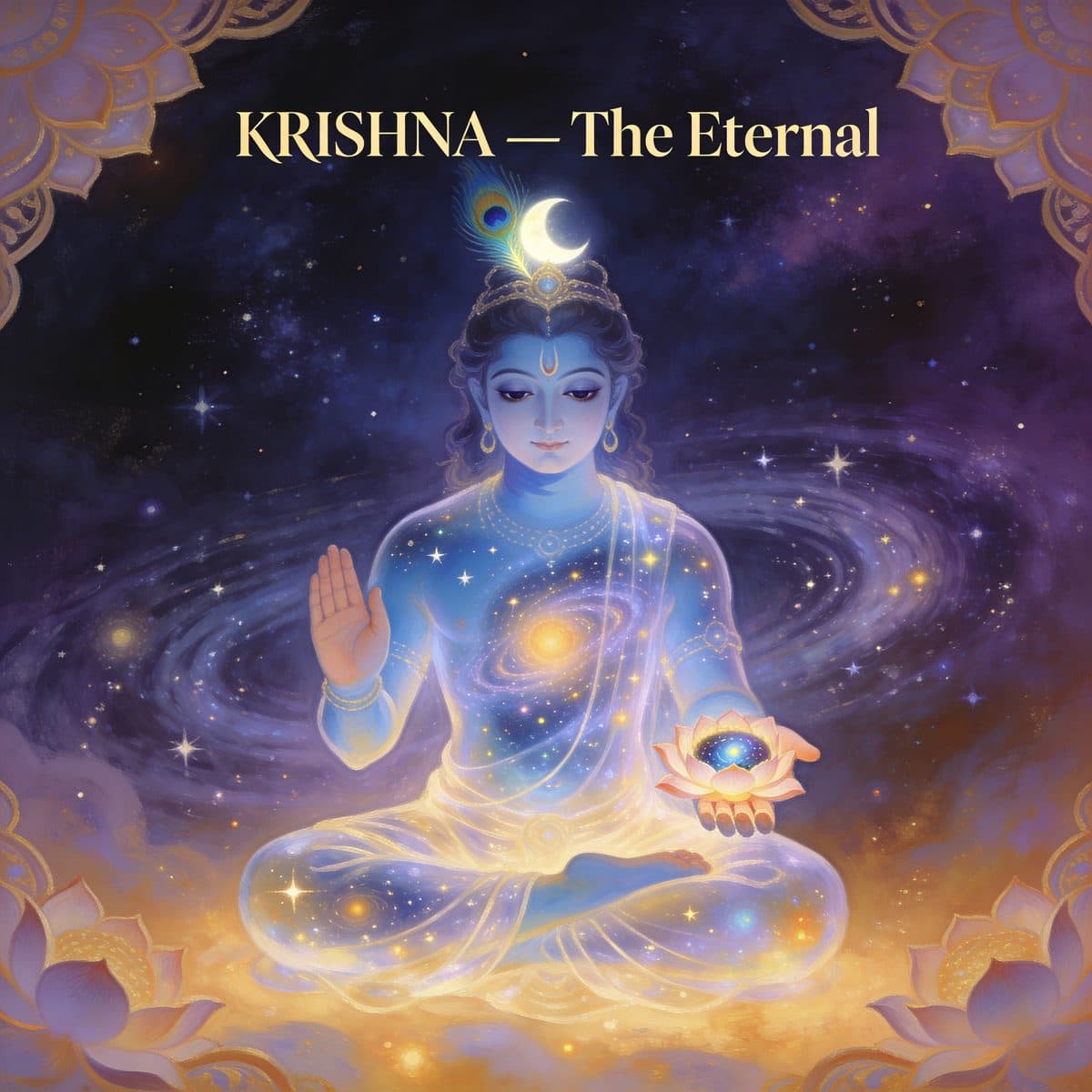
Lord Krishna
Divine TeacherThe Supreme Lord, the charioteer and divine guide of Arjuna. Krishna delivers the eternal wisdom of the Gita, revealing the nature of the soul, duty, and the path to liberation.
Speaking: Chapter 18, Verse 47
Verse 47
The Yoga of Liberation through Renunciation
Better is one's own duty, though imperfectly performed, than the duty of another well performed. Performing the duty ordained by one's own nature, one does not incur sin.
Context & Meaning
This principle appeared earlier in the Gita (chapter 3, verse 35) and returns here with greater resonance because of the full context now built around it. The teaching challenges the human temptation to abandon one's own path in favour of someone else's that appears more glorious, more spiritual, more impressive. The imperfect performance of one's own authentic duty — the path that corresponds to one's genuine nature — is spiritually more valuable than the perfect performance of a borrowed one. When one acts from one's own nature (svabhāva-niyatam), there is authenticity, an absence of pretence, a natural alignment — and this authenticity is itself a form of integrity that prevents the accumulation of spiritual harm (kilbiṣa).
Scholar Commentaries
1 commentary · Public domainRamanujacharya
VishishtadvaitaSvabhāvaniyataṃ karma — action determined by one's own nature. The Vishishtadvaita reading sees svabhāva as the soul's God-given particular nature — its unique configuration of capacities, inclinations, and dharmic role. To follow one's svabhāva is therefore to follow God's design for this particular soul in this particular life. To abandon it for another's dharma, however attractive, is to step out of alignment with the divine intention for one's existence. The imperfect offering made from one's true place is more pleasing to God than the polished performance of a borrowed role.