
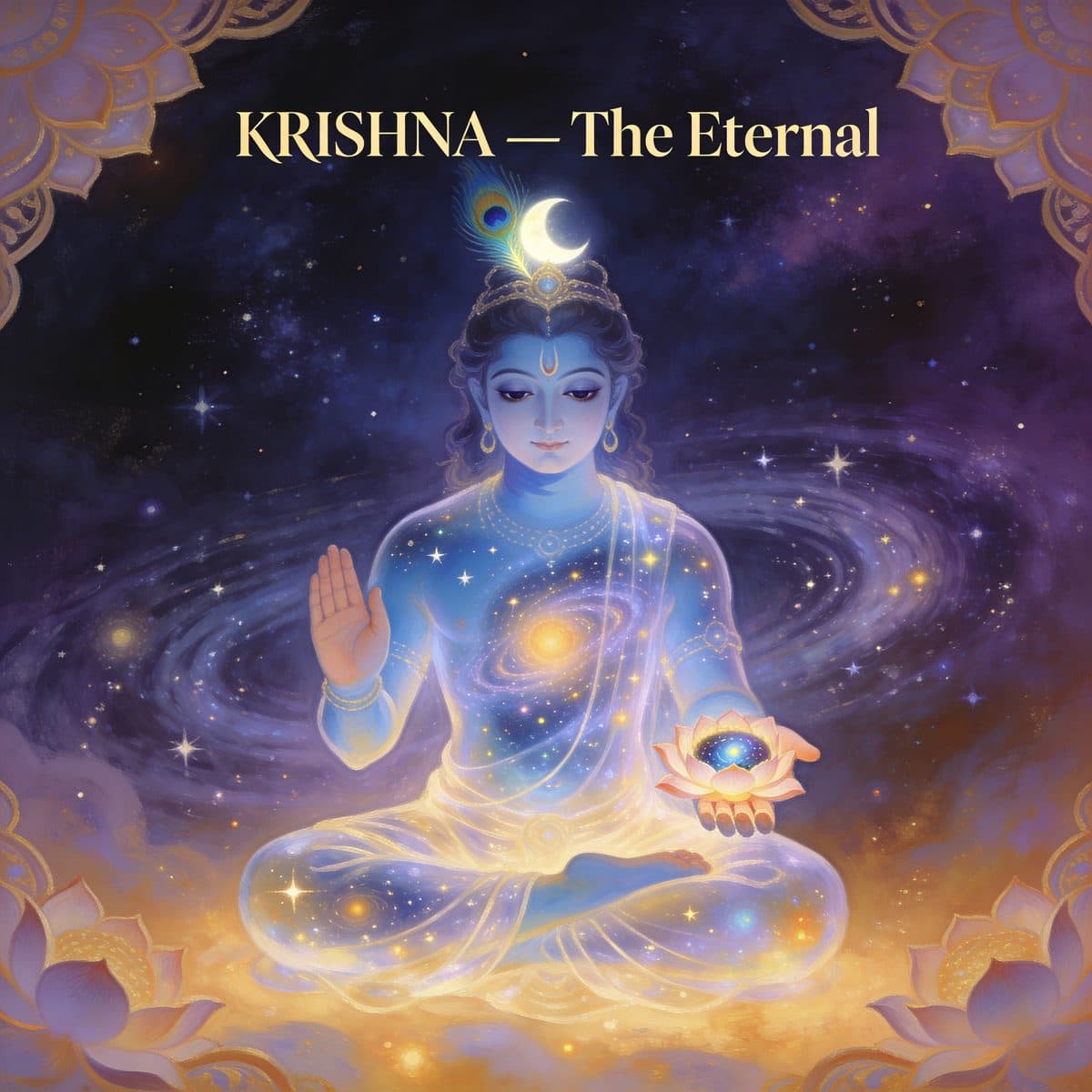
Lord Krishna
Divine TeacherThe Supreme Lord, the charioteer and divine guide of Arjuna. Krishna delivers the eternal wisdom of the Gita, revealing the nature of the soul, duty, and the path to liberation.
Speaking: Chapter 18, Verse 46
Verse 46
The Yoga of Liberation through Renunciation
By worshipping through one's own duty the One from whom all beings proceed and by whom all this is pervaded, a person finds perfection.
Context & Meaning
This verse transforms duty into worship with a single syntactic move: performing one's own duty (svakarmana) is the means of abhyarcya — of worshipping the divine (tam) from whom all beings spring and by whom the entire creation is pervaded. The artisan worships God by making excellent things with full attention and love; the farmer worships God by tending the earth with care and gratitude; the healer worships God by bringing skill and compassion to the suffering. When this understanding is alive, every form of work becomes a liturgy, every workplace a temple, every moment of skilled and loving action a prayer. This is the Gita's most practical and universal spiritual teaching.
Scholar Commentaries
1 commentary · Public domainAdi Shankaracharya
AdvaitaYataḥ pravṛttirbhūtānāṃ yena sarvamidaṃ tatam — from whom the activity of beings proceeds and by whom all this is pervaded. The Advaita reading sees this verse as establishing the unity of the path of action and the path of knowledge: if one genuinely understands that the source and substance of all activity is Brahman — that there is no action apart from the divine energy — then every action performed with that understanding becomes an act of recognition, an act of worship. Karma Yoga and Jñāna Yoga are not two paths but two aspects of the same vision: acting from the understanding that the actor, the action, and the One who is the source of both are ultimately not three separate things.