
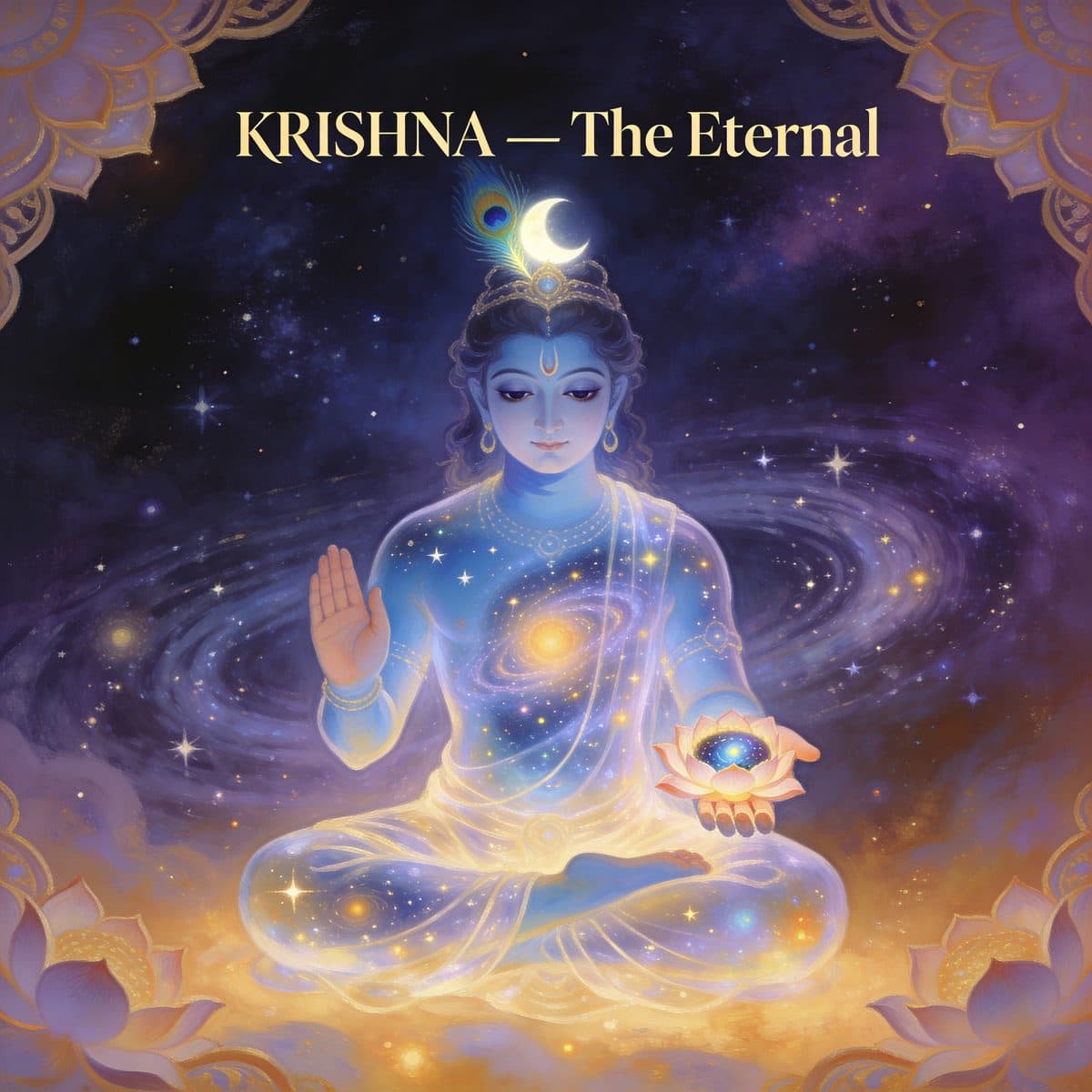
Lord Krishna
Divine TeacherThe Supreme Lord, the charioteer and divine guide of Arjuna. Krishna delivers the eternal wisdom of the Gita, revealing the nature of the soul, duty, and the path to liberation.
Speaking: Chapter 18, Verse 41
Verse 41
The Yoga of Liberation through Renunciation
The duties of Brahmins, Kshatriyas, Vaishyas, and Shudras, O scorcher of foes, are distributed according to the Gunas arising from their own nature.
Context & Meaning
Krishna now applies the Guna-analysis to the social order — the four varnas. This is a crucial passage that has been widely debated: it grounds the varna system not in birth but in svabhāva — one's own inherent nature, the particular configuration of Gunas that defines a person's natural capacities and inclinations. The Gita's vision of social order is thus meritocratic in the deepest sense: roles are distributed according to what one is, not who one's parents were. The Brahmin's qualities, the Kshatriya's qualities, the Vaishya's qualities, and the Shudra's qualities are all equally necessary expressions of the divine order, and all paths lead — through the proper performance of their respective duties — to the highest liberation.
Scholar Commentaries
1 commentary · Public domainRamanujacharya
VishishtadvaitaSvabhāvaprabhavairguṇaiḥ — by the Gunas arising from one's own nature. The Vishishtadvaita reading emphasises that svabhāva — one's inherent nature — is not a prison but a gift: it is the particular form in which the divine has expressed itself in this soul. The duties assigned to each category are therefore not impositions from without but the natural expression of what one is. The genius of the Gita's social philosophy, in this reading, is that it consecrates every natural human capacity as a form of divine service: intellectual enquiry, courageous protection, productive creation, and faithful service are all equally paths to God when performed with the proper spirit.