
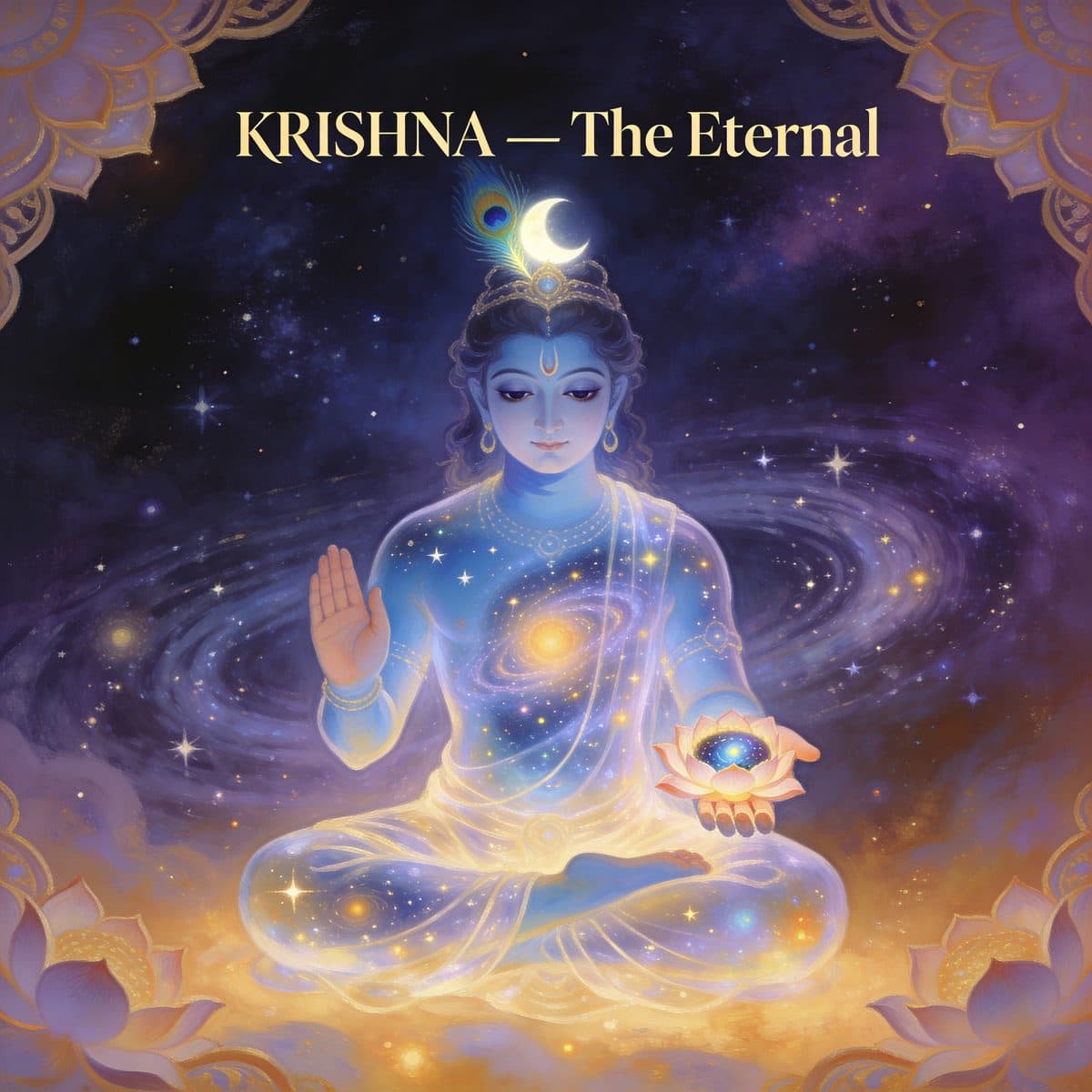
Lord Krishna
Divine TeacherThe Supreme Lord, the charioteer and divine guide of Arjuna. Krishna delivers the eternal wisdom of the Gita, revealing the nature of the soul, duty, and the path to liberation.
Speaking: Chapter 18, Verse 33
Verse 33
The Yoga of Liberation through Renunciation
The fortitude by which one sustains the activities of mind, vital breath, and senses through unwavering yoga — that fortitude, O Partha, is sattvic.
Context & Meaning
Sattvic dhṛti (fortitude) is the inner strength that holds the entire instrument — mind, prāṇa (vital energy), and senses — in alignment through the practice of yoga. The word avyabhicāriṇī is crucial: this fortitude is unwavering, not promiscuous, not dispersed across many objects and concerns. It is the fortitude of single-pointed commitment. This is not grimness or suppression but the natural steadiness that comes when the instrument of body-mind is aligned with a purpose larger than itself. The sattvic person holds their faculties together in the service of liberation, and this holding is experienced not as effort but as integrity — as wholeness.
Scholar Commentaries
1 commentary · Public domainMadhvacharya
DvaitaAvyabhicāriṇyā — unwavering, without deviation. The Dvaita tradition sees sattvic dhṛti as the practical expression of vyāsakti (single-pointed attachment to Vishnu): when the soul is genuinely devoted to God, the mind naturally steadies, the vital energies naturally align, and the senses naturally come under the governance of that devotion. This is why dhṛti in the Gita is not achieved through suppression but through devotion: it is a natural consequence of genuine love for the divine. The lover of God does not need to force the mind to be steady; it steadies itself in the presence of the Beloved.