
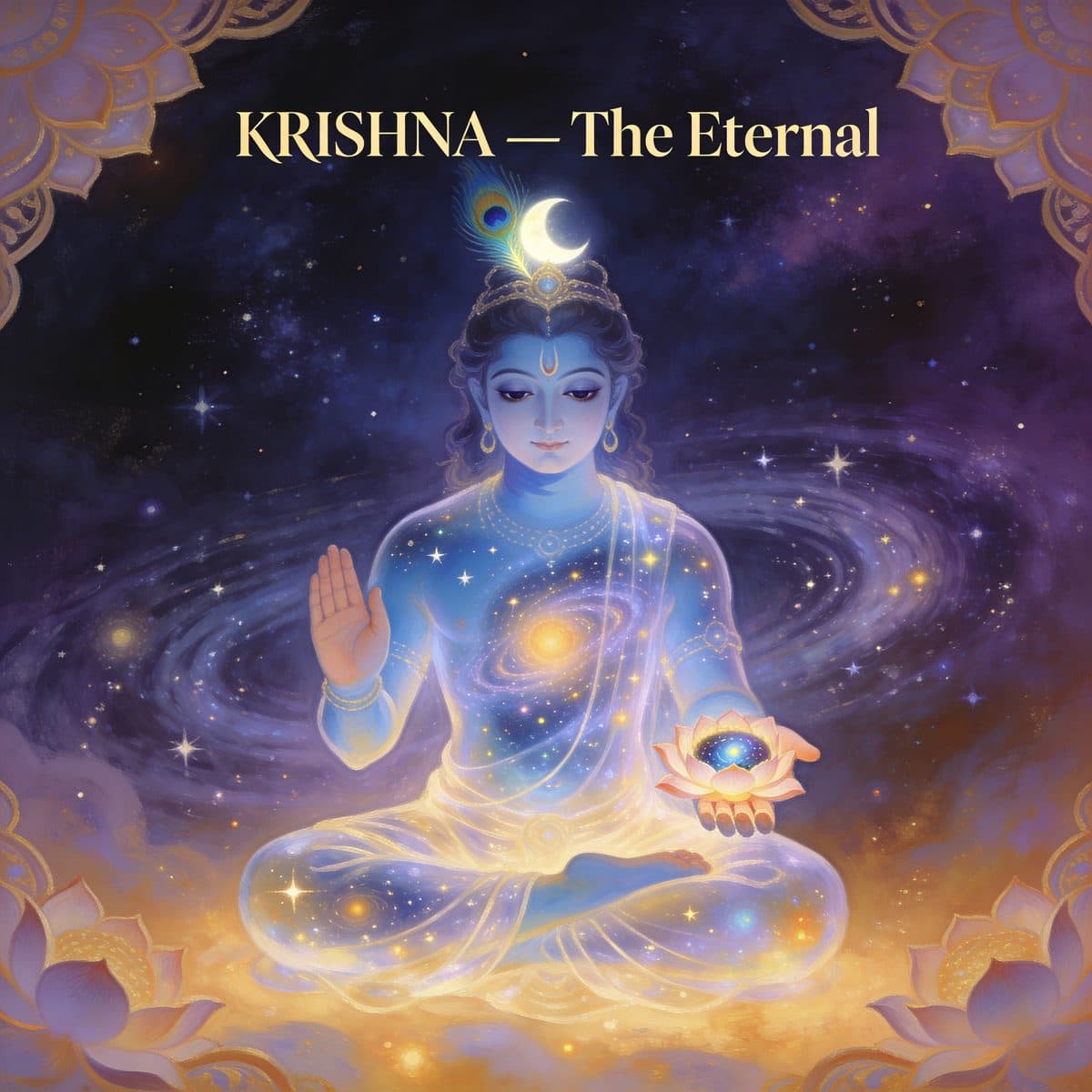
Lord Krishna
Divine TeacherThe Supreme Lord, the charioteer and divine guide of Arjuna. Krishna delivers the eternal wisdom of the Gita, revealing the nature of the soul, duty, and the path to liberation.
Speaking: Chapter 18, Verse 30
Verse 30
The Yoga of Liberation through Renunciation
That intellect which knows the paths of action and renunciation, what is to be done and what is not to be done, what is to be feared and what is not — bondage and liberation — that intellect, O Partha, is sattvic.
Context & Meaning
The sattvic buddhi is characterised by its capacity for correct discrimination across six fundamental polarities: pravṛtti (the path of engagement in the world) and nivṛtti (the path of withdrawal from the world) — knowing when each is appropriate; kārya (what must be done) and akārya (what must not be done); bhaya (what is genuinely to be feared — the things that truly bind the soul) and abhaya (what need not be feared — the things that only appear threatening to the ego); and bandha (bondage) and mokṣa (liberation). The sattvic intellect knows these distinctions clearly and acts accordingly. This is practical wisdom in its fullest form.
Scholar Commentaries
1 commentary · Public domainMadhvacharya
DvaitaBandhaṃ mokṣaṃ ca yā vetti — that which knows bondage and liberation. The Dvaita tradition holds that the clearest possible knowledge of bondage and liberation is knowledge of the soul's fundamental dependence on Vishnu. The sattvic intellect, in the Dvaita reading, is the one that sees clearly that the soul without God is bound, and the soul surrendered to Vishnu is free — and that this freedom is not an abstraction but a living reality available in every moment of surrender. The sattvic buddhi does not speculate about liberation; it discriminates clearly between the paths that lead there and the paths that lead away.