
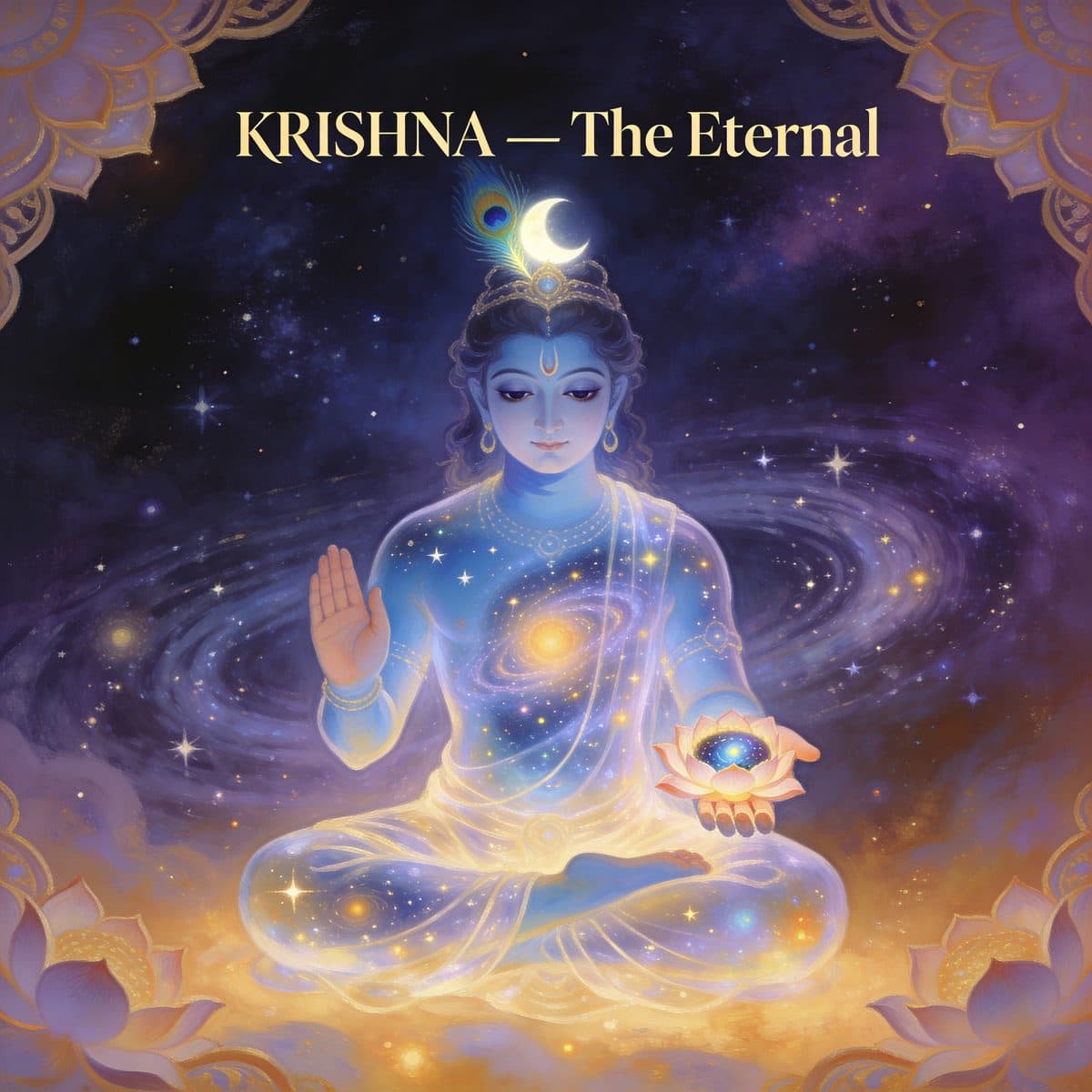
Lord Krishna
Divine TeacherThe Supreme Lord, the charioteer and divine guide of Arjuna. Krishna delivers the eternal wisdom of the Gita, revealing the nature of the soul, duty, and the path to liberation.
Speaking: Chapter 18, Verse 29
Verse 29
The Yoga of Liberation through Renunciation
Hear now the threefold distinction of intellect (buddhi) and also of fortitude (dhrti), according to the Gunas, expounded separately and completely, O Dhananjaya.
Context & Meaning
The guna-analysis now extends to two more inner faculties: buddhi (the intellect — the capacity for discernment, judgment, and understanding) and dhṛti (fortitude — the quality of inner strength that sustains one through challenges). These are among the most important faculties in the Gita's psychology: buddhi is the instrument of right discrimination between the real and the unreal, the eternal and the transient; dhṛti is what allows one to hold to what is good when everything else pulls against it. To understand how sattva, rajas, and tamas express themselves through these faculties is to gain a precise diagnostic tool for one's inner condition.
Scholar Commentaries
1 commentary · Public domainRamanujacharya
VishishtadvaitaBuddhi and dhṛti are the two inner faculties most directly involved in the practice of devotion. Sattvic buddhi sees God in all things and discerns the right action in every situation; sattvic dhṛti holds the mind steady in that vision even when emotion, fatigue, or the world's pressures push against it. For the Vishishtadvaita path, the cultivation of sattvic buddhi and sattvic dhṛti is not an end in itself but the precondition for the deepest devotion — the kind that is not shaken by any circumstance because it rests on direct perception of the divine rather than on belief.