
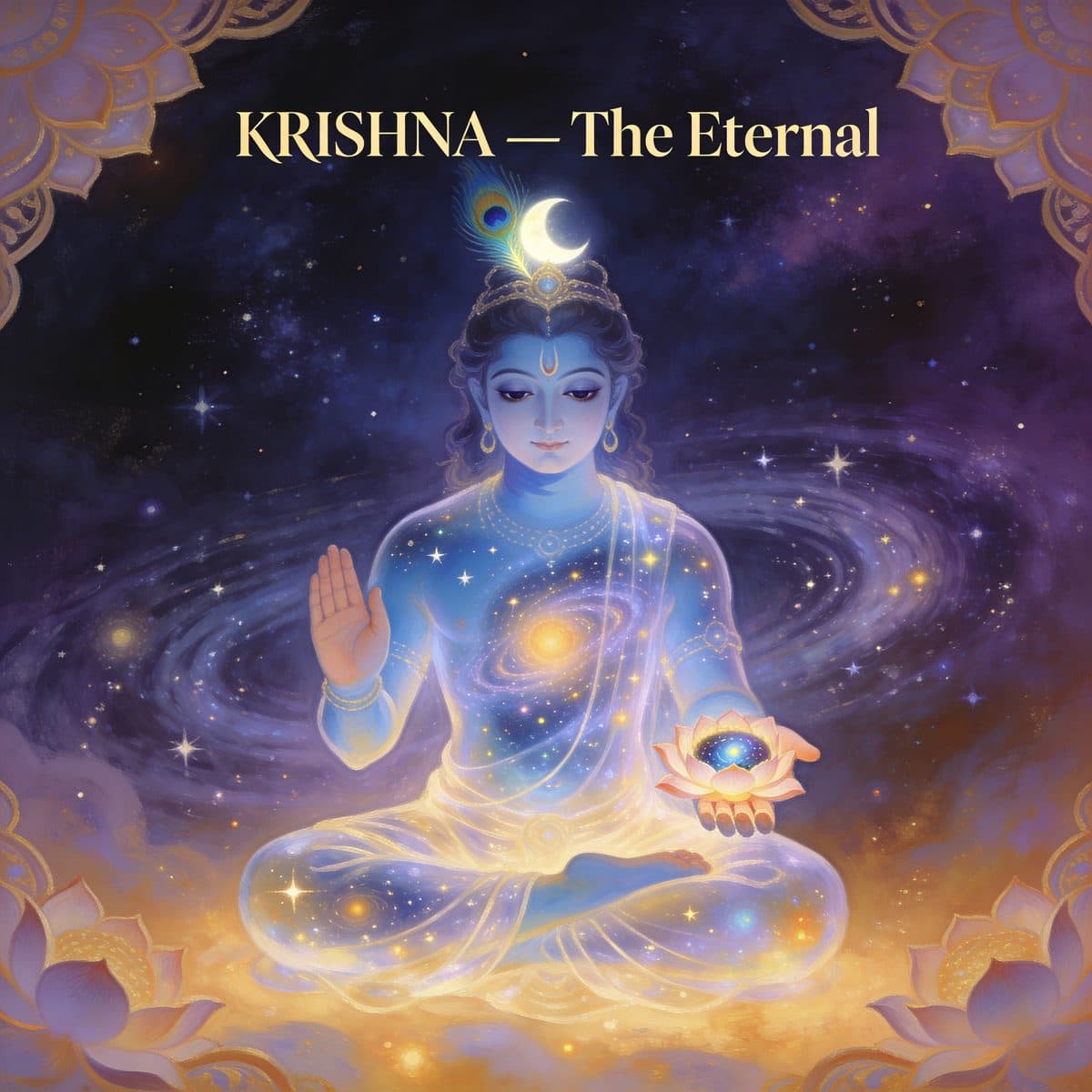
Lord Krishna
Divine TeacherThe Supreme Lord, the charioteer and divine guide of Arjuna. Krishna delivers the eternal wisdom of the Gita, revealing the nature of the soul, duty, and the path to liberation.
Speaking: Chapter 18, Verse 17
Verse 17
The Yoga of Liberation through Renunciation
One who has no sense of "I am the doer," whose intellect is not tainted — even if they slay these worlds, they do not kill, nor are they bound.
Context & Meaning
This is one of the most striking and radical verses in the Gita — one that has caused controversy and deep reflection across centuries of commentary. Krishna says: if your ego-sense as doer is absent, and your intellect is untainted by desire, attachment, and identification — then even if you kill everyone in these worlds, you have not killed, and you are not bound by that action. This is not a licence for violence or a dispensation for arbitrary destruction. It is a precise statement about the metaphysics of action: karma accrues not to the action but to the actor's identification. The untainted actor who has no ahaṃkāra-sense acts as an instrument of the divine order — and like a knife used by a surgeon, the instrument bears no moral residue from what it cuts.
Scholar Commentaries
1 commentary · Public domainRamanujacharya
VishishtadvaitaHatvāpi sa imām̐llokān na hanti — even having slain, they do not slay. This verse directly addresses Arjuna's situation: the great warrior who must fight but fears the karma of killing. In the Vishishtadvaita reading, this is not a metaphysical escape clause but a statement of transformed consciousness: the devotee who acts entirely for Bhagavān, without personal ahaṃkāra, is simply the divine instrument. The soul that kills in this state is like a sword that takes the credit for the surgeon's skill — the instrument is pure because it is not the author. But this purity is conditional on genuine freedom from ego-sense: it cannot be performed, only lived.