
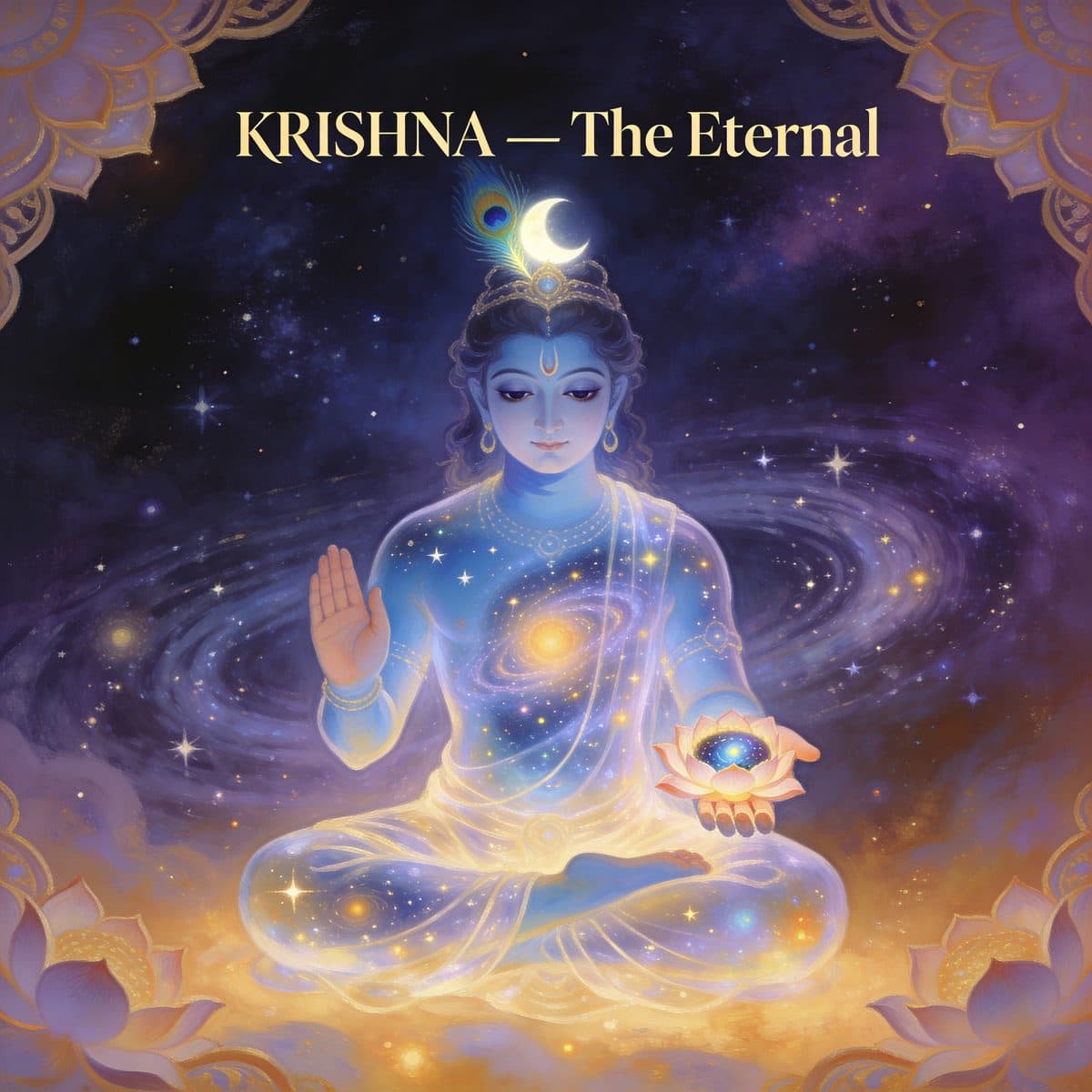
Lord Krishna
Divine TeacherThe Supreme Lord, the charioteer and divine guide of Arjuna. Krishna delivers the eternal wisdom of the Gita, revealing the nature of the soul, duty, and the path to liberation.
Speaking: Chapter 17, Verse 5
Verse 5
The Yoga of the Three Types of Faith
Those who practise terrible austerities not enjoined by scripture, impelled by hypocrisy and ego, driven by the force of desire and passion —
Context & Meaning
Krishna now addresses a particular spiritual pathology: extreme, self-punishing austerities performed outside scriptural guidance, driven not by genuine spiritual aspiration but by hypocrisy (dambha) and ego (ahaṃkāra), and fuelled by desire and passionate attachment. This describes a familiar type: the person who inflicts suffering on their body not to purify the spirit but to demonstrate their extraordinary commitment, to attract admiration, or to coerce the Divine into granting their wishes. The word ghora (terrible, dreadful) indicates these are not merely unconventional practices but genuinely harmful ones. Spiritual practice, when disconnected from wisdom and driven by ego, can become its own form of violence.
Scholar Commentaries
1 commentary · Public domainRamanujacharya
VishishtadvaitaAśāstravihitam — not enjoined by scripture. The scriptural framework is not a cage but a protection: it encodes the wisdom of what genuinely purifies and what merely exhausts or corrupts. When austerity is performed outside this framework, the motivation tends to slip from genuine aspiration toward ego-display or coercive desire. Dambha (hypocrisy) and ahaṃkāra (ego) are the twin poisons that corrupt spiritual practice at its root — because they orient the practice toward self-aggrandisement rather than self-transcendence.