
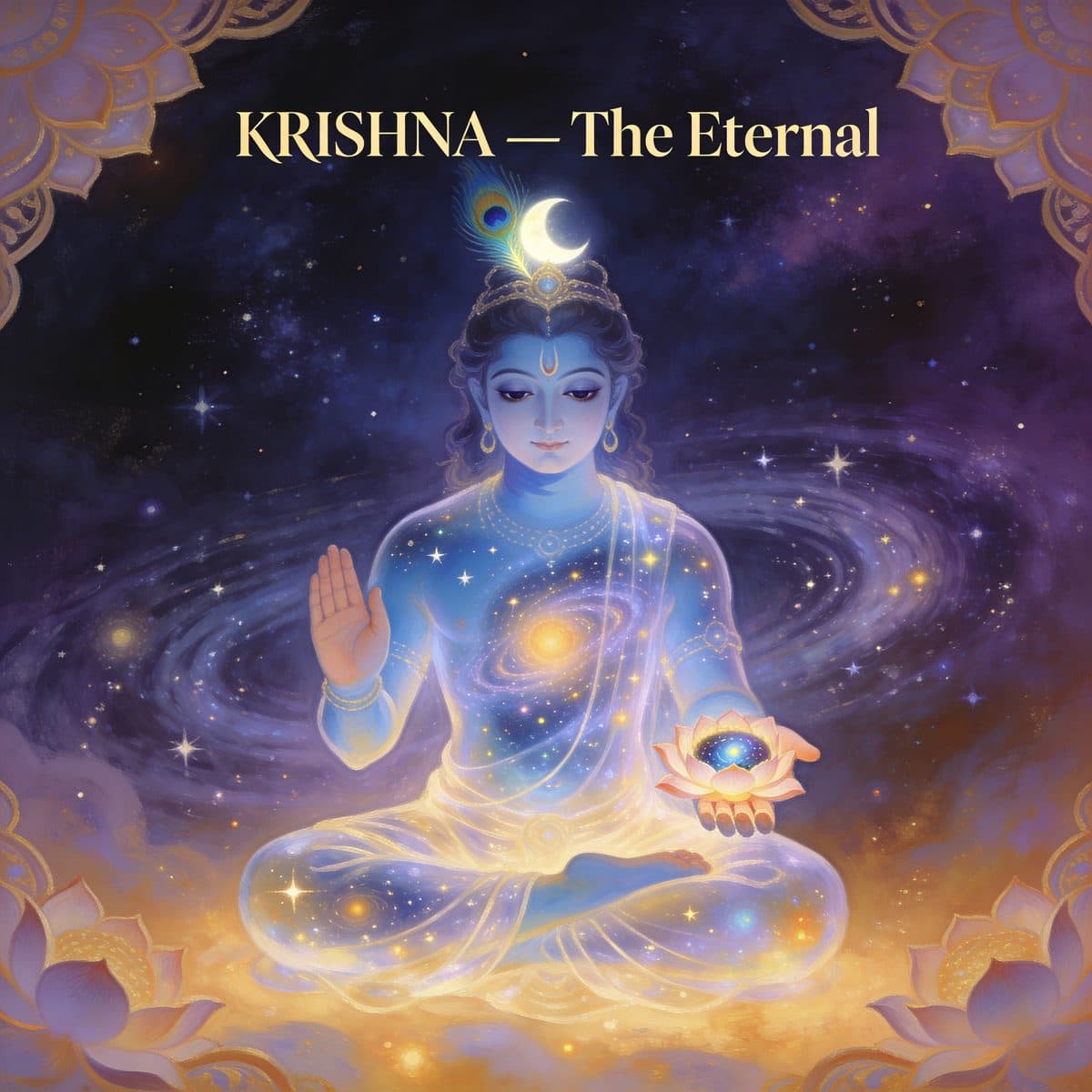
Lord Krishna
Divine TeacherThe Supreme Lord, the charioteer and divine guide of Arjuna. Krishna delivers the eternal wisdom of the Gita, revealing the nature of the soul, duty, and the path to liberation.
Speaking: Chapter 16, Verse 14
Verse 14
The Yoga of the Divine and Demonic Natures
"That enemy has been slain by me, and I shall slay others too. I am the lord; I am the enjoyer; I am perfect, powerful, and happy."
Context & Meaning
The inner monologue continues, now revealing the demonic mind's attitude toward power and identity. Enemies are named and eliminated, others are marked for future elimination. And then the self-declarations: "I am the lord (īśvara), I am the enjoyer (bhogī), I am perfected (siddha), I am powerful (balavān), I am happy (sukhī)." The irony of these declarations is total: each claim is false. The demonic person is not truly a lord — they are enslaved by desire. Not a true enjoyer — they are consumed by anxiety. Not perfected — deeply incomplete. Not happy — profoundly restless. These declarations are not descriptions of reality but compensatory fantasies maintained against the truth of inner poverty.
Scholar Commentaries
1 commentary · Public domainRamanujacharya
VishishtadvaitaĪśvaro'ham — I am the lord. This is the ultimate demonic claim: the appropriation of the title that belongs to God alone. The demonic person seats their ego in the position that only the Divine can occupy — the position of ultimate sovereignty. This is the theological core of the āsurī nature: not atheism as an intellectual position but the practical installation of the ego as God, with all reality evaluated purely in terms of its service to that ego's desires.