
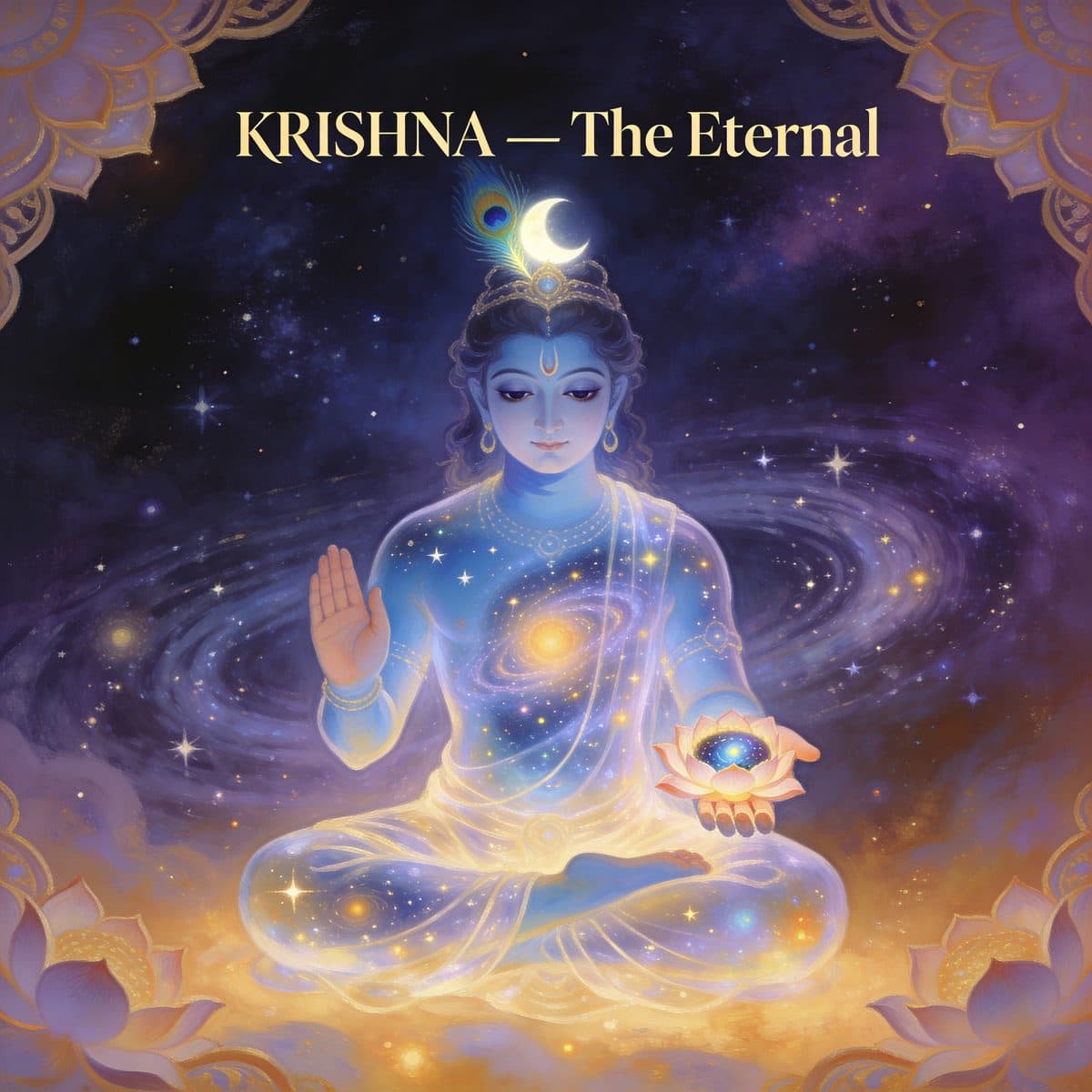
Lord Krishna
Divine TeacherThe Supreme Lord, the charioteer and divine guide of Arjuna. Krishna delivers the eternal wisdom of the Gita, revealing the nature of the soul, duty, and the path to liberation.
Speaking: Chapter 15, Verse 2
Verse 2
The Yoga of the Supreme Person
Its branches spread below and above, nourished by the three qualities of nature, with sense objects as its twigs. Below, in the world of humans, its roots extend downward, bound to action.
Context & Meaning
The cosmic tree's anatomy is detailed: branches both above and below, all nourished by the three gunas — sattva, rajas, and tamas. The twigs are the sense objects, those small attractive terminals that draw living beings outward and downward. And here is the critical insight: in the human world, there are secondary roots growing downward — the roots of karma, of action bound to desire. Every attachment we form, every action driven by craving, sends another root deeper into the material soil, binding us further. The tree is not evil; it is the structure of samsara itself — endlessly self-reinforcing unless the original root above is recognised and the secondary roots below are severed.
Scholar Commentaries
1 commentary · Public domainRamanujacharya
VishishtadvaitaThe gunas nourish the branches — meaning that all the diversity of experience in higher and lower realms is sustained by the interplay of nature's three qualities. The sense objects are the tender shoots that draw creatures outward. But the secondary roots — karma binding beings to the human world — point to the special responsibility of human birth: here alone can the axe of discrimination be taken up.