
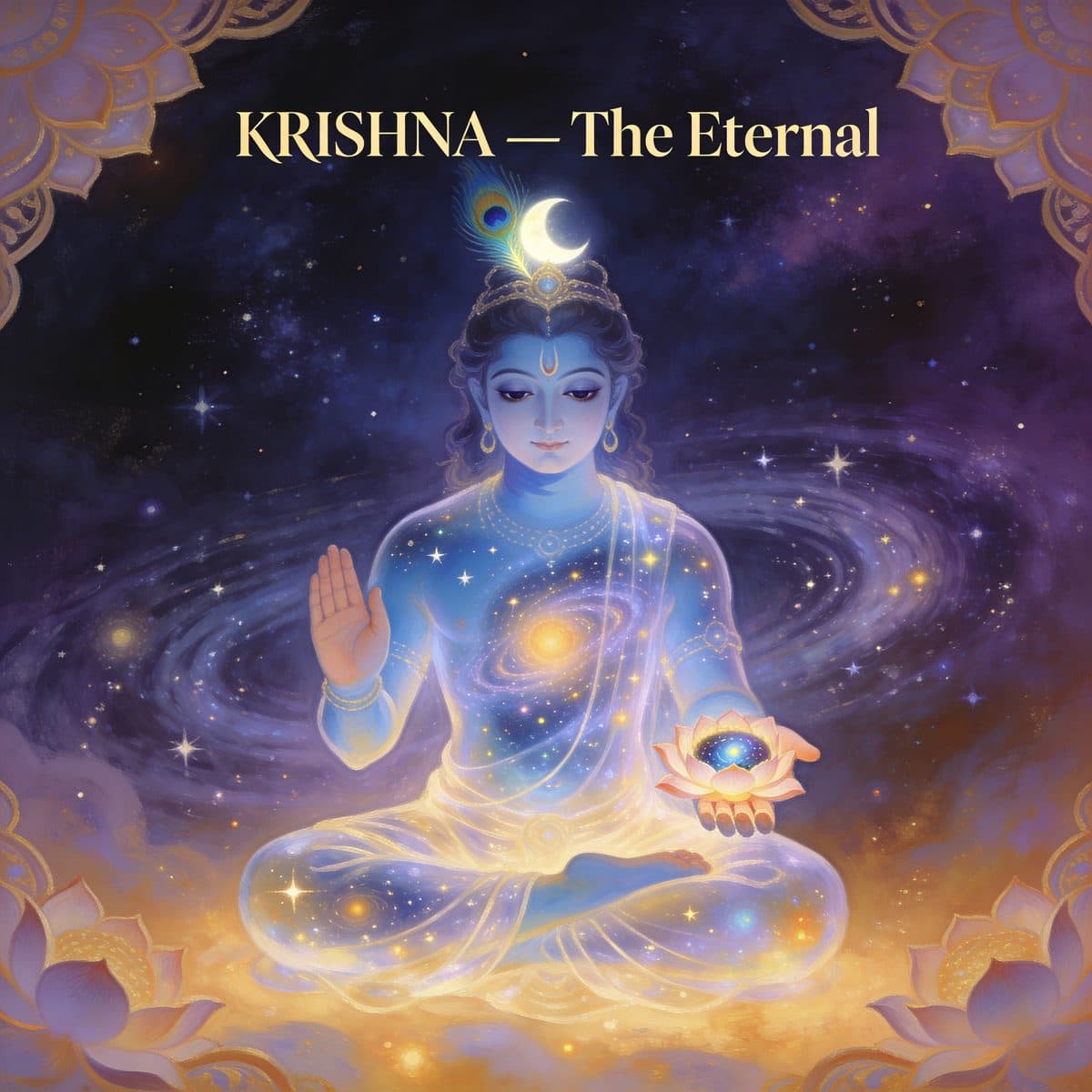
Lord Krishna
Divine TeacherThe Supreme Lord, the charioteer and divine guide of Arjuna. Krishna delivers the eternal wisdom of the Gita, revealing the nature of the soul, duty, and the path to liberation.
Speaking: Chapter 15, Verse 11
Verse 11
The Yoga of the Supreme Person
The striving yogis perceive this soul seated within the Self. But those of impure heart, though striving, do not perceive it — the unintelligent.
Context & Meaning
Effort is not sufficient by itself — a remarkable and honest teaching. The striving yogis (yatanto yoginaḥ) do perceive the soul established within the Self. But others who also strive — called akṛtātmana (those of uncultivated or unpurified self) and acetasa (those without true inner intelligence) — do not perceive it, despite their efforts. The implication is sobering: it is possible to practice sincerely and still miss the target, because the obstacle is not lack of effort but impurity of heart (akṛta-ātmā). The cultivation of the self — through ethical living, surrender, devotion, and the washing away of self-deception — is what makes the soil fertile for perception. Effort without inner purification is like water poured on stone.
Scholar Commentaries
1 commentary · Public domainRamanujacharya
VishishtadvaitaAkṛtātmānaḥ — those of uncultivated self. Cultivation here means the progressive refinement of the inner instrument through practice, devotion, and grace. The pure heart is transparent — it allows the light of the soul to be perceived. The impure heart, however earnestly it strains, remains opaque. This is why Ramanuja places such emphasis on bhakti as the purifier: love for God dissolves the impurities of ego that intellectual effort alone cannot reach.