
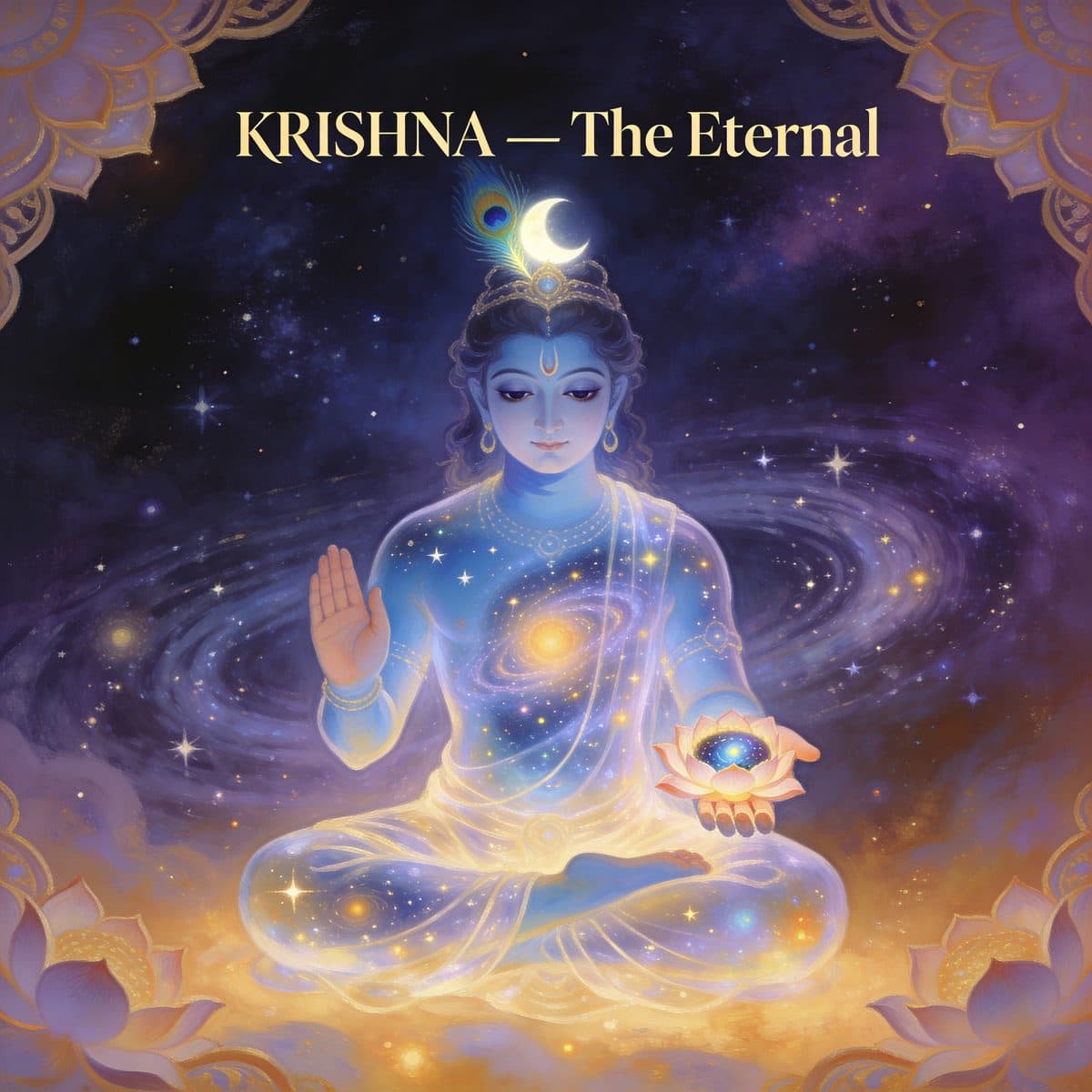
Lord Krishna
Divine TeacherThe Supreme Lord, the charioteer and divine guide of Arjuna. Krishna delivers the eternal wisdom of the Gita, revealing the nature of the soul, duty, and the path to liberation.
Speaking: Chapter 14, Verse 16
Verse 16
The Yoga of the Three Gunas
The fruit of good action is said to be pure and sāttvic; the fruit of rājasic action is suffering; and the fruit of tāmasic action is ignorance.
Context & Meaning
The three guṇas produce different fruits in their corresponding actions. Sāttvic action — done with clarity, without selfish desire, in alignment with dharma — yields pure fruit: clarity, peace, and progress toward liberation. Rājasic action — driven by desire and passion — yields duḥkha (suffering, frustration, the endless hunger of desire that is never finally satisfied). Tāmasic action — born of confusion and negligence — yields only deeper ajñāna (ignorance), a further thickening of the veil over consciousness.
Scholar Commentaries
1 commentary · Public domainAdi Shankaracharya
AdvaitaThe fruits of the three guṇas point to the direction in which each takes the soul: sattva toward liberation, rajas toward worldly entanglement with its inevitable suffering, tamas toward deeper unconsciousness. This is not arbitrary divine judgment — it is the natural consequence of the quality of intention and consciousness brought to action.