
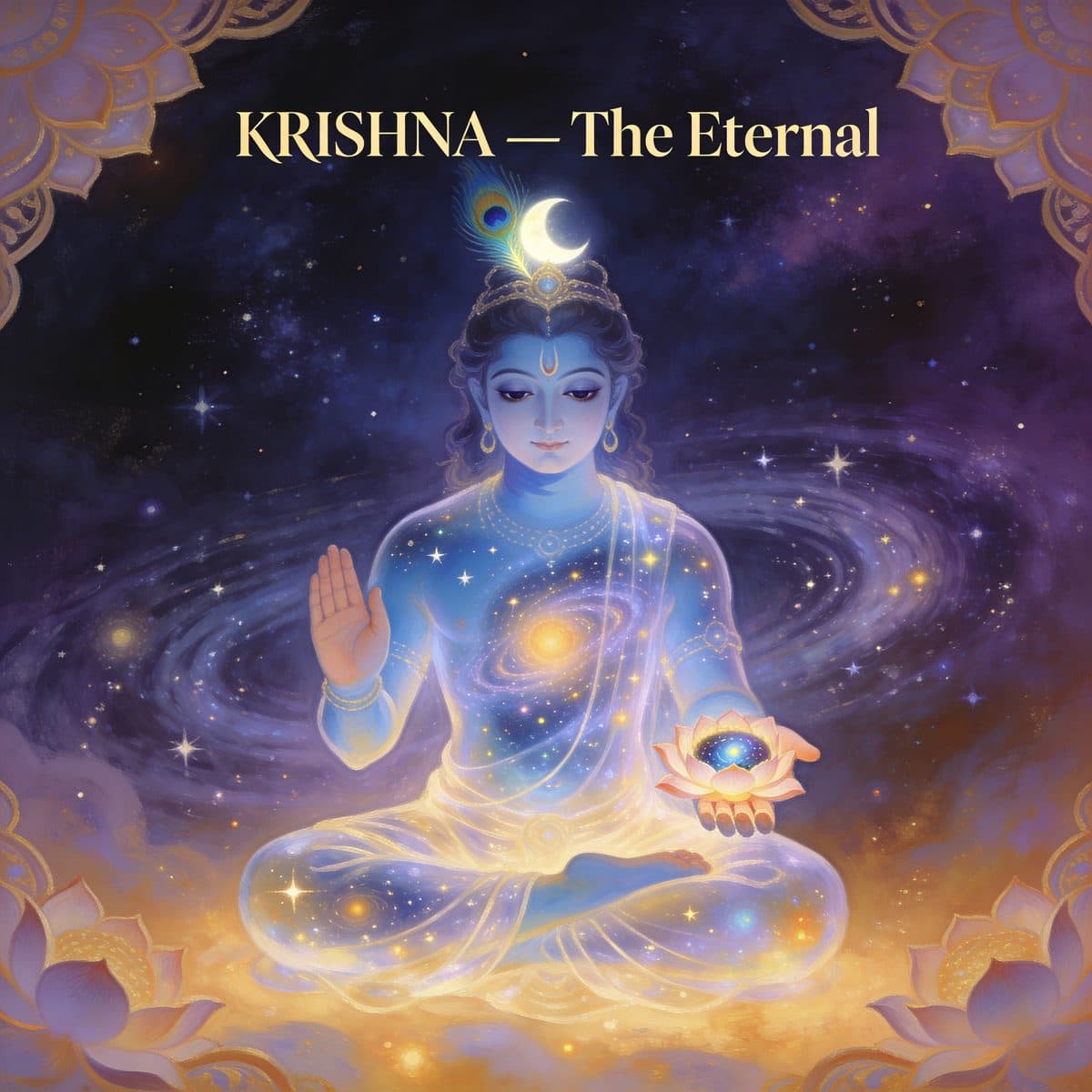
Lord Krishna
Divine TeacherThe Supreme Lord, the charioteer and divine guide of Arjuna. Krishna delivers the eternal wisdom of the Gita, revealing the nature of the soul, duty, and the path to liberation.
Speaking: Chapter 13, Verse 28
Verse 28
Hard VerseThe Yoga of the Field and the Knower of the Field
One who sees the Supreme Lord dwelling equally in all beings — the imperishable within the perishable — truly sees.
Context & Meaning
The culminating vision of the chapter: to truly see is to see the same supreme Lord present equally in every being, the imperishable dwelling within the perishable. This is the vision of sameness (samatā) that the Gita returns to again and again — not a moral commandment to treat everyone equally, but a perceptual reality to be realised: the same infinite awareness looks out through every pair of eyes. The one who sees this truly sees (sa paśyati — that one sees). All other seeing is partial, conditioned, distorted by the illusion of separation.
Scholar Commentaries
2 commentaries · Public domainAdi Shankaracharya
AdvaitaSa paśyati — that one sees. This simple phrase is the highest certification in the Gita. True vision is not more information but a completely different mode of perception — seeing the one Self in all, the imperishable in the perishable. This is what the Upanishads call the vision of the knower of Brahman, and it is the end of all seeking.
Madhvacharya
DvaitaThe Supreme Lord — Parameśvara — dwells equally in all beings, not as an impersonal force but as the fully personal God. To see God in all beings is the highest form of devotion — it is vision that has become worship, perception that has become prayer.