
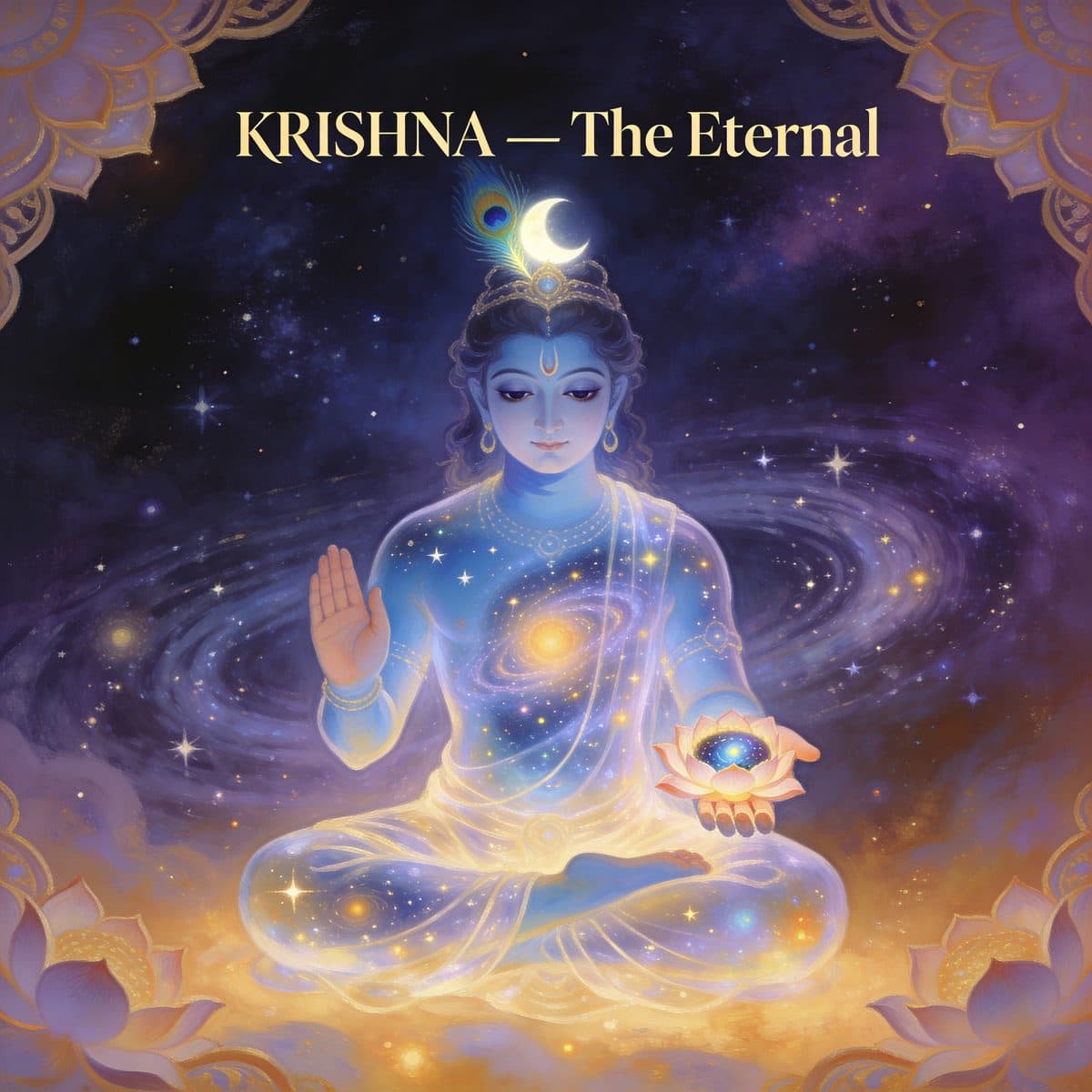
Lord Krishna
Divine TeacherThe Supreme Lord, the charioteer and divine guide of Arjuna. Krishna delivers the eternal wisdom of the Gita, revealing the nature of the soul, duty, and the path to liberation.
Speaking: Chapter 13, Verse 23
Verse 23
Hard VerseThe Yoga of the Field and the Knower of the Field
Yet in this body dwells the supreme Purusha — the witness, the permitter, the sustainer, the experiencer, the great Lord — who is also called the Paramatma, the Supreme Self.
Context & Meaning
Having described the individual soul as bound by attachment, Krishna now reveals the other Purusha — the supreme Purusha within the same body. The upadraṣṭā is the witness (literally "the one who sees from nearby"). The anumantā is the permitter or overseer — the one whose presence makes all experience possible. The bhartā is the sustainer; the bhoktā, the experiencer; the maheśvara, the great Lord. This is the Paramātman — the supreme Self — dwelling in the very same body that houses the individual soul. Two birds on the same tree: one eats the fruit, one only watches. The witness is always present; it is only overlooked.
Scholar Commentaries
2 commentaries · Public domainAdi Shankaracharya
AdvaitaUpadraṣṭā — the nearby witness. The supreme Self is not distant. It is the most immediate of all realities — the pure awareness that is the ground of every experience. The entire spiritual quest consists in shifting identity from the experiencing soul caught in guṇa-attachment to the pure witnessing Paramātman that was always already present.
Ramanujacharya
VishishtadvaitaThis verse reveals the indwelling God — the antaryāmin — present within every body as the supreme witness and sustainer. The individual soul (jīva) and the supreme Soul (Paramātman) are both present within; their relationship is one of dependence and love, not identity.