
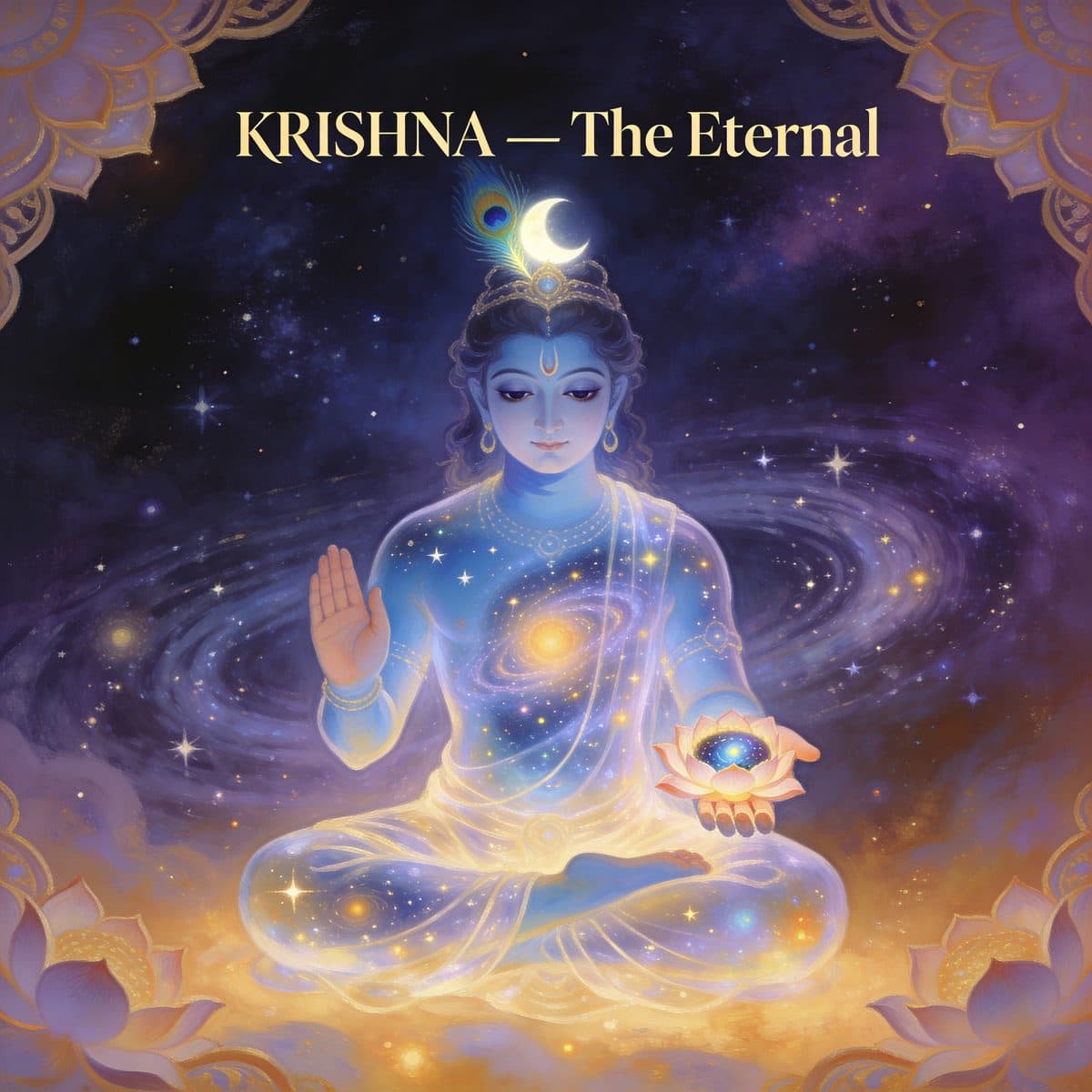
Lord Krishna
Divine TeacherThe Supreme Lord, the charioteer and divine guide of Arjuna. Krishna delivers the eternal wisdom of the Gita, revealing the nature of the soul, duty, and the path to liberation.
Speaking: Chapter 6, Verse 5
Verse 5
Hard VerseThe Yoga of Meditation
One must deliver himself with the help of his mind, and not degrade himself. The mind is the friend of the conditioned soul, and his enemy as well.
Context & Meaning
You must rescue yourself — no one else can do it for you. The mind is both your closest ally and your most dangerous enemy. Whether it liberates or enslaves you depends entirely on how you relate to it.
Scholar Commentaries
2 commentaries · Public domainAdi Shankaracharya
Advaita VedantaThis verse is a radical statement of self-responsibility. The word "ātmā" is used in three senses here: as the empirical self (who must be rescued), as the agent of rescue (the disciplined will), and as the Self that is ultimately free. Liberation is not granted from outside — it is realized by the self, through the self, as the Self. The idea that an external deity "saves" you is here replaced by something more demanding: you must lift yourself.
Swami Vivekananda
VedanticVivekananda quoted this verse constantly. He saw it as the cornerstone of human dignity and spiritual self-reliance. The strength to rise is already within you — "the lion must be told it is a lion." Every time you yield to a degrading impulse, you degrade yourself; every act of self-mastery is an act of self-elevation. The divine power within is your greatest friend; the animal passions within are your greatest enemy.