
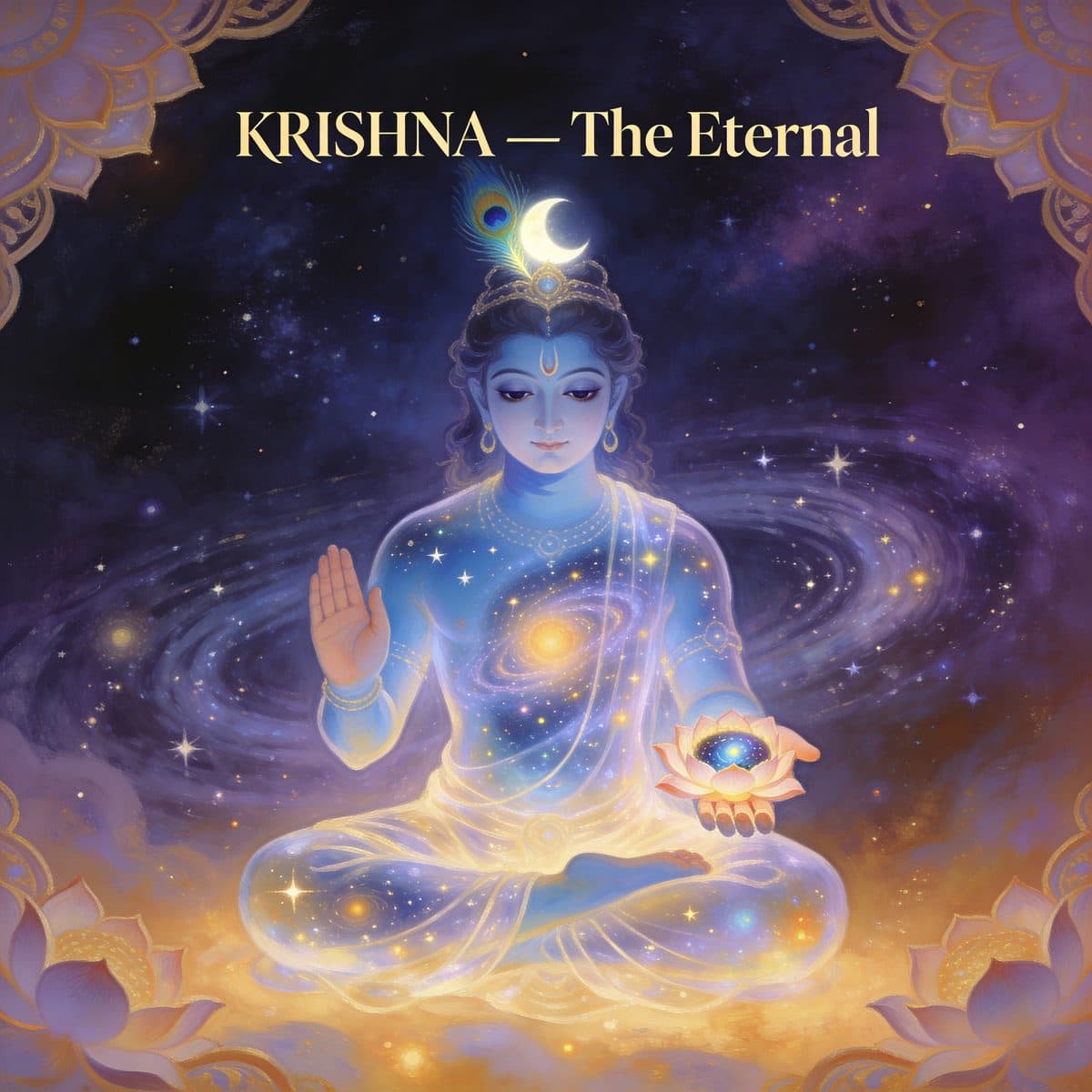
Lord Krishna
Divine TeacherThe Supreme Lord, the charioteer and divine guide of Arjuna. Krishna delivers the eternal wisdom of the Gita, revealing the nature of the soul, duty, and the path to liberation.
Speaking: Chapter 6, Verse 47
Verse 47
Hard VerseThe Yoga of Meditation
And of all yogis, the one with great faith who always abides in Me, thinks of Me within himself, and renders transcendental loving service to Me—he is the most intimately united with Me in yoga and is the highest of all. That is My opinion.
Context & Meaning
The closing verse of Chapter 6 and the crown of the yoga hierarchy: of all yogis, the greatest is the one who worships Krishna with faith, with their inner self absorbed in Krishna. Bhakti — devotional love — is declared the highest form of yoga. This prepares the ground for the Bhakti Yoga teachings that dominate the second half of the Gita.
Scholar Commentaries
2 commentaries · Public domainRamanujacharya
VishishtadvaitaThis final verse of Chapter 6 is pivotal for Ramanuja's entire philosophy. The supreme yogi is not the one who has attained the most refined impersonal absorption, but the one who worships the Personal God with faith and love. "Madgatena antarātmanā" — with the inner self absorbed in Me — describes bhakti-yoga at its height. Knowledge and meditation culminate in devotional love; they do not replace it. This verse opens the door to Chapters 7–12, which elaborate the nature of the Supreme and the path of devotion.
Swami Vivekananda
VedanticVivekananda saw this verse as the ultimate synthesis. The Gita has described Karma Yoga, Jnana Yoga, and now Raja Yoga (meditation). Here it declares that the greatest yogi is the Bhakta — the lover of God. This is not a step backward from the heights of Jnana but its natural completion. Pure knowledge and pure love, in their highest form, are the same reality — the Absolute known not as an object but as the beloved.