
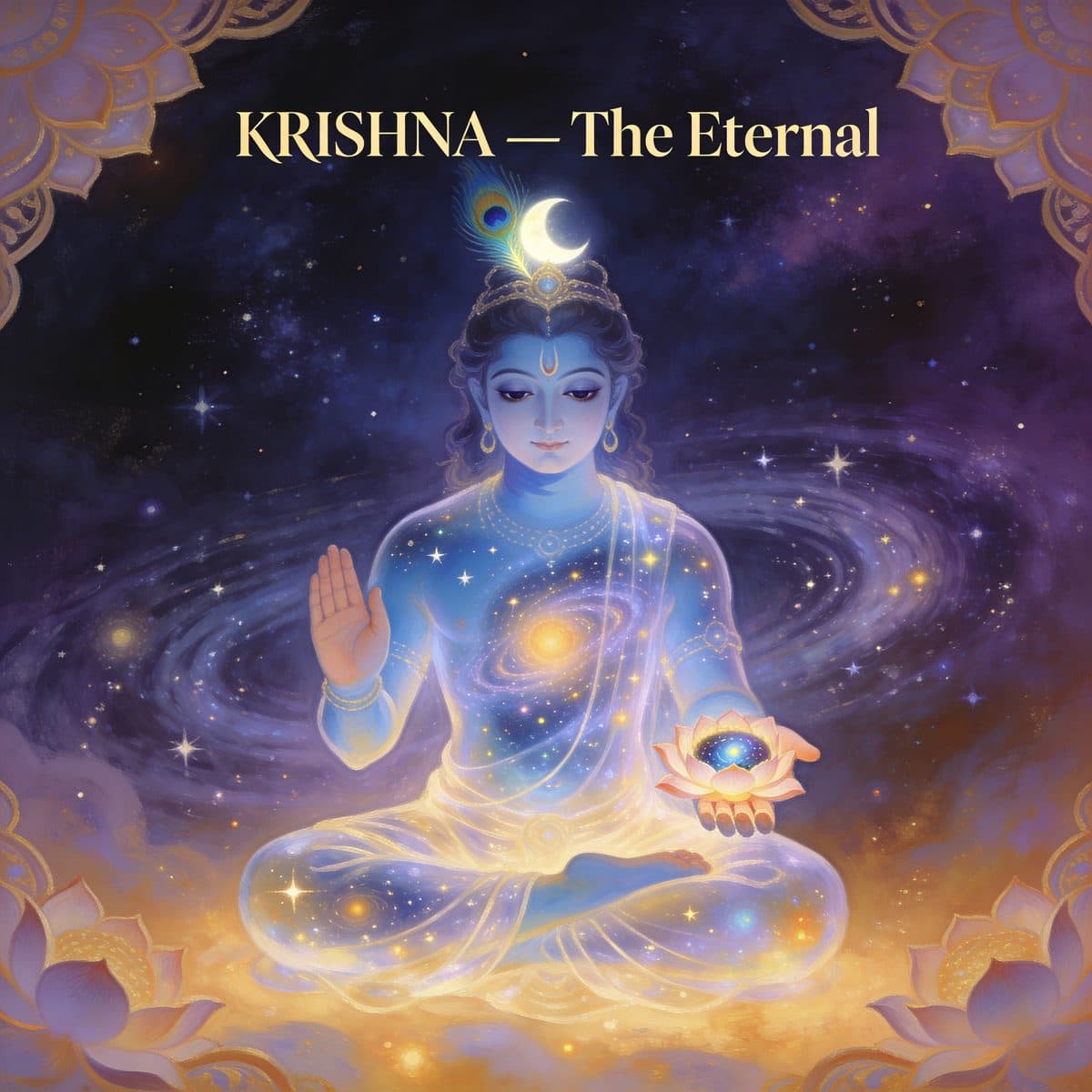
Lord Krishna
Divine TeacherThe Supreme Lord, the charioteer and divine guide of Arjuna. Krishna delivers the eternal wisdom of the Gita, revealing the nature of the soul, duty, and the path to liberation.
Speaking: Chapter 6, Verse 35
Verse 35
Hard VerseThe Yoga of Meditation
Lord Sri Krishna said: O mighty-armed son of Kunti, it is undoubtedly very difficult to curb the restless mind, but it is possible by suitable practice and by detachment.
Context & Meaning
Krishna does not contradict Arjuna — yes, the mind is genuinely difficult to control. But it is possible. The two instruments are abhyasa (consistent, repeated practice) and vairagya (dispassion toward sense-objects). These two together can tame what seems untameable.
Scholar Commentaries
1 commentary · Public domainAdi Shankaracharya
Advaita VedantaAbhyāsa and vairāgya — practice and dispassion — are also the two foundational concepts of Patanjali's Yoga Sutras (1:12). Shankara comments that abhyāsa is the positive effort to return attention again and again to the object of meditation, while vairāgya is the negative effort — ceasing to feed the mind's craving for external objects. Both are indispensable; practice without dispassion gives concentration without freedom; dispassion without practice gives withdrawal without clarity.