
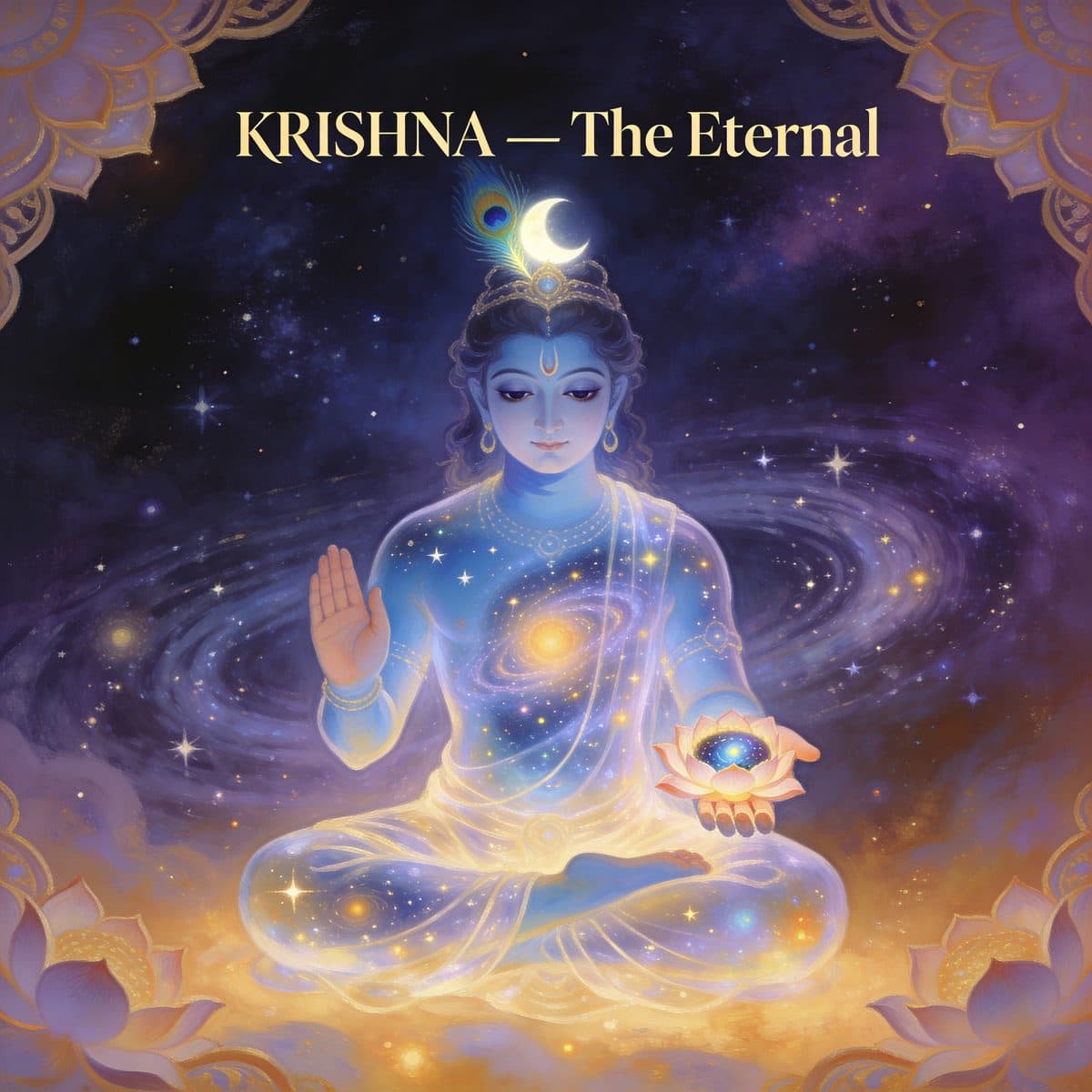
Lord Krishna
Divine TeacherThe Supreme Lord, the charioteer and divine guide of Arjuna. Krishna delivers the eternal wisdom of the Gita, revealing the nature of the soul, duty, and the path to liberation.
Speaking: Chapter 2, Verse 47
Verse 47
Hard VerseSānkhya Yoga — The Yoga of Discernment
You have the right to perform your prescribed duty, but you are not entitled to the fruits of your actions. Never consider yourself the cause of the results of your activities, nor be attached to inaction.
Context & Meaning
You have a right to perform your duty, but not to its fruits. Do not be attached to results nor to inaction.
Scholar Commentaries
4 commentaries · Public domainSwami Sivananda
VedanticThis is the famous verse of the Gita. The essence of Karma Yoga is taught here. Do your duty to the best of your ability, with devotion and without attachment.
Ramanujacharya
VishishtadvaitaThe right (adhikāra) to action is given; the right to its fruits (phala) is withheld. This is not an arbitrary deprivation — it is a liberation. When one acts for God rather than for personal gain, all anxiety and bondage that normally accompany goal-directed action dissolve. Dedicating action to the Supreme is itself the highest form of worship.
Swami Vivekananda
VedanticThis verse is the formula for unselfishness. Work for work's sake; do good for the sake of doing good, without asking for anything in return. The person who works thus is Karma Yoga personified, and such work without desire for results leads to freedom — while work done with desire is bondage.
Bal Gangadhar Tilak
Gita Rahasya — B.G. TilakIn Gita Rahasya, Tilak emphasized that this verse is not a counsel of passivity. It demands vigorous, unreserved action (karmaṇi eva adhikāraḥ — the right is firmly in action) while releasing the ego's grip on results. It is the maximum of activity with the minimum of ego — the highest form of engaged living.