
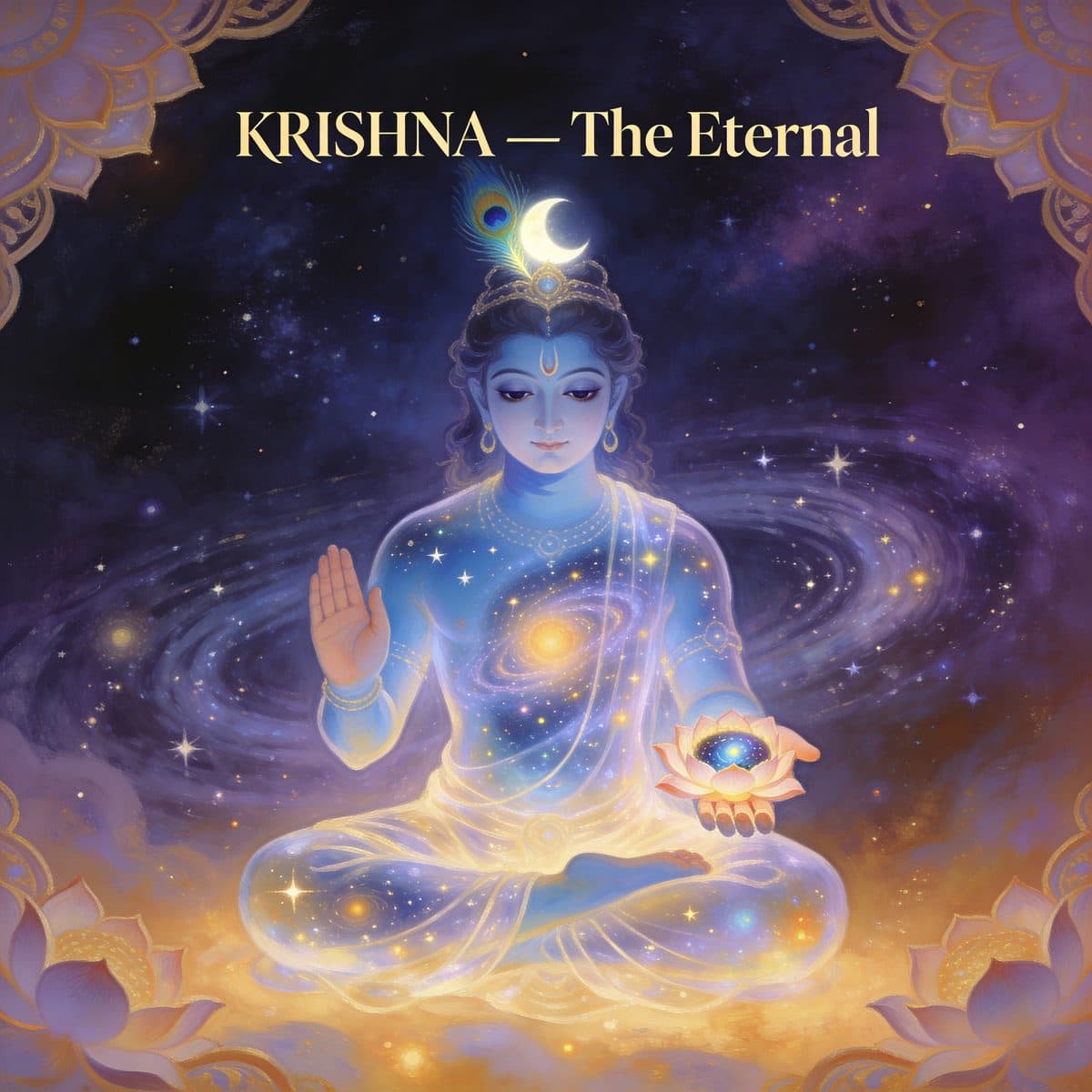
Lord Krishna
Divine TeacherThe Supreme Lord, the charioteer and divine guide of Arjuna. Krishna delivers the eternal wisdom of the Gita, revealing the nature of the soul, duty, and the path to liberation.
Speaking: Chapter 18, Verse 62
Verse 62
The Yoga of Liberation through Renunciation
Take refuge in him alone with your whole being, O Bharata. By his grace you will attain supreme peace and the eternal abode.
Context & Meaning
The instruction could not be simpler or more complete: go to refuge in God — tam eva śaraṇaṃ gaccha — with sarvabhāvena, with your whole being. Not a part of yourself, not with conditions or reservations, not with one eye still on personal advantage — but wholly. This total refuge is both the path and the destination: by his grace (tatprasādāt), one attains parā śānti — supreme peace — and the eternal abode. The eternal abode is not a place elsewhere but the recognition of the ground of one's own being — which is always peace, always free, always home. Grace is what makes this recognition possible when the seeker has prepared through practice and genuinely surrendered.
Scholar Commentaries
1 commentary · Public domainRamanujacharya
VishishtadvaitaSarvabhāvena — with your whole being. The Vishishtadvaita tradition sees prapatti — complete surrender — as the supreme means of liberation, and this verse is its most explicit scriptural foundation. Whole-being refuge means the surrender of thought, speech, action, desire, fear — every layer of the person — into the care of Bhagavān. The grace that flows from this refuge — tatprasāda — is not earned but given: God meets the total surrender with total grace. This is the short path — shorter even than the decades of rigorous yoga — because it moves at the speed of love rather than the speed of effort.